On Saturday September 13, 2025 a dedication ceremony was held for the Udney Hay historic marker set at the site of his original Underhill residence.
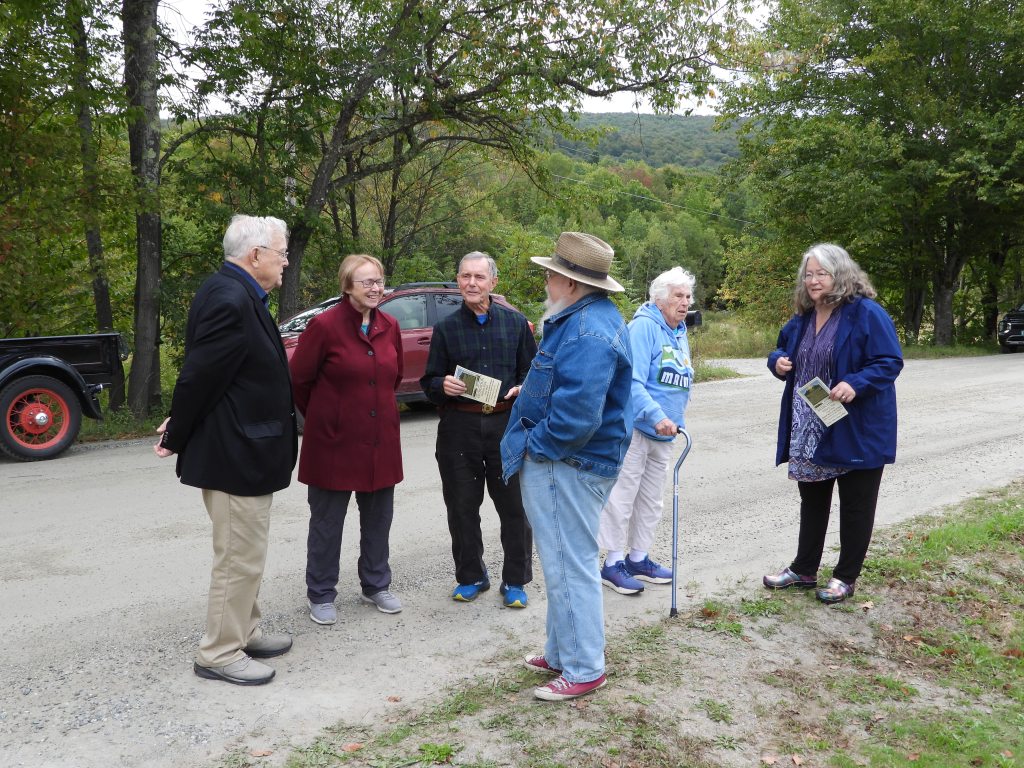

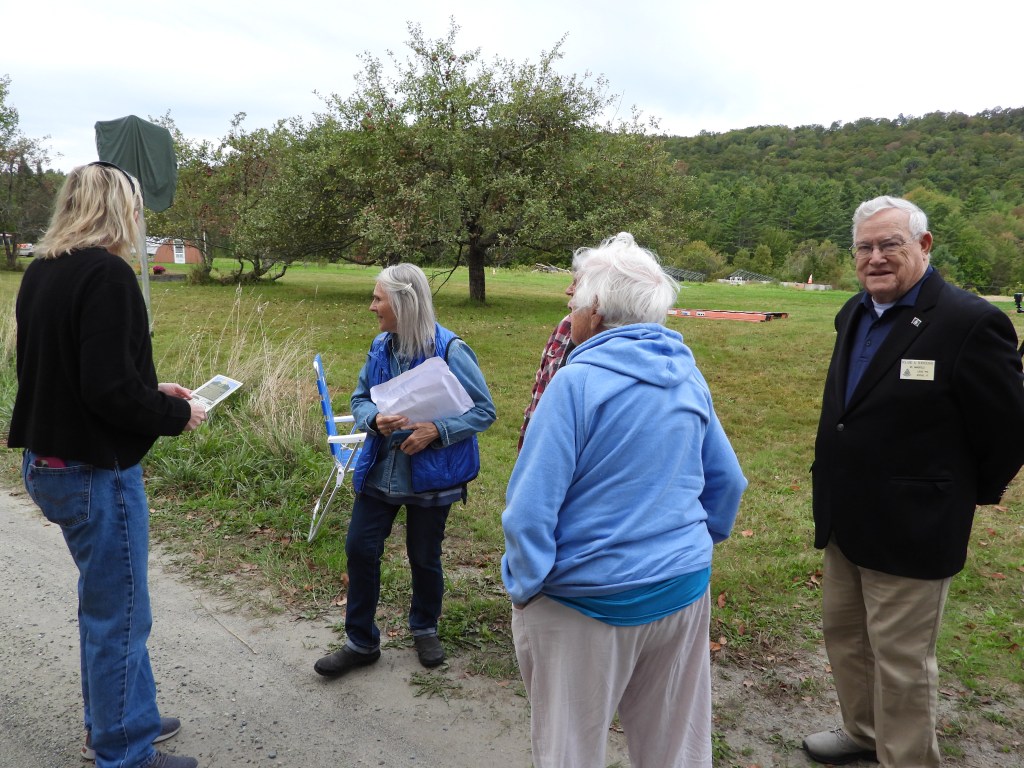
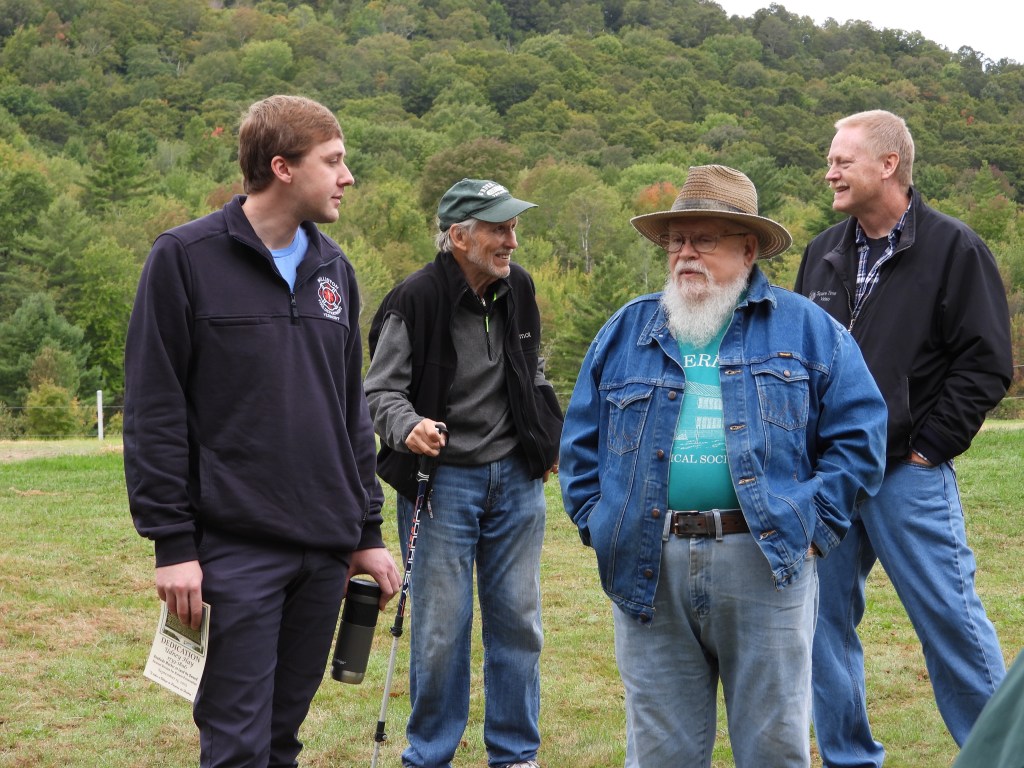
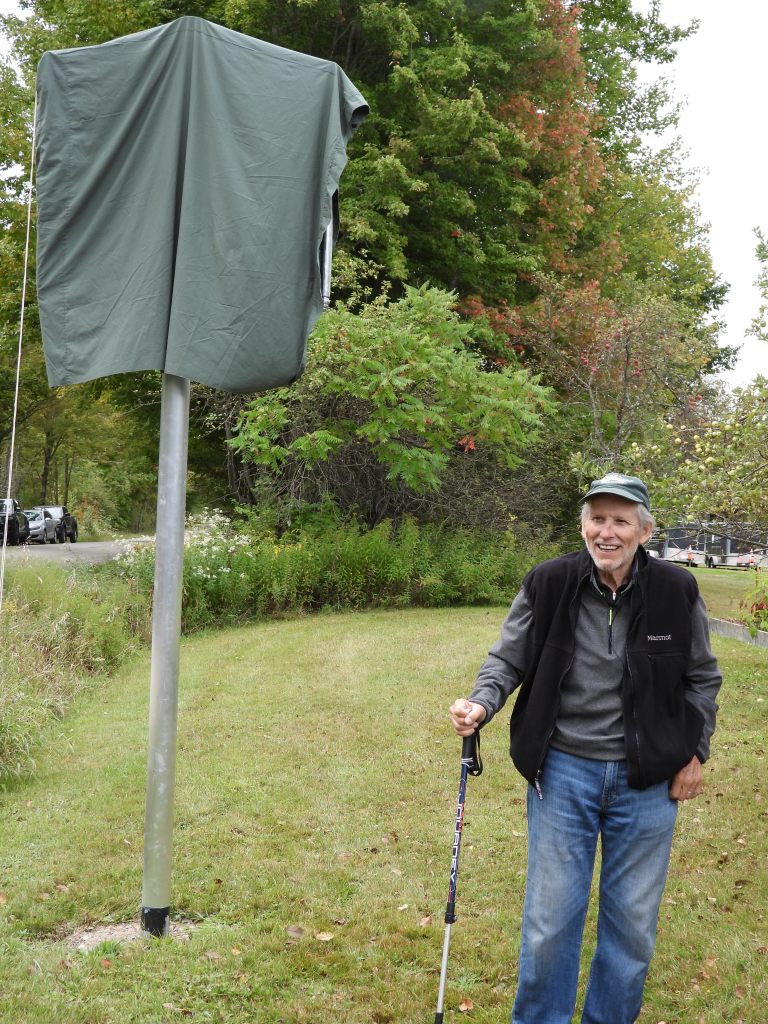
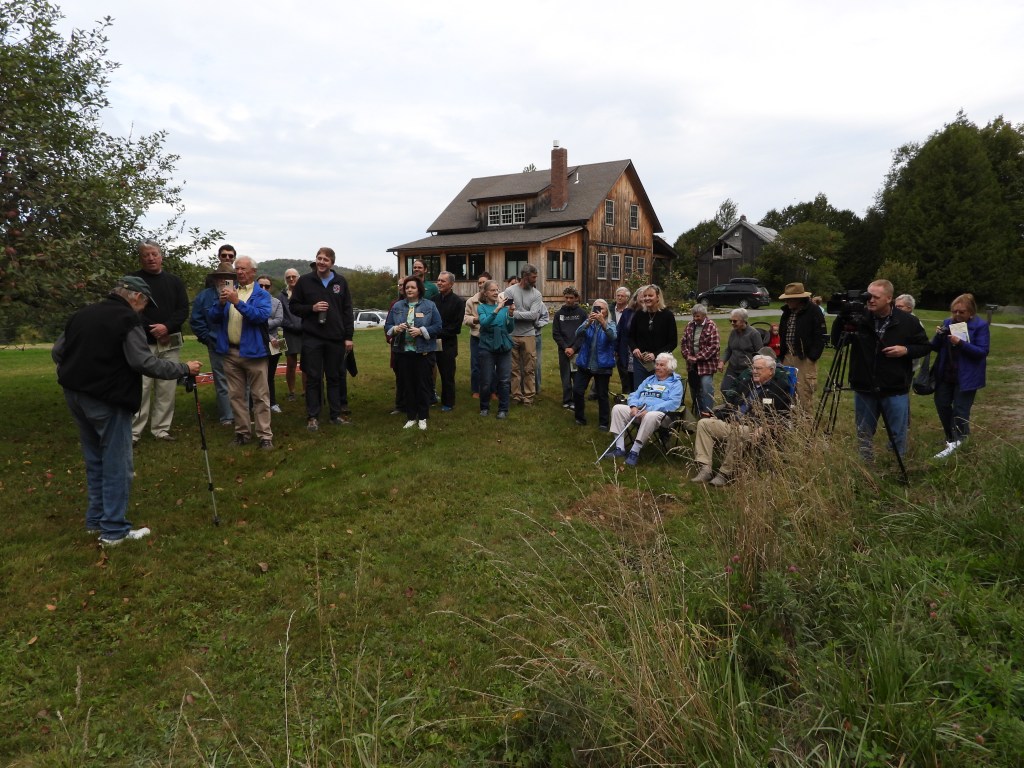
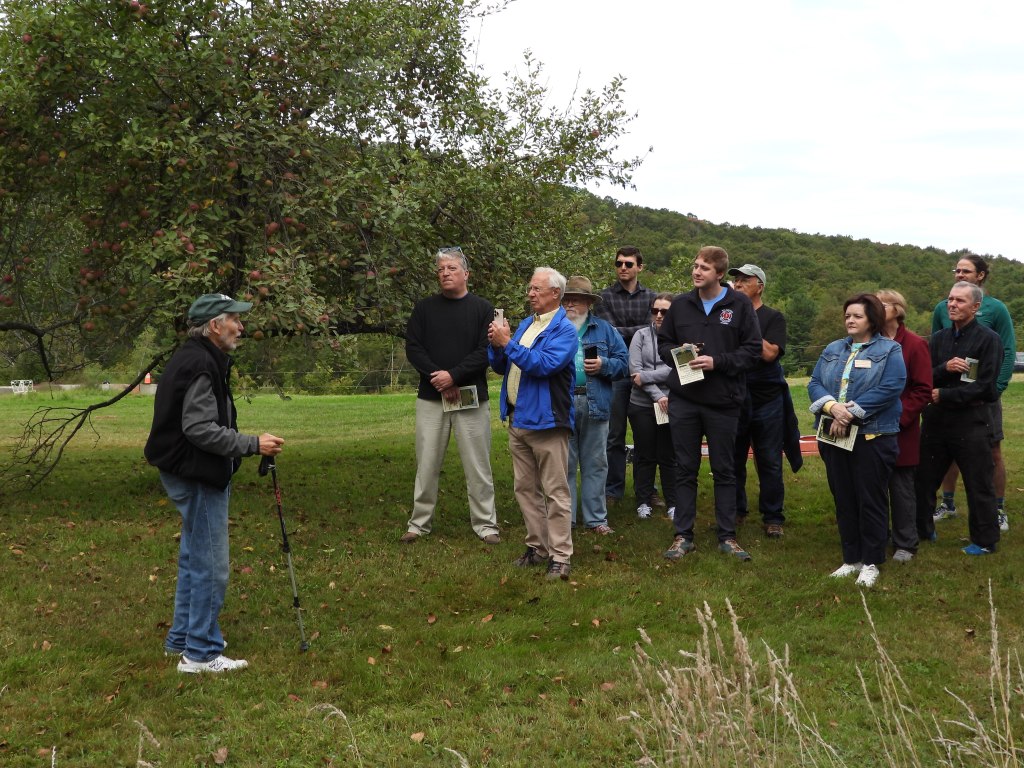
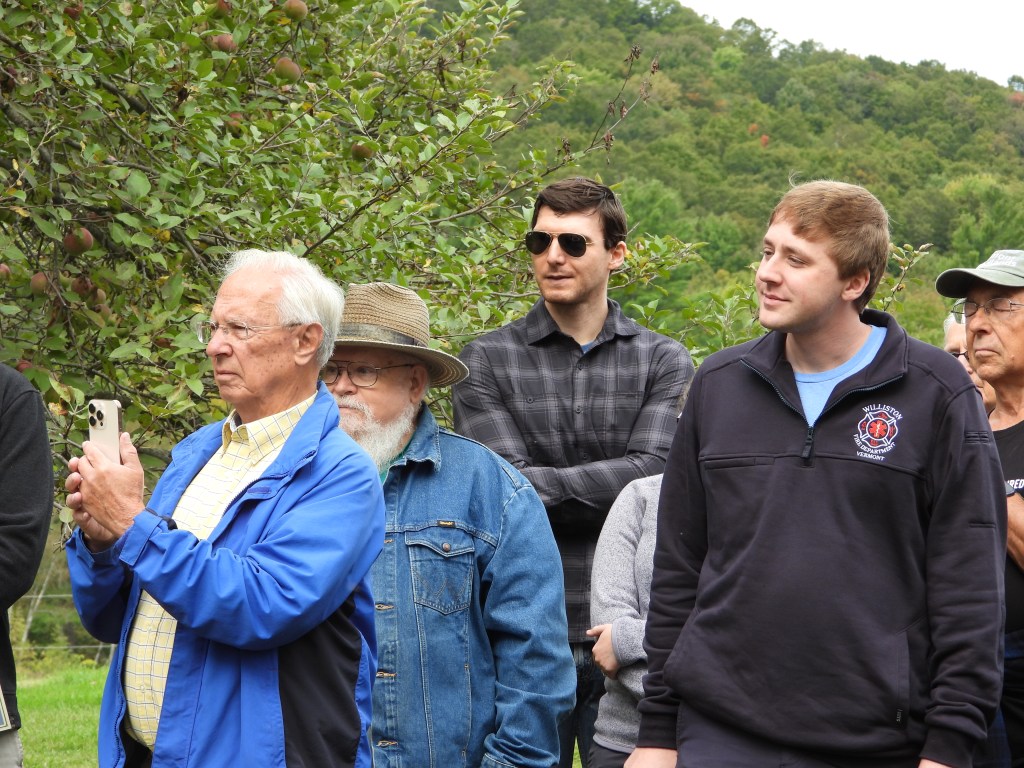
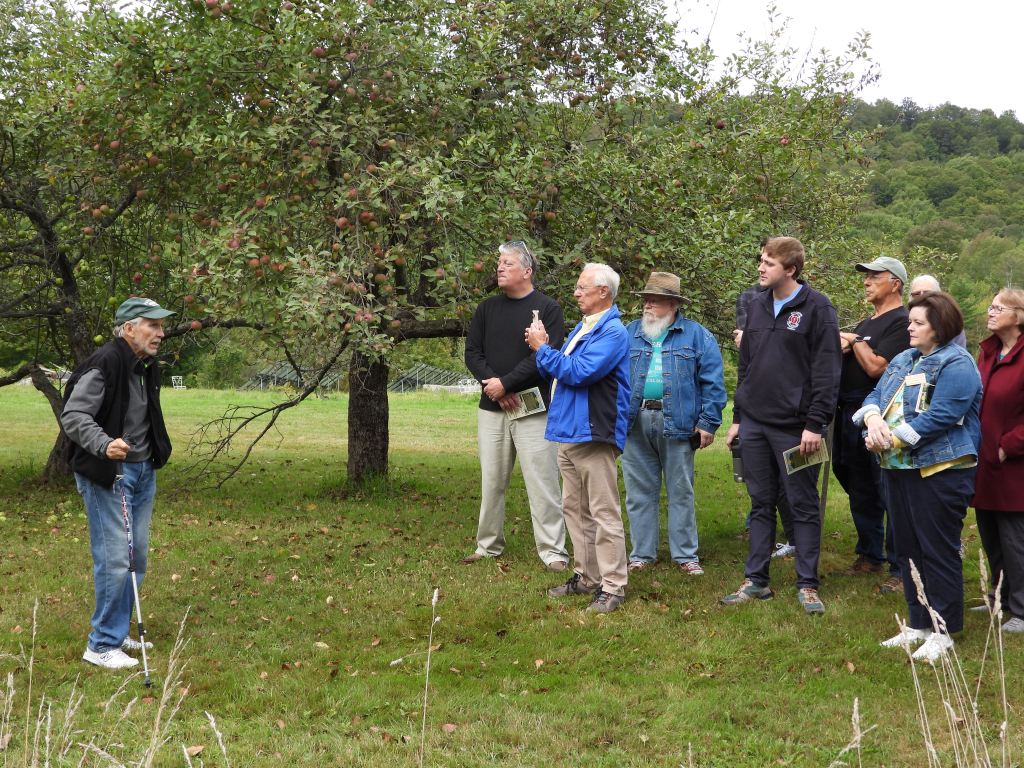


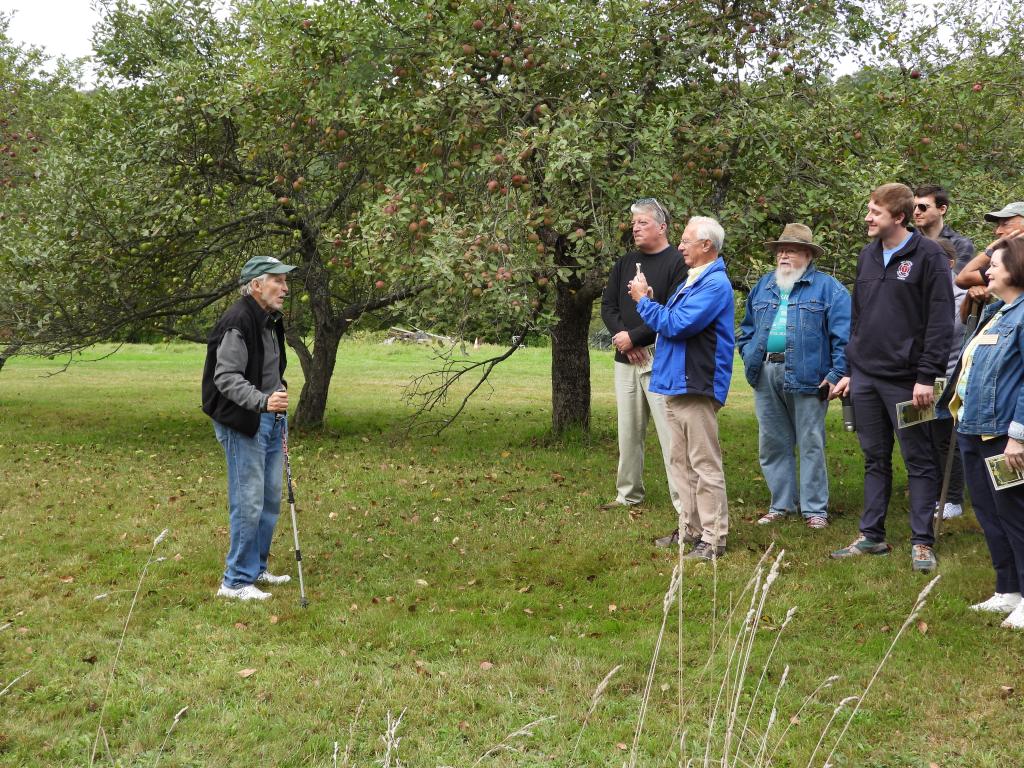
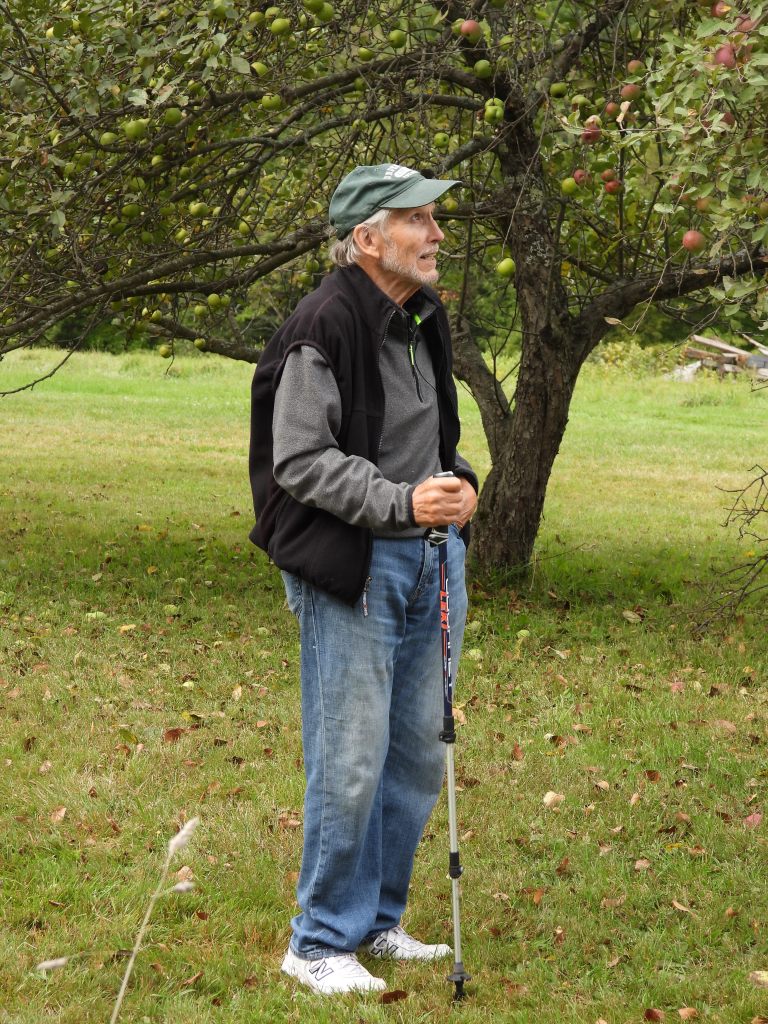
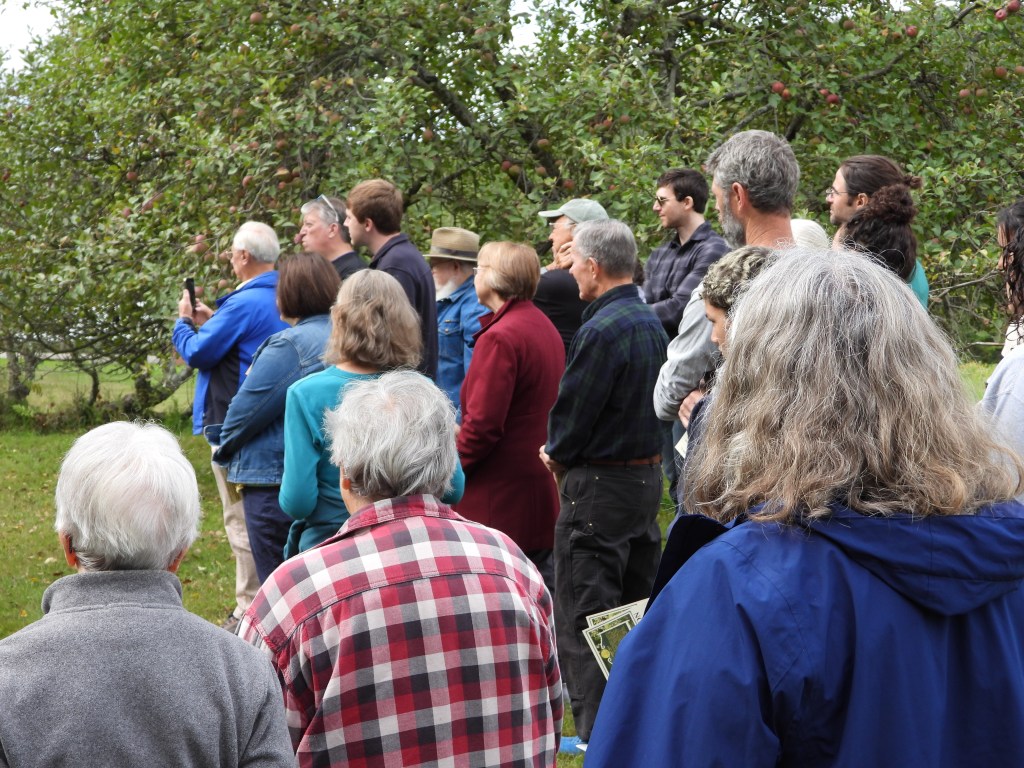
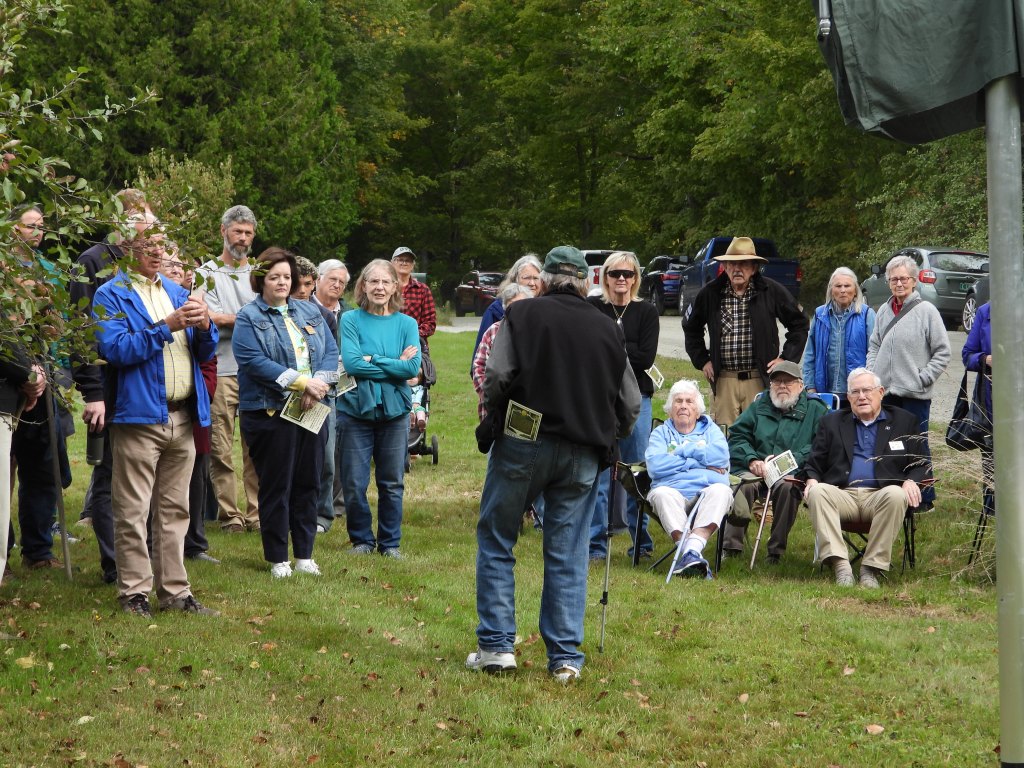

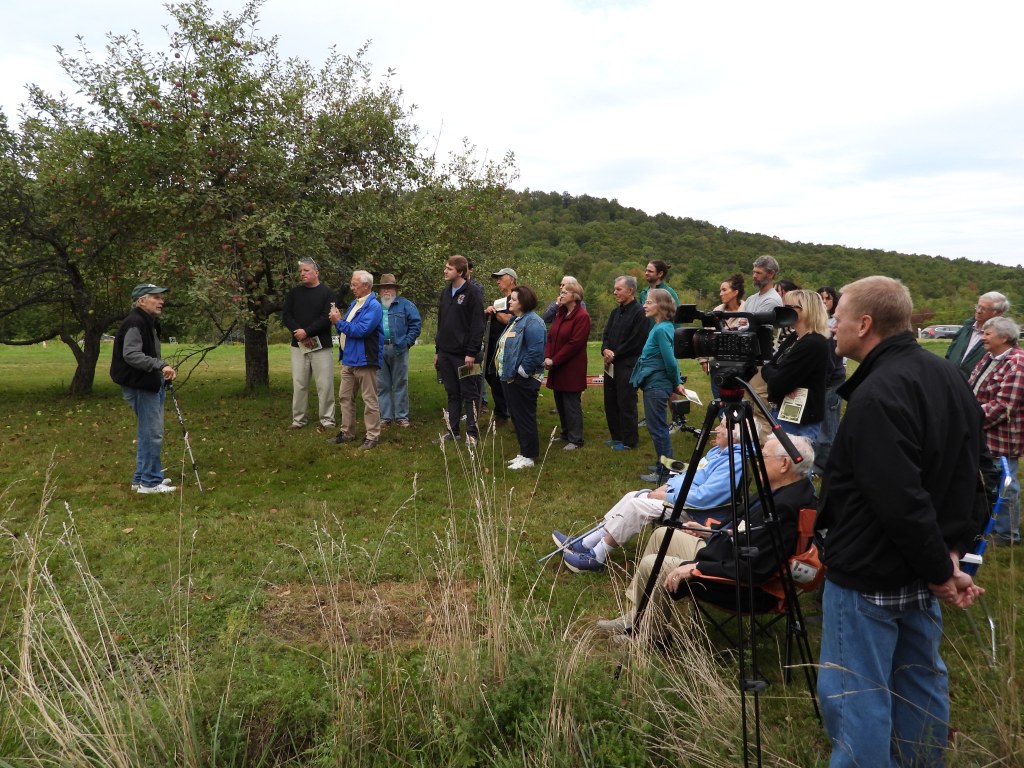
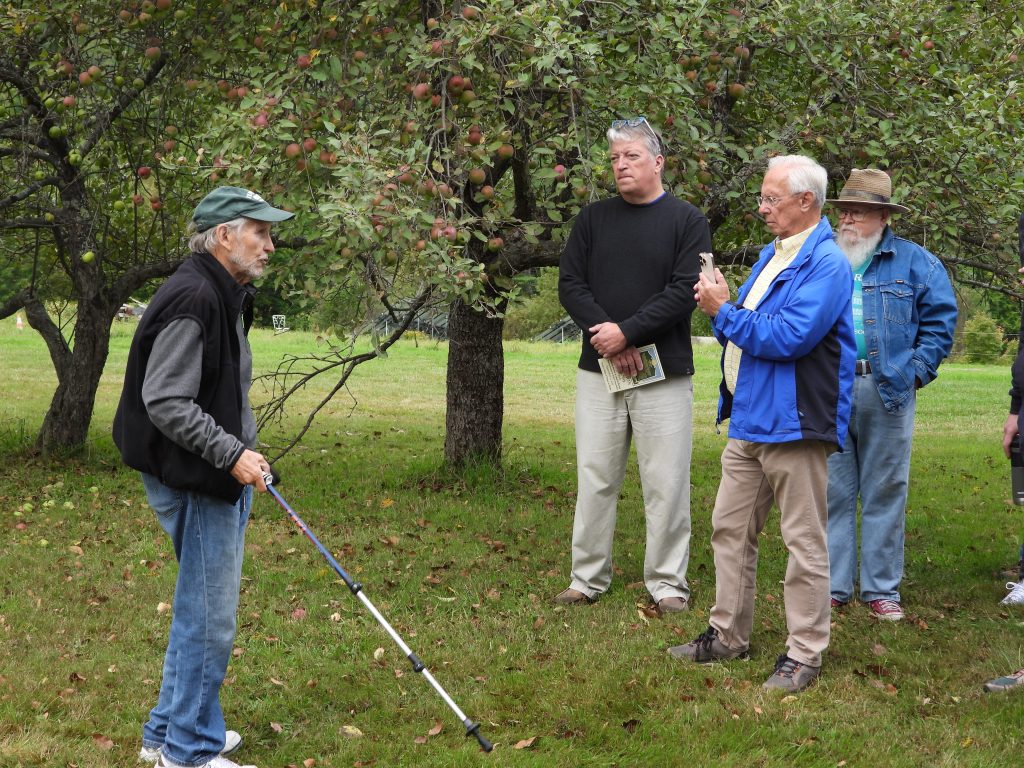
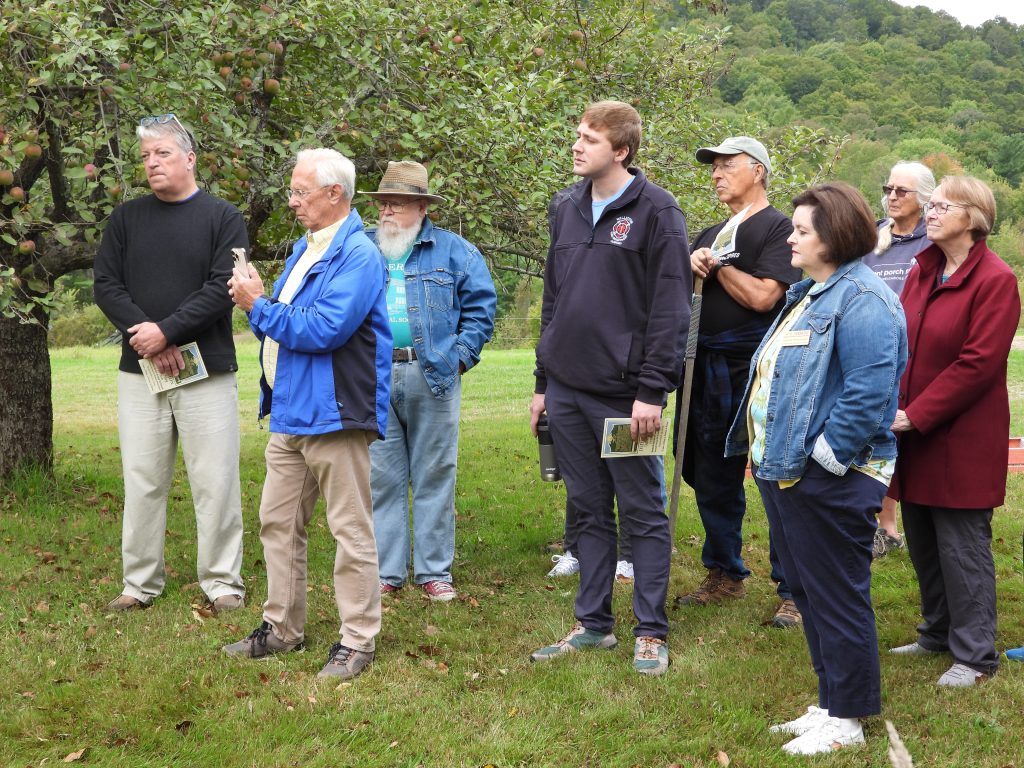
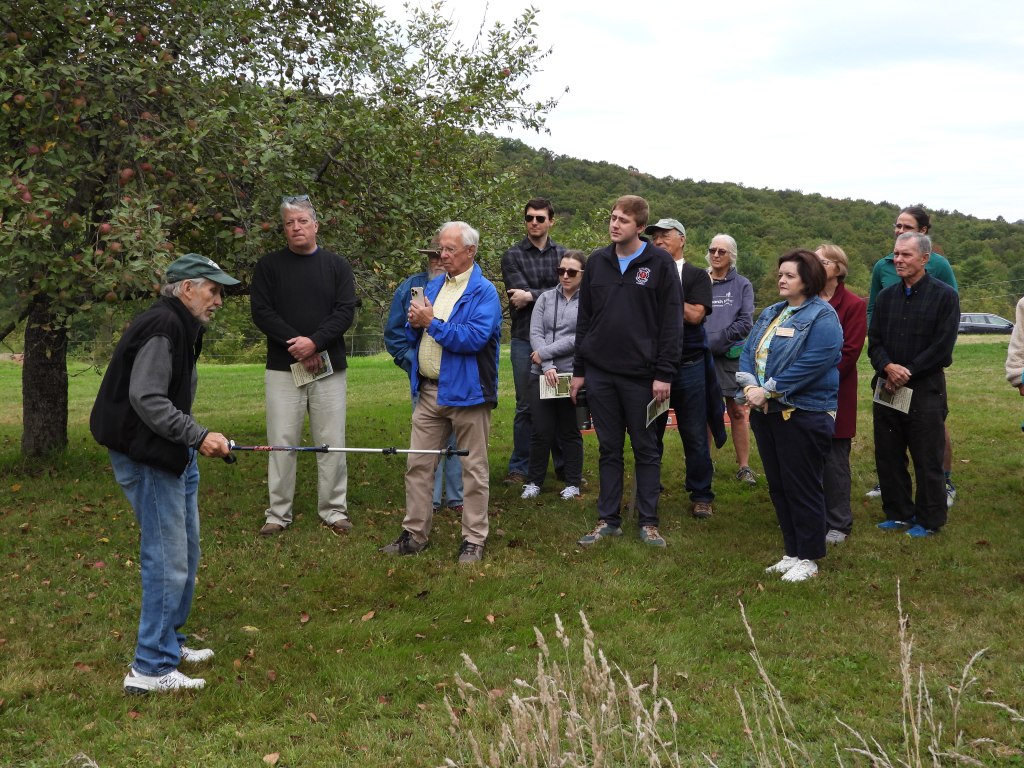
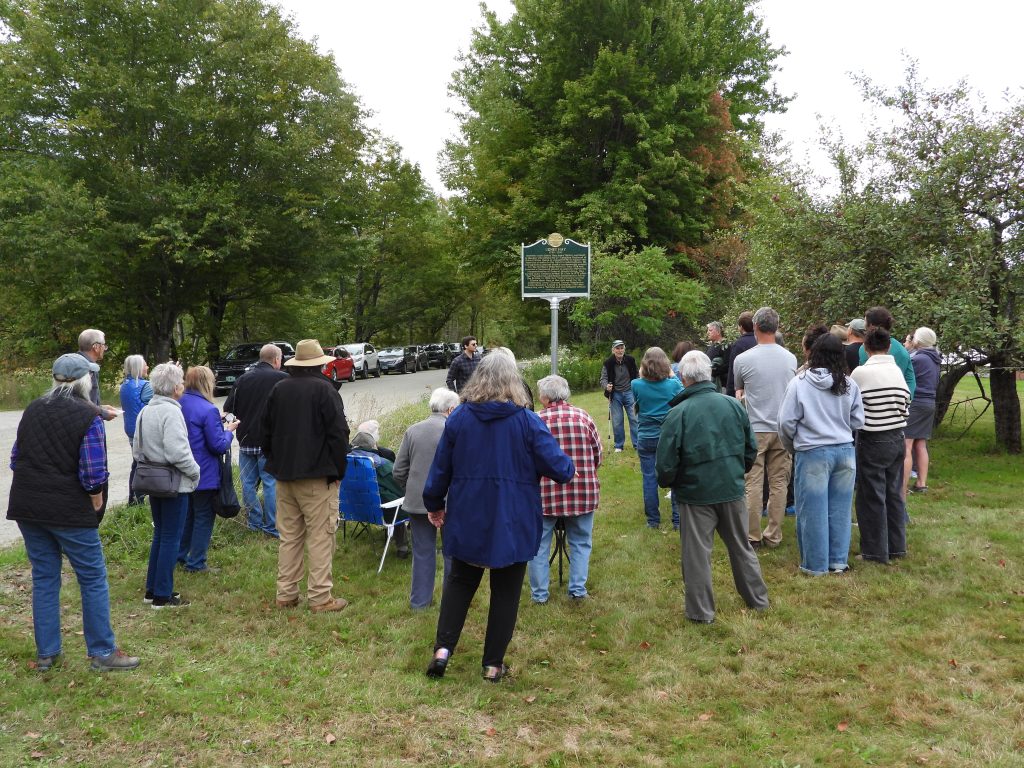
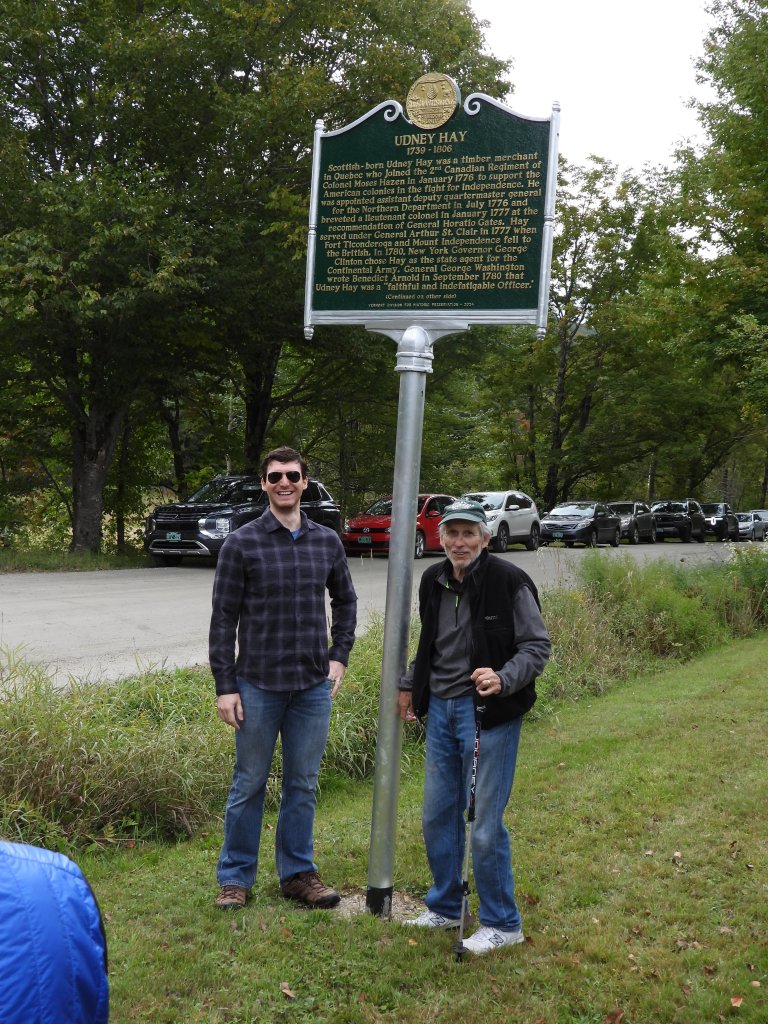
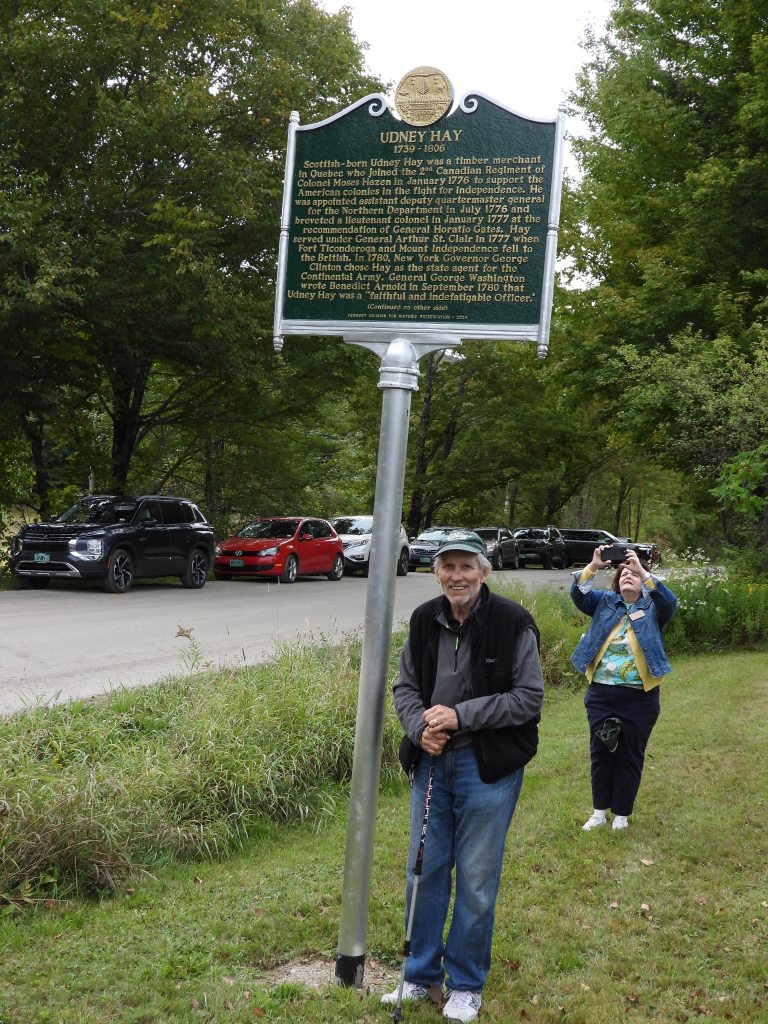
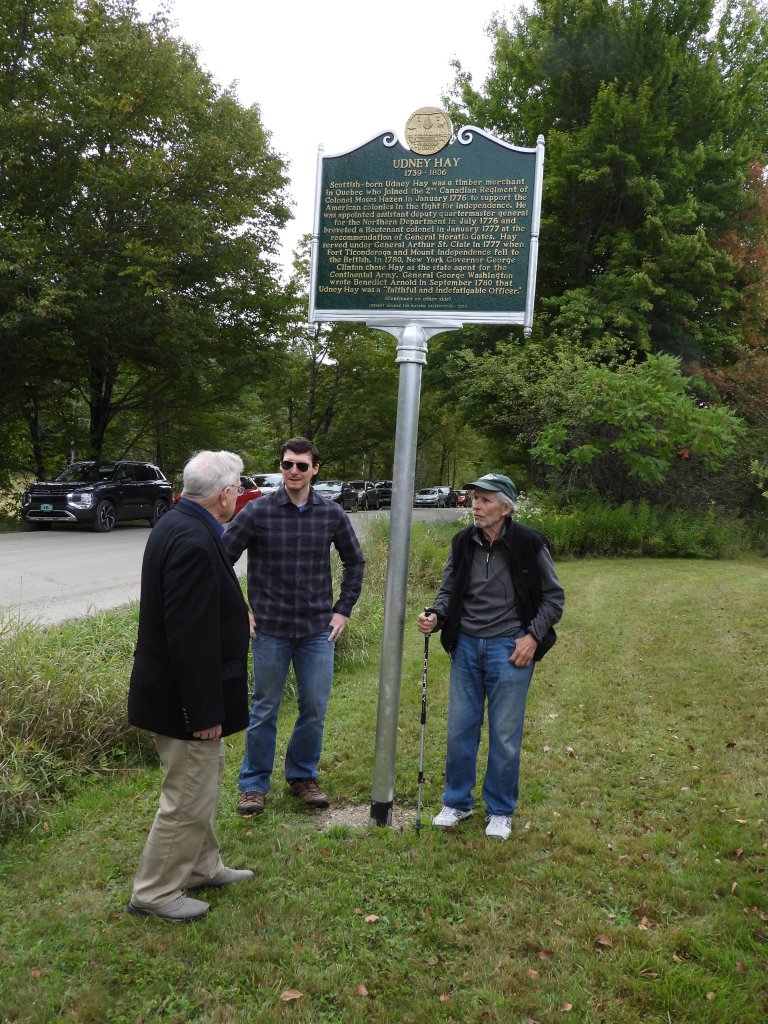
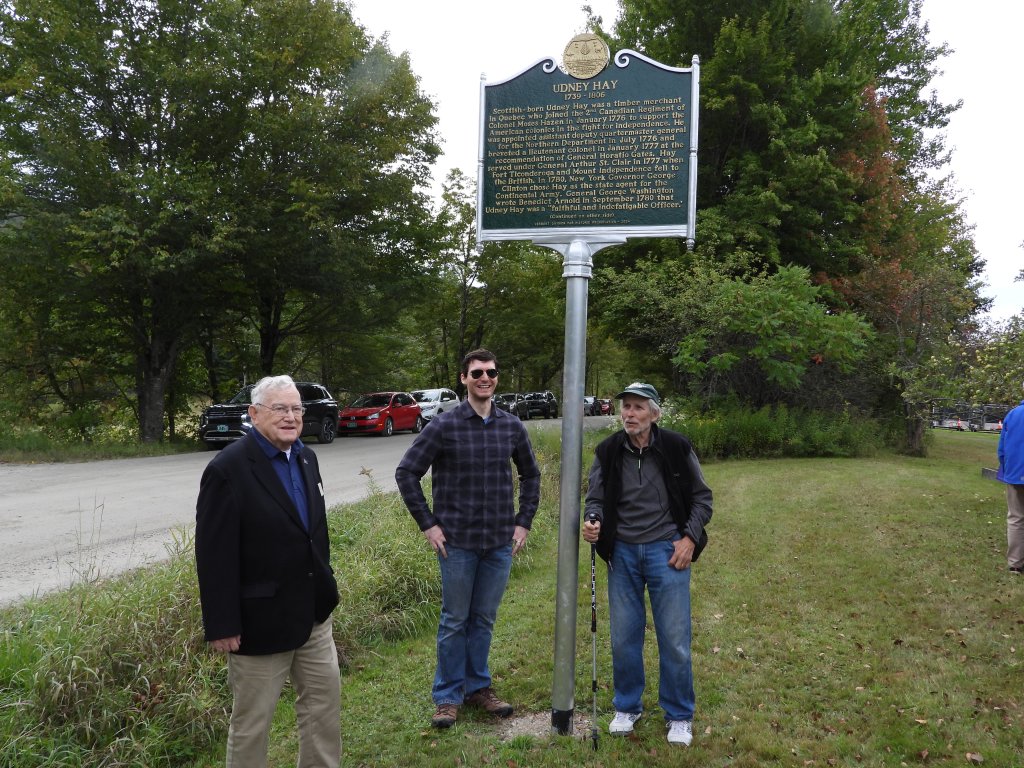
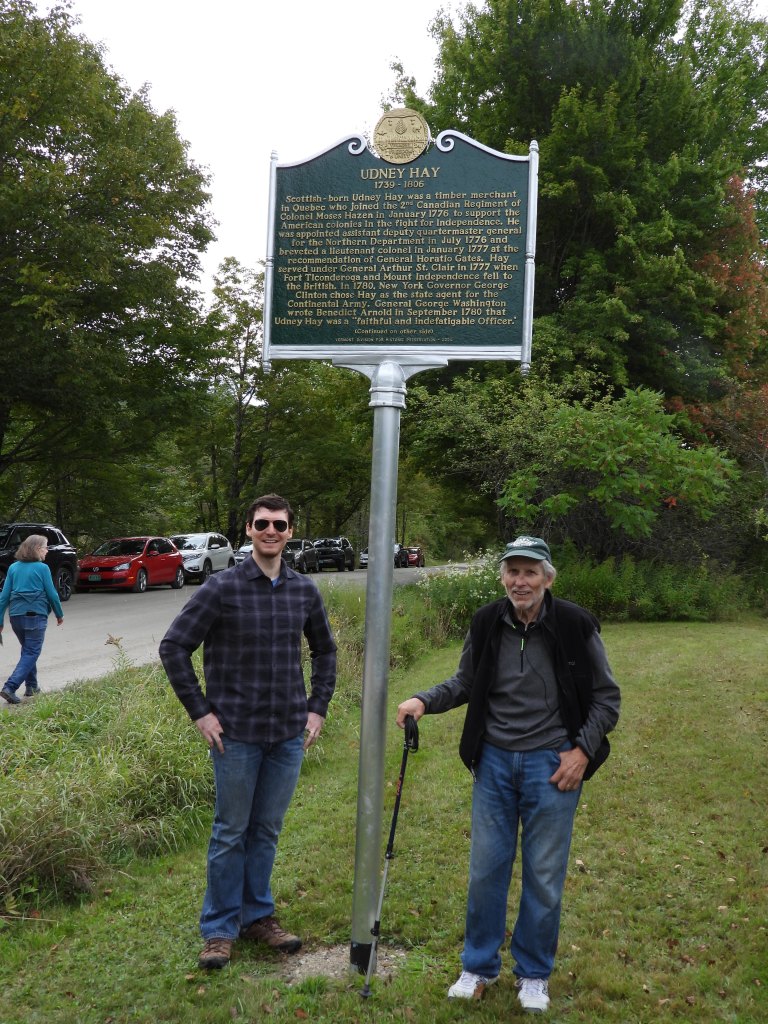
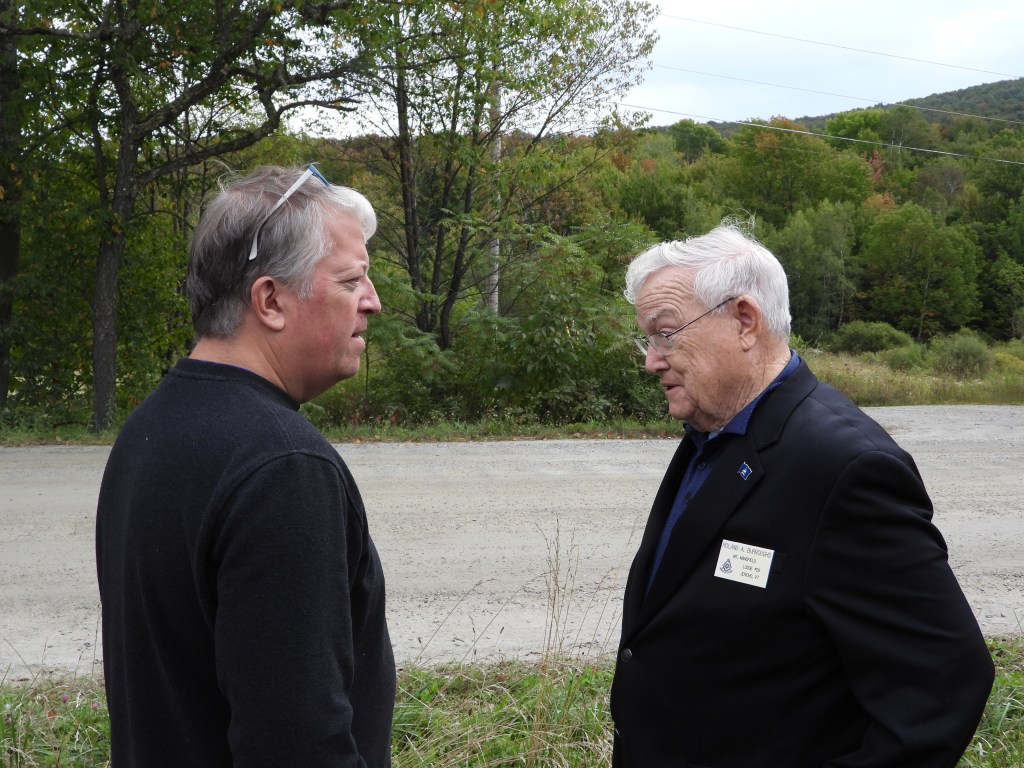
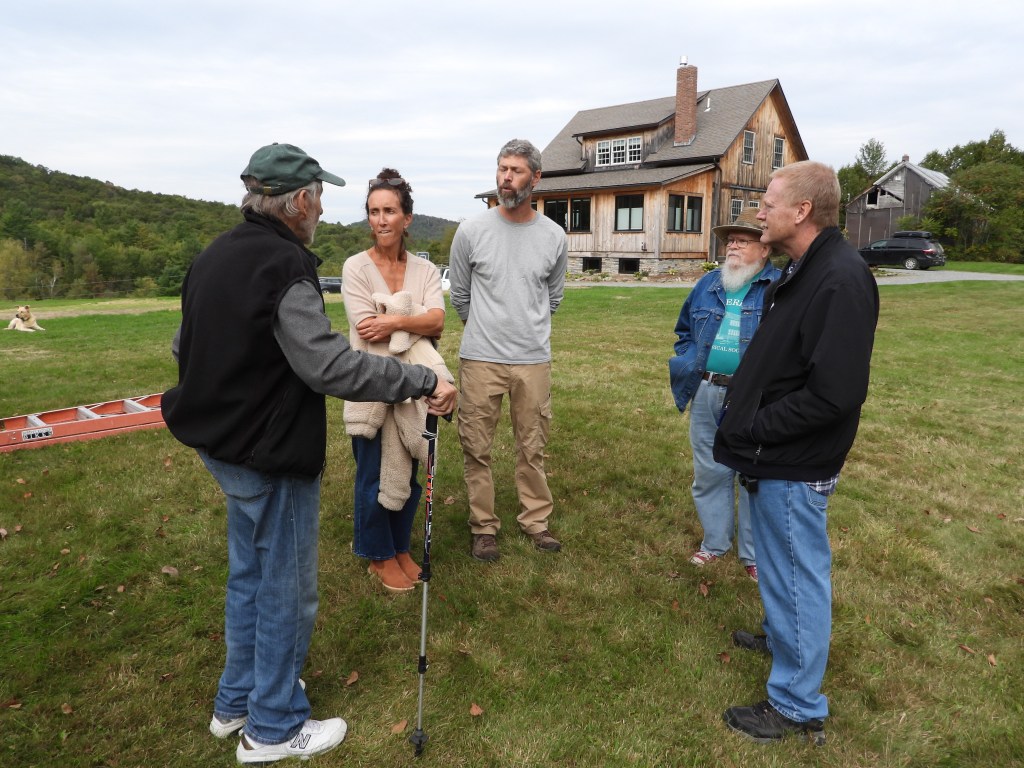
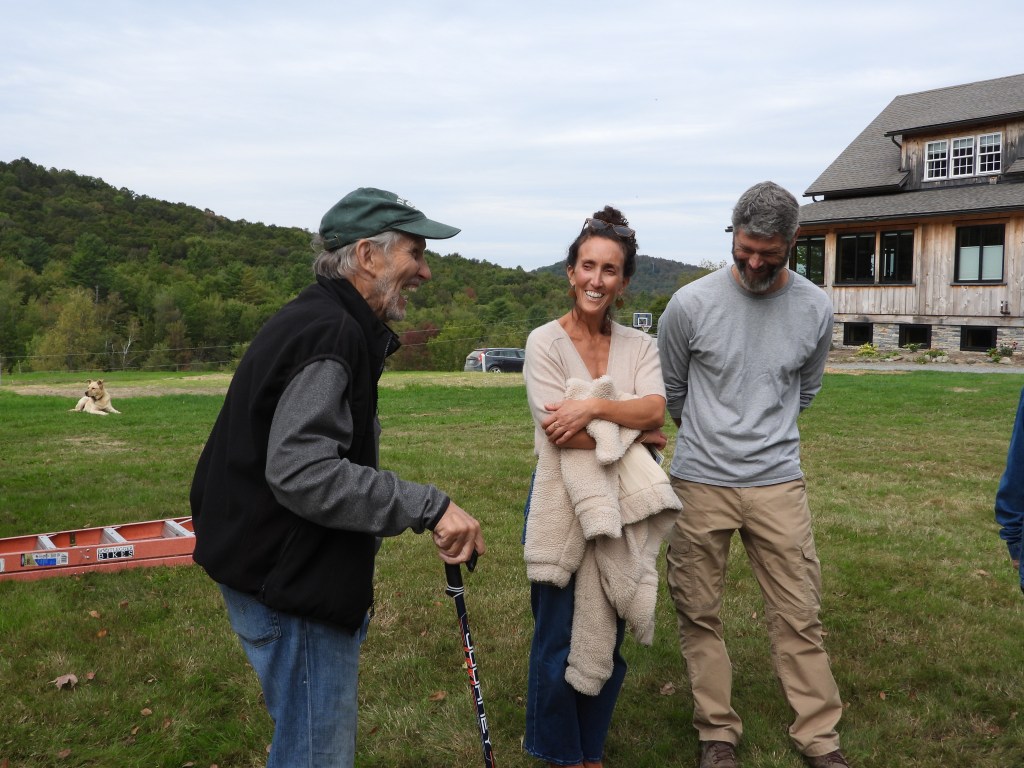
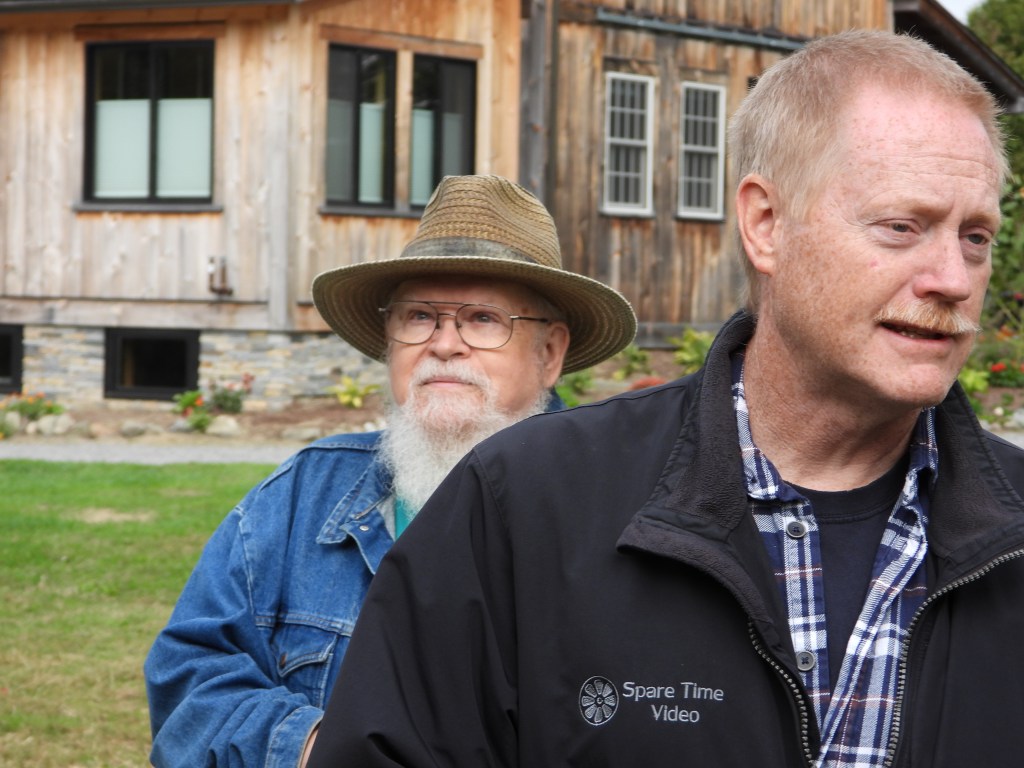
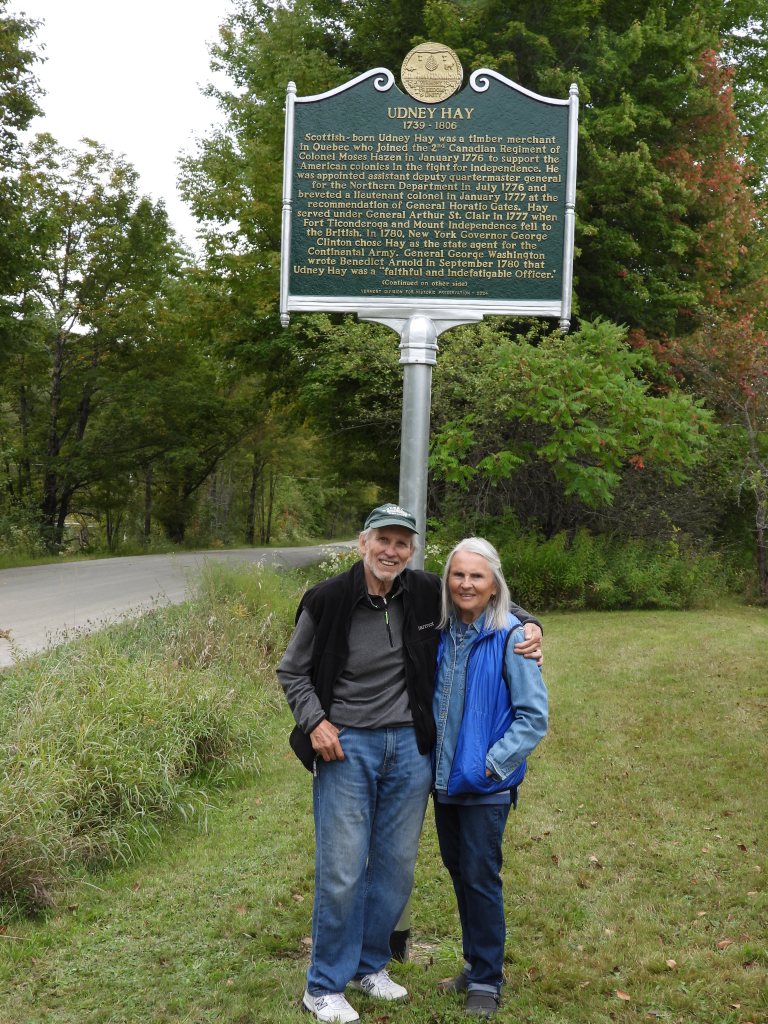

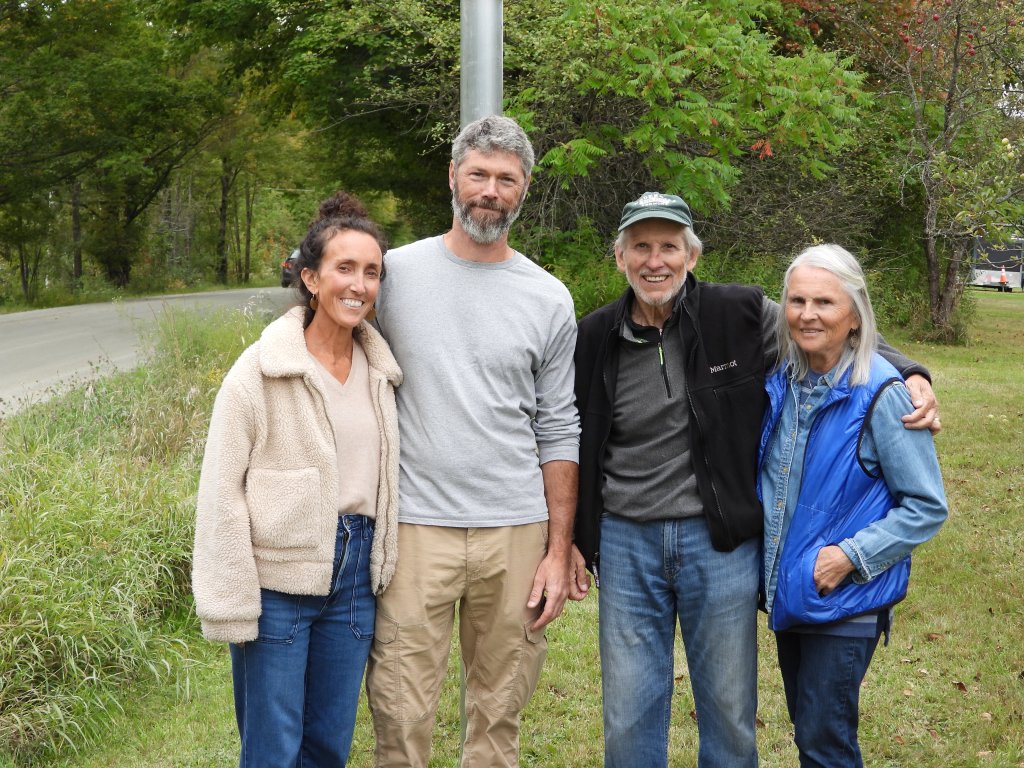

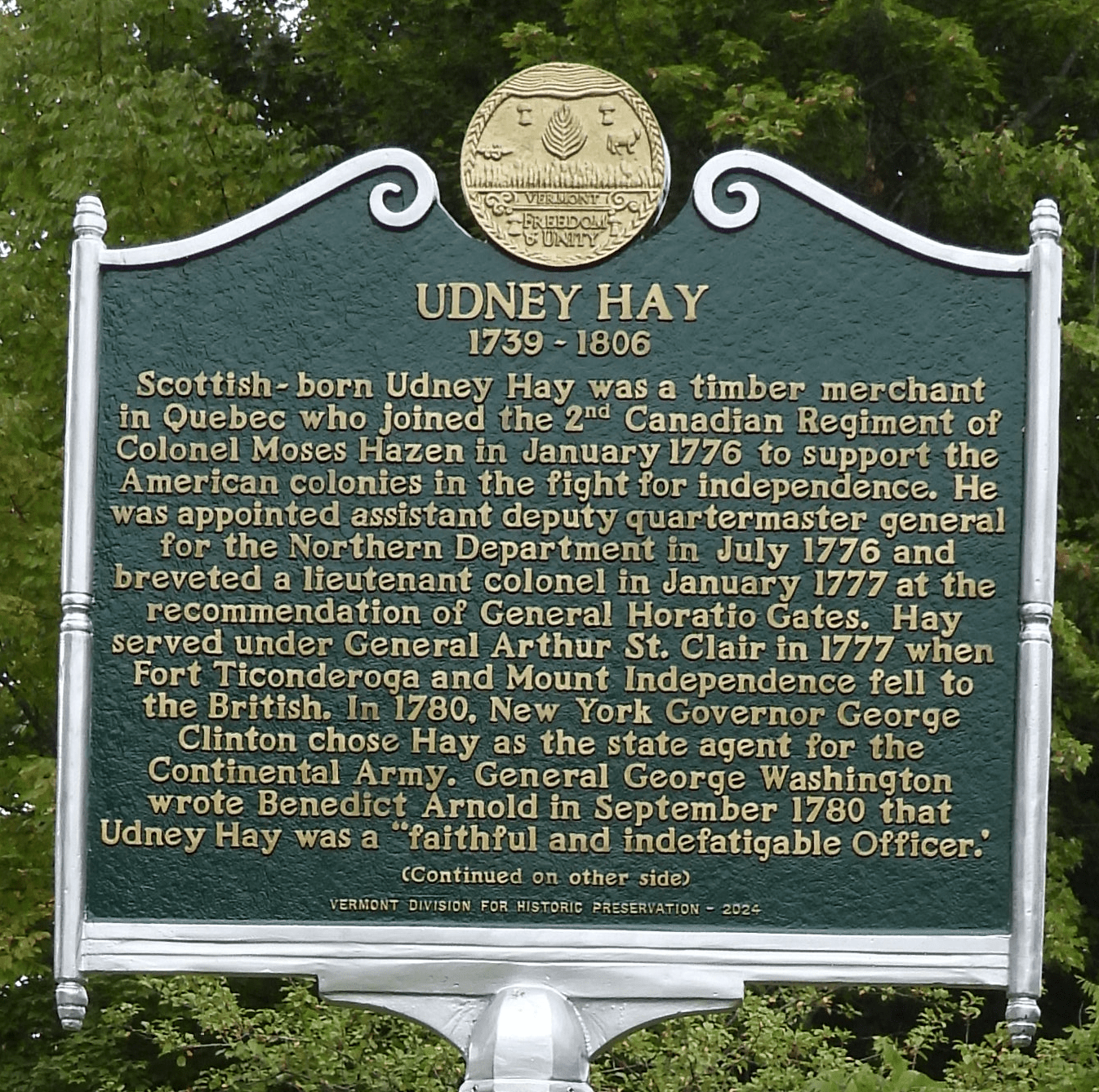
On Saturday September 13, 2025 a dedication ceremony was held for the Udney Hay historic marker set at the site of his original Underhill residence.
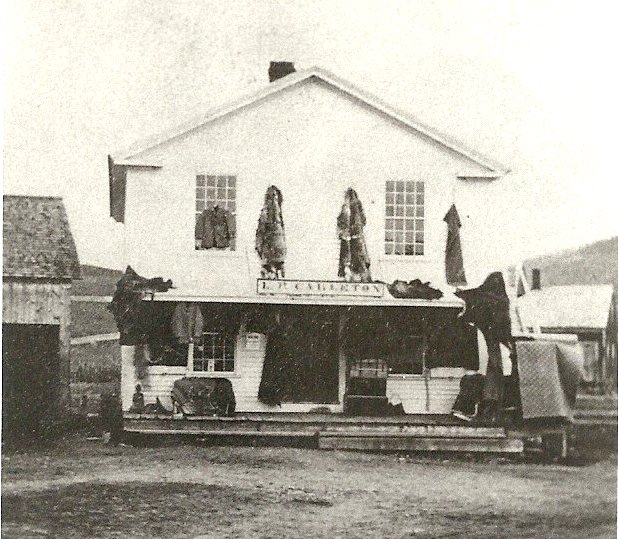
Hope Greenberg presents an intimate picture of rural community life in Underhill in the antebellum years prior to the Civil War.
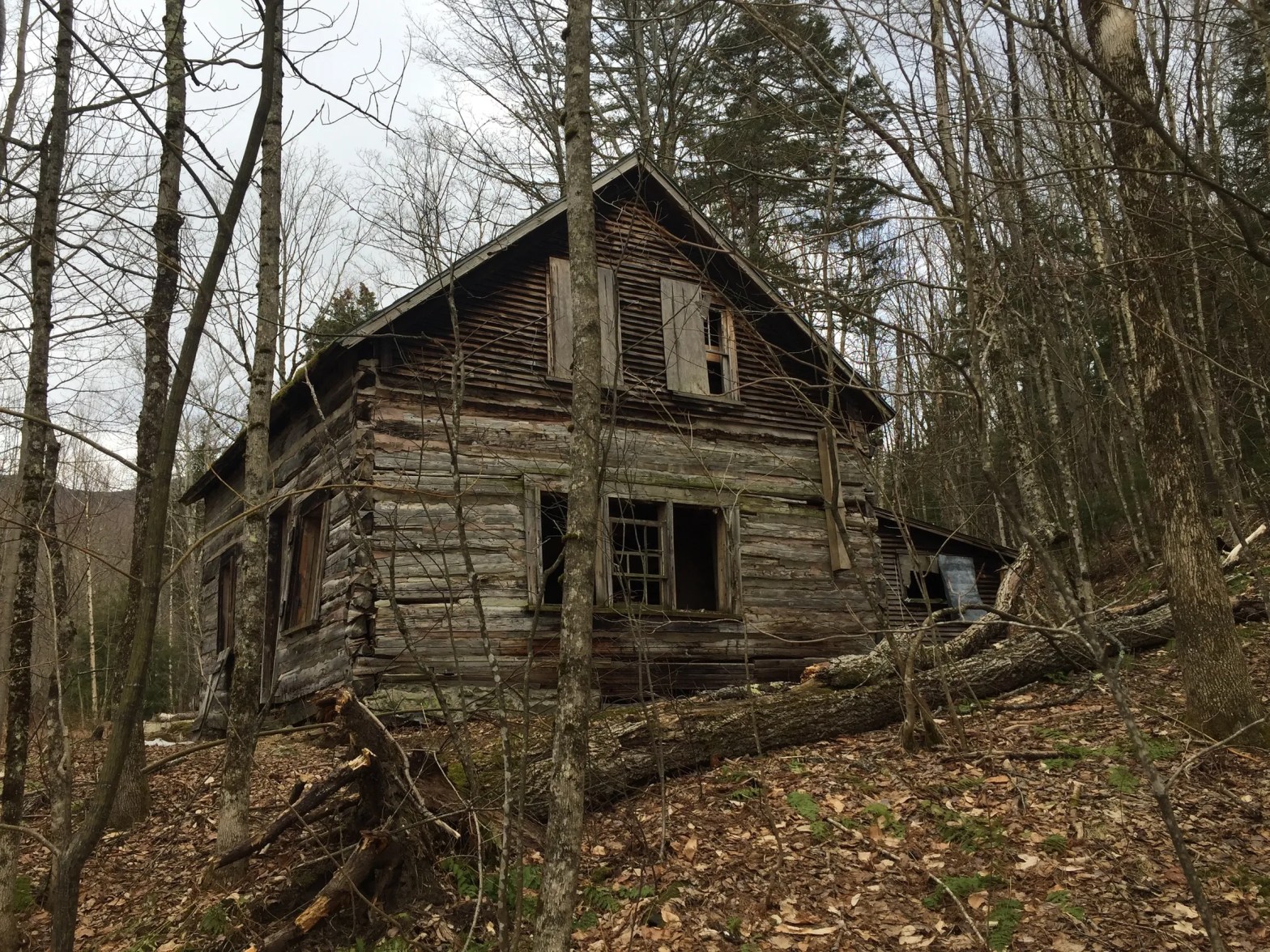
The Stevensville Cabin, built in the 1830s and originally known as the H. Hicks Farm after Hiram Hicks, is one of very few remaining 19th century log cabins in the state. Dating from Stevensville’s early logging days, it is representative of a unique era in Underhill history.
Through the help of generous donations, the cabin is currently being rebuilt with the goal of turning it into an educational space or hiking accommodation along the Nebraska Notch Trail.
For more information, or to make a donation toward the restoration project, please visit https://stevensville-cabin.org/
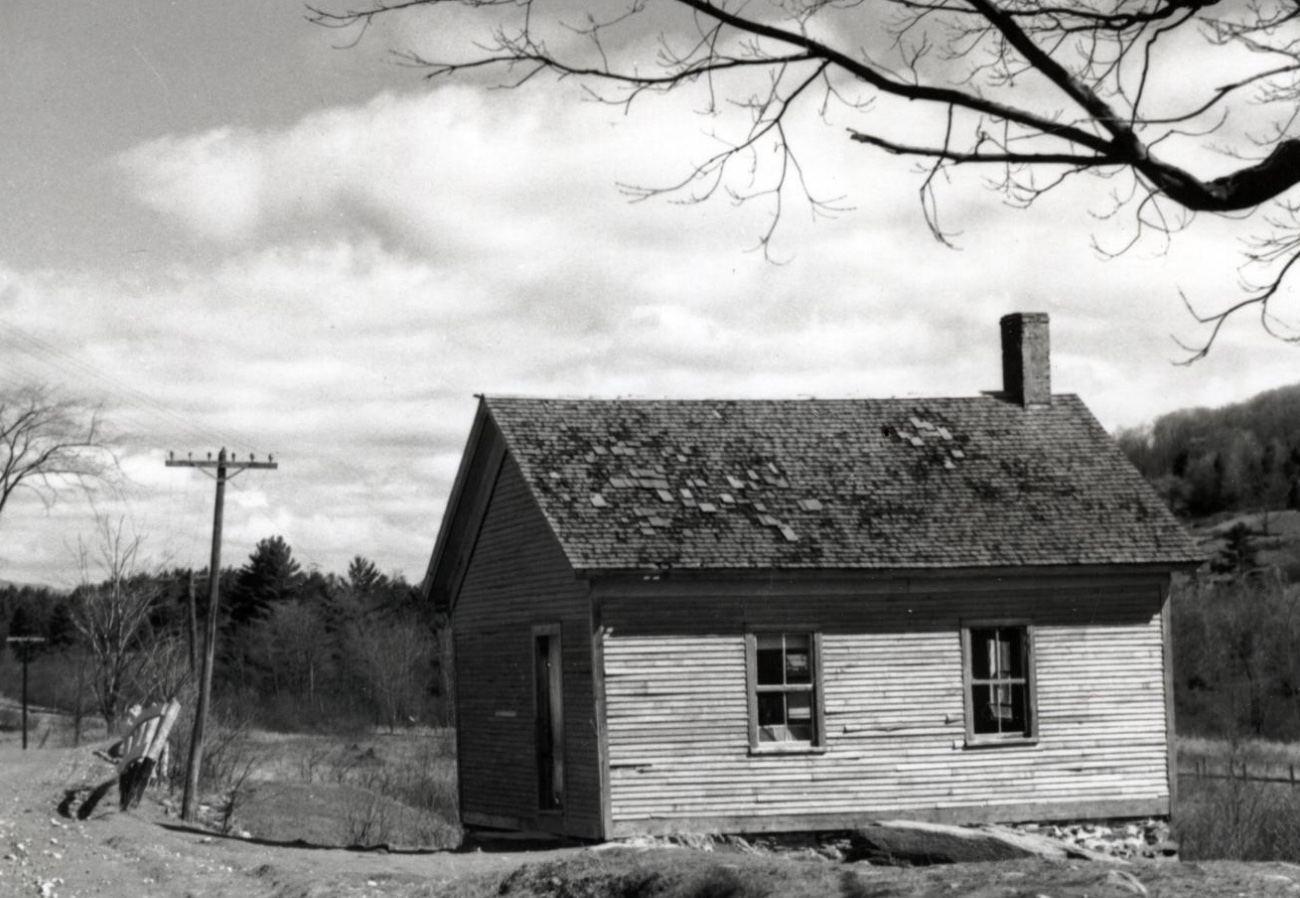
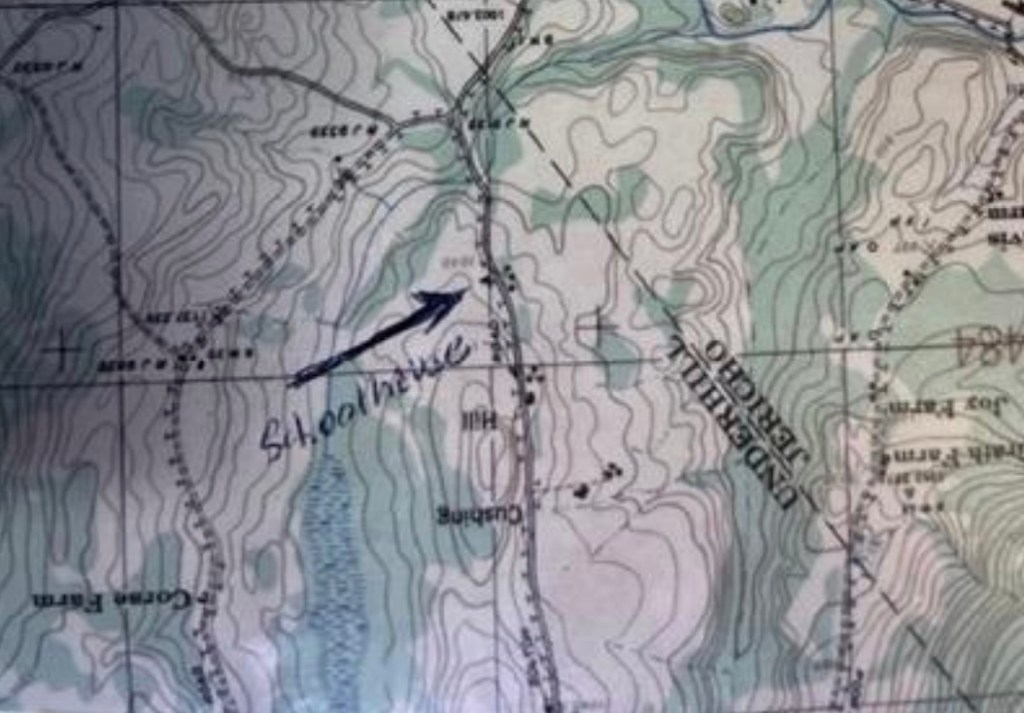
For schoolhouse locations, see interactive map here
Think of the 15 Districts like neighborhoods. The parents of the students largely built the schools and did upkeep as needed. However, in reading selectboard reports/school committee reports there were years when they postponed repairs due to lack of consensus to spend the money to make the repairs. For example, the adults voted at Town Meeting 1829 that repairs would be billed to the students’ families. There was no water or plumbing in any of the school houses. Privies, boys and girls, were built and utilized for as many years as the school existed. One member of each school committee had the responsibility to collect taxes. By 1835, or possibly sooner, tax was collected from all homeowners in the district whether they had students in school or not. In short, each District was on their own in managing their schoolhouse.
In the early years, it was difficult to say the least. Text books were few and far between, and families had to supply textbooks for their children. Students…families, had to supply wood to heat the schoolhouse. As a student if you were sitting far from the stove you were likely cold, and too warm if sitting right next to the stove. Schools had the bare minimum of educational tools, often no books, dictionaries, globes, maps, even writing paper. They had to rely on the teacher to instruct what was often only their verbal knowledge. During some early years boys went to school in the winter, girls in the summer. Sometimes parents needed the children to work the farm and their attendance could be inconsistent. For example, during the 1873 summer term (both boys & girls by this time), there were 108 children in District #5, but only 50 were enrolled and the average attendance was only 34. Graduating from 8th grade was a BIG DEAL, with a graduation ceremony and a diploma. Only a small minority of students went on to High School, as they had to procure room and board at someone’s home while attending High School largely in Burlington or Essex Jct.
Simply stated, “it wasn’t easy”. Teachers were paid little and usually boarded with students’ families. Boarding during a 3-4 month session often meant a teacher would have to pack up and move sometimes weekly, bi-weekly, or at the very least monthly. Each District school committee was responsible to hire their teacher(s). School reports show parents were less concerned about qualifications than what the teacher was to be paid. Most of the teachers were female, however during years in which boys only attended winter term, a male teacher was often hired. Teaching multiple grades was difficult to say the least. Teachers had to be strong disciplinarians, and it was expected they would be. Teachers dealt with poor lighting, poor heating, privies, lack of drinking water, and most importantly the lack of educational tools and supplies. Often the teachers were young women as young as 14 years old. There was constant turnover of teachers due to inadequate compensation, and the poor conditions as mentioned. By 1909 they had a Town School Superintendent, who reported that of the 18 Underhill teachers only eight were high school graduates and only one had formal teacher education.
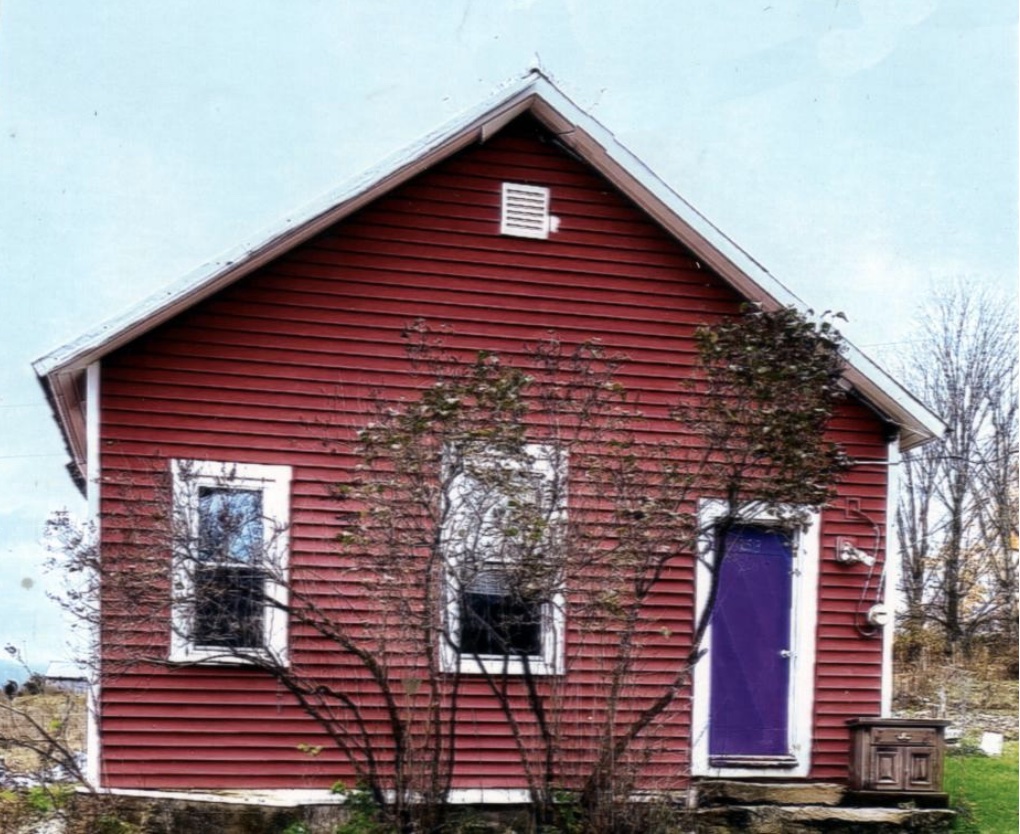
Located on Poker Hill Road (originally “Hill Road”) in operation 1787-1953. The first school was a log cabin. It was said the students sat on wooden bench boards held up by milk pails. Local citizens rebuilt the school 3 times, the last being in 1893. By the 1920’s Vermont instituted statewide educational standards. When a school followed through and was “accredited,” they received the designation “Vermont Standards School.” District #1 was the first in Underhill to be certified. Two families, Morse and Covey, over many generations were active as school teachers and/or school directors. The photo of the red house is the location on Poker Hill where the last (3rd) school house stood. In the other photo, one can see the stone foundation of the original schoolhouse location which is only 75 yards north from the red house.
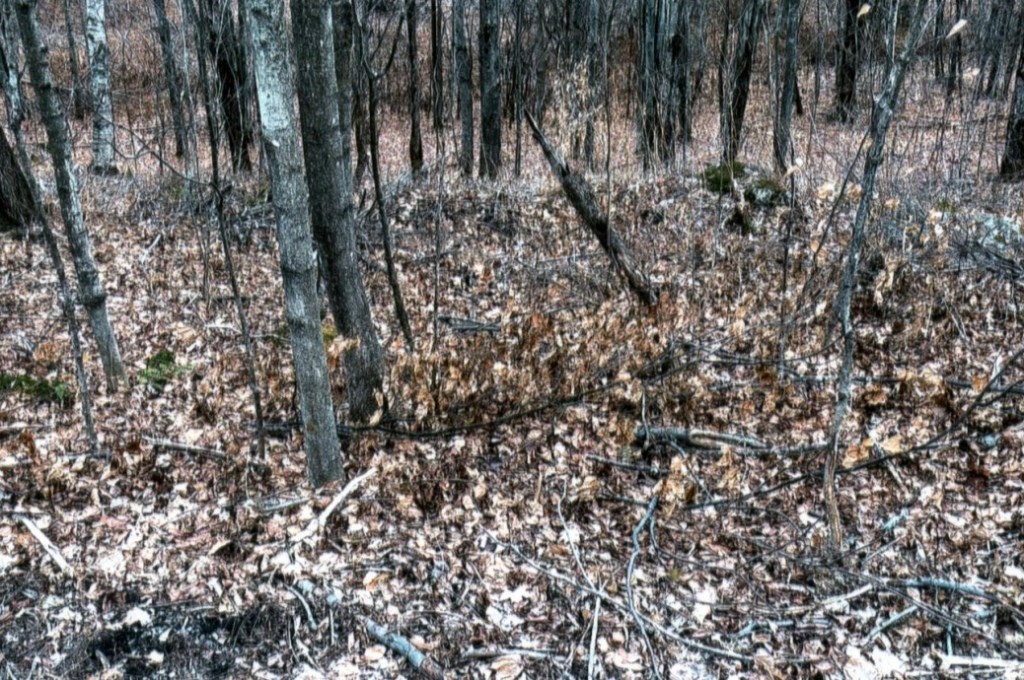
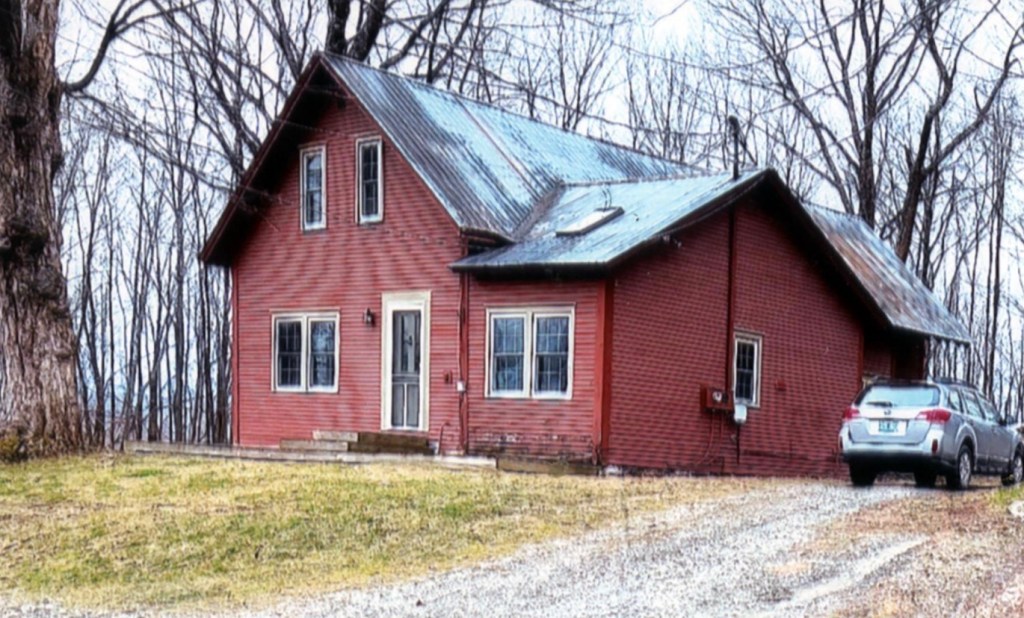
In the early years it was referred to as the (Poker) “Hill Road School.” It is situated on level ground above Birge Homestead/Tavern (Built 1802). This school operated until 1930. It is believed to have been built around 1797. Water for students was provided by the various owners of the Birge Homestead, and students wanted to fetch the water as there was an apple orchard there for them to eat apples while fetching the water. This schoolhouse was sold for $300 in 1947 and moved to Machia Family Farm 1 mile away. The photo of the “trees” is the approximate location of District 2, just north of the 1802 Birge Homestead.

The school’s first location appears to be on the west side of “Flatts Road” (Route 15) near the junction of “Flatts Road” and “Hill Road” (Poker Hill Road) according to the Walling Atlas map of 1857. This location was further confirmed by local map maker Martin Hapgood in 1858. The Beers Atlas map of 1869 shows that school was moved alongside Roaring Brook at the end of Dumas Rd, directly across from the Humphrey (Mill) Homestead on Poker Hill Road. The current house photo provided was the location of the old schoolhouse. It was in operation beginning in the first decade of the 1800’s and closed in 1892.
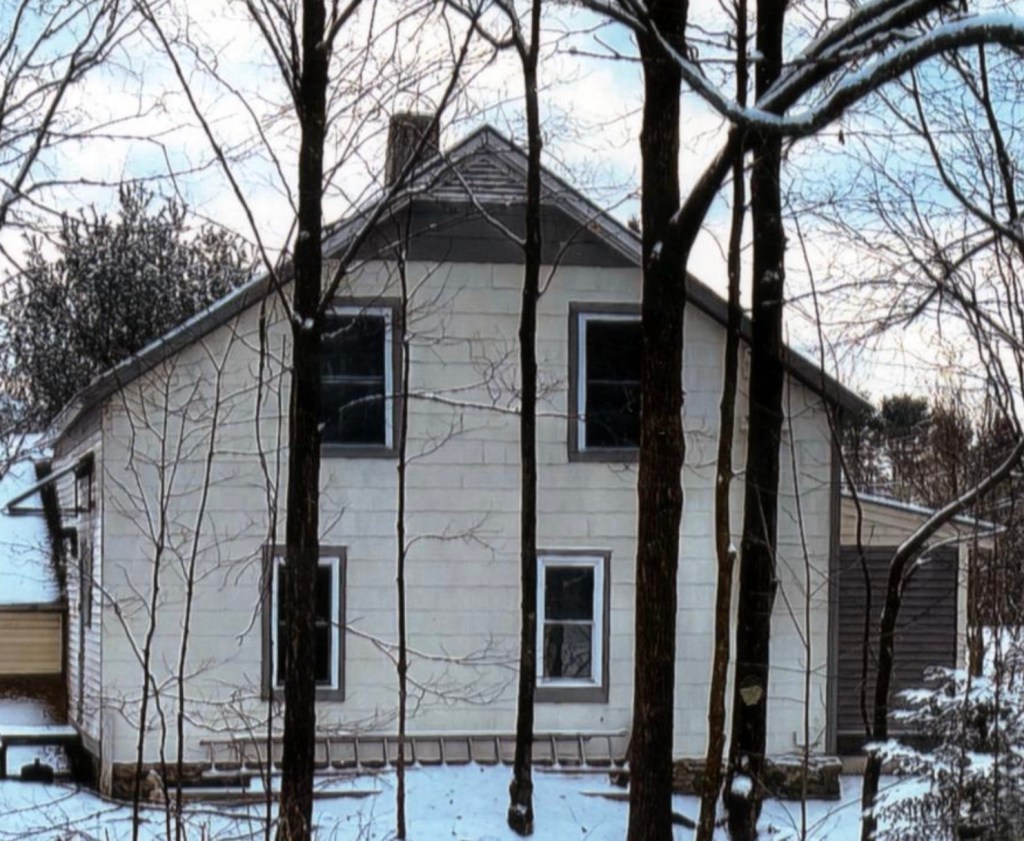
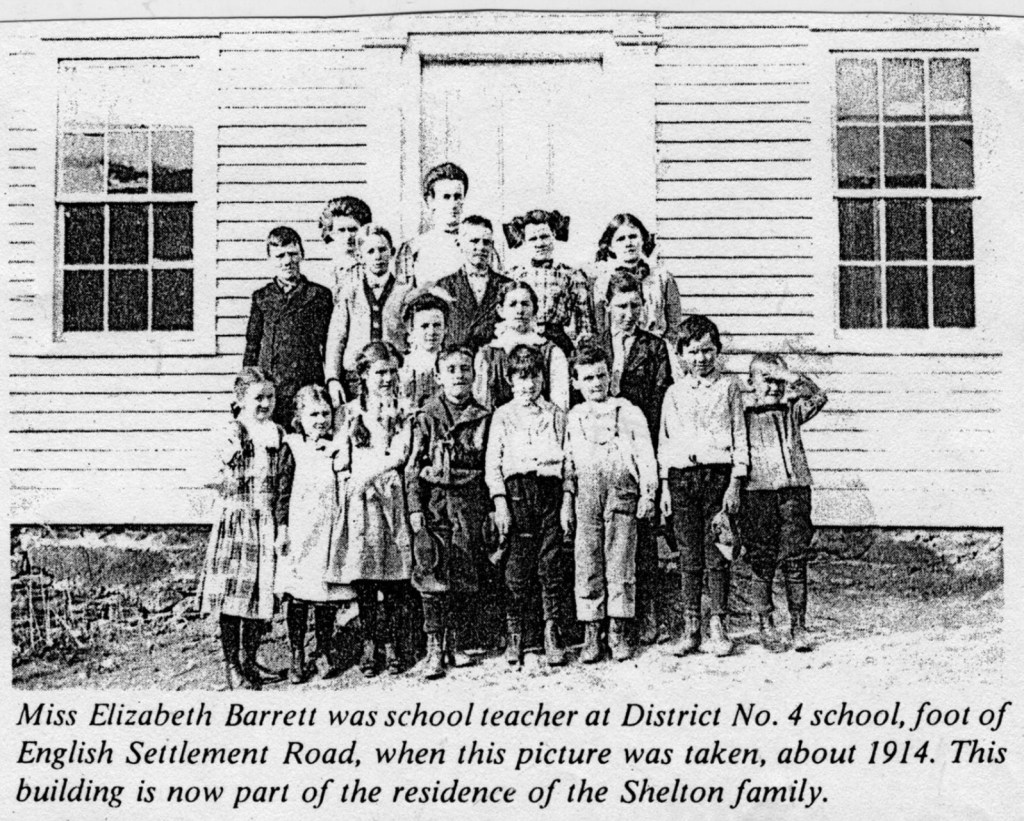
The River Road School formerly stood on the south side of River Road, opposite where the Lower English Settlement Road intersects River Road. Part of this school is believed to form part of the home on the westside corner of River Road and Lower English Settlement Road. The story was told that the students planted 3 maple trees in front of the school and also buried a bottle with the students’ names along with the 3 trees. Elizabeth Barrett was a teacher from the early 1900’s. The Historical Society has a music book with handwritten lessons on teaching music by a Miss West. This school is believed to have been started as early as 1814, but not utilized every year. However, it was run continuously from 1857 until around 1920.
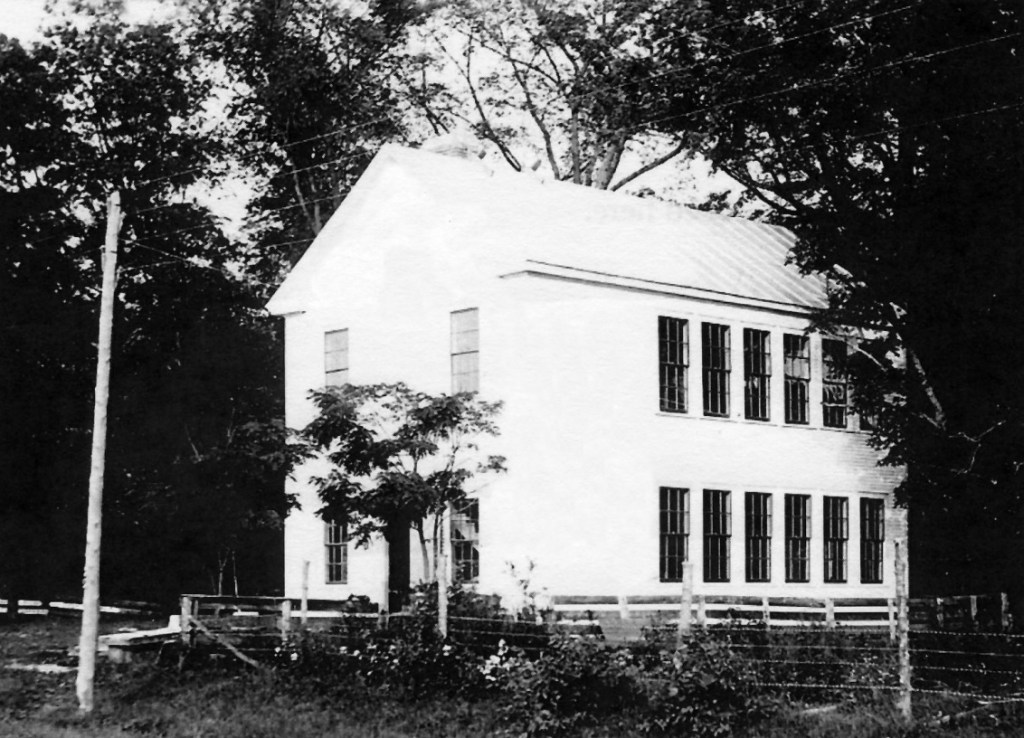
The first school building for Underhill Center was built nearby in 1823 and was replaced in 1836. These were both log construction. In 1860-1861 a diphtheria epidemic forced the townspeople to turn the schoolhouse into a “pest house” which they eventually burned down. In 1861 the schoolhouse was built as a one-floor schoolhouse, and a second floor was added in 1915. Underhill children were educated here for 90 years despite no running water and plumbing. A damaging fire in February 1951 prompted the townspeople to build the Central School, opening in September 1953. The Underhill Historical Society’s efforts preserved the building by 2019, and the schoolhouse is listed in the National Register of Historic Places, as well as recognized with a Roadside Historic Sign through the Vermont Division for Historic Preservation.
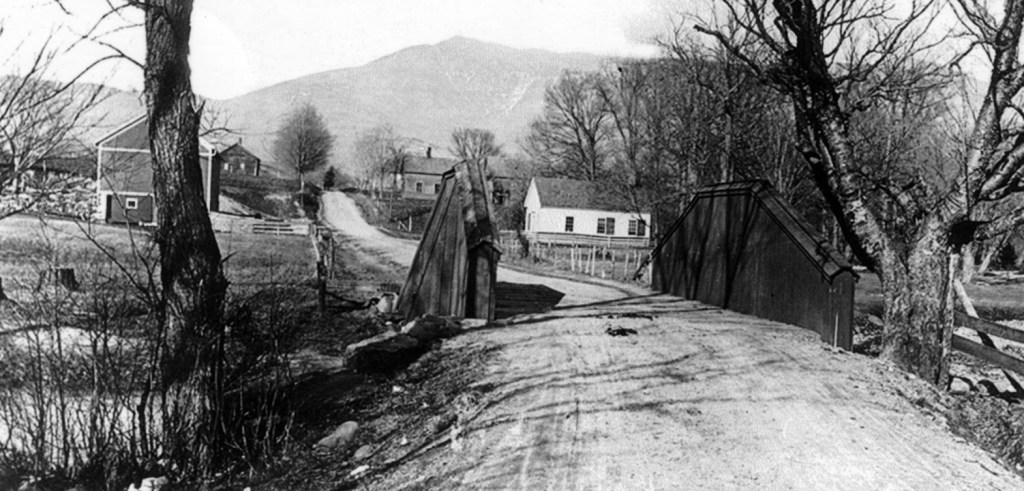
This school, built around 1828, was in continuous operation till 1953. Located on Rt. 15, just south of Gerts Knob Lane, on the east side of the road (later moved to the west side). According to the Schools Report, in 1845 there were 30 students and school lasted 6 months that year. Most schools in the early 1800s were in session 3 months in summer and 3 months in winter. The Creek Road School was certified as a Vermont Standard School in the 1920s. Teachers worth noting were Lillian Cross, mother of well-known local photographer Earl Cross, and Miss Majorie King who was one of the few teachers who graduated with formal teacher education from the Johnson (VT) Normal School.
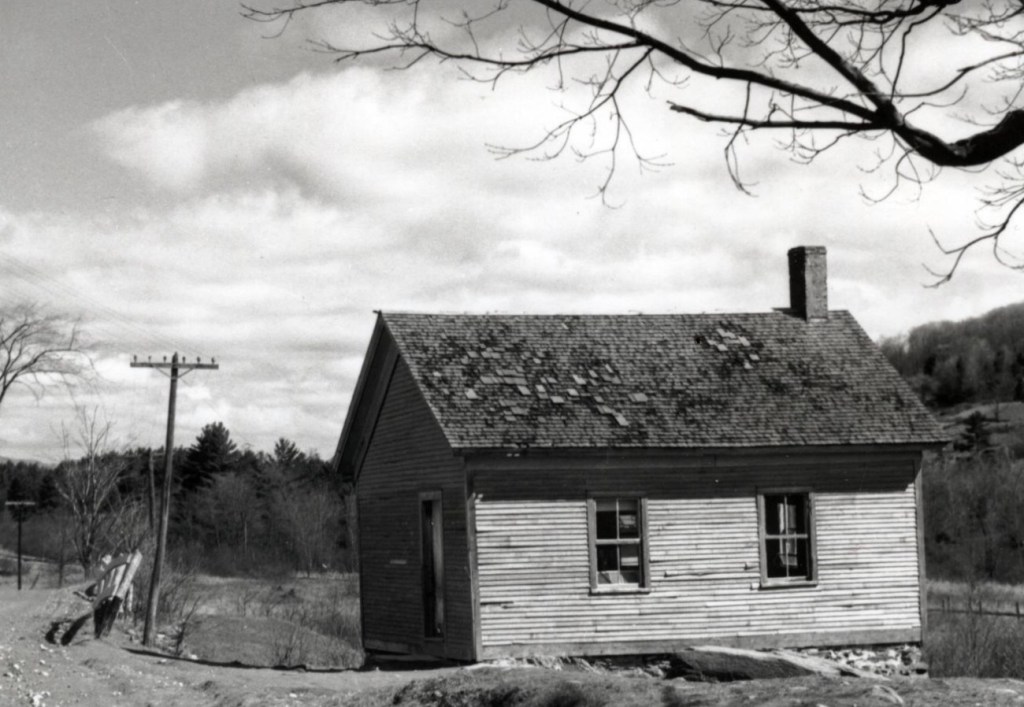

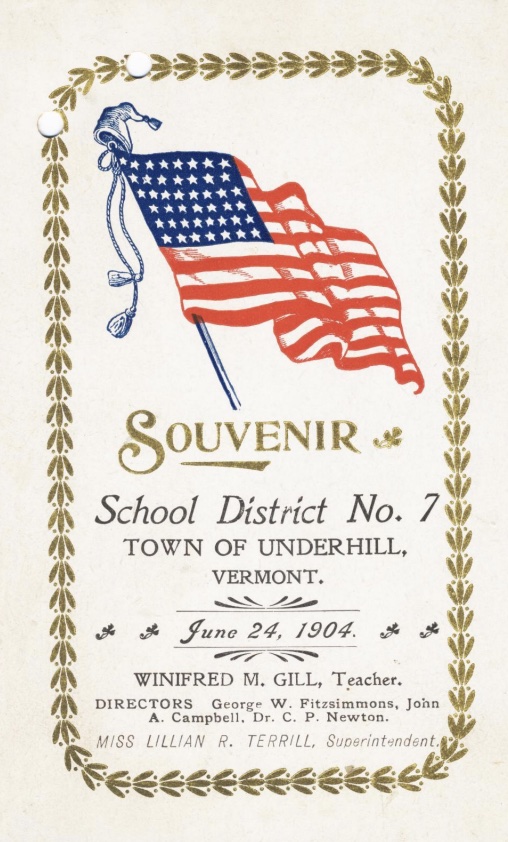
This schoolhouse is located on Cilley Hill Road at what is now the Rawson Farm property. Before the War of Independence, New Hampshire Governor Benning Wentworth reserved for himself 500 acres in the corner of Underhill abutting the towns of Essex, Jericho, and Westford. From this parcel he granted land for the Cilley Hill one-room school which was always known as the Governor’s Rights School as well as its designation as District #7. This school was known as a “fractional” school meaning that students from the bordering towns attended as well. The Governor’s Rights School is currently used as a residence.
Hutchville was a community largely dedicated to the logging enterprise owned by James Hutchinson. Located on what is now the Camp Ethan Allen Training Site, this school operated in the years 1845-1909, although not continuously. Housed on the first floor of the main boarding house located near the junction of Beartown Road and West Bolton Road (Krug Road), the school served pre-school, kindergarten, 1st, and 2nd grade students. Those children who were old enough walked 2 miles to school. This was also another “fractional” school as youngsters from Jericho and Bolton also attended.
Located just beyond what was known as Maple Leaf Farm (leased by ReTribe Transformations since 2017), it is believed that the school was built in the early 1840’s and was in use until 1919. According to the 1845 School Report, there were 24 students. Girls attended for 3 months in the summer, boys for 3 months in the winter. The schoolhouse burned down in 1982.
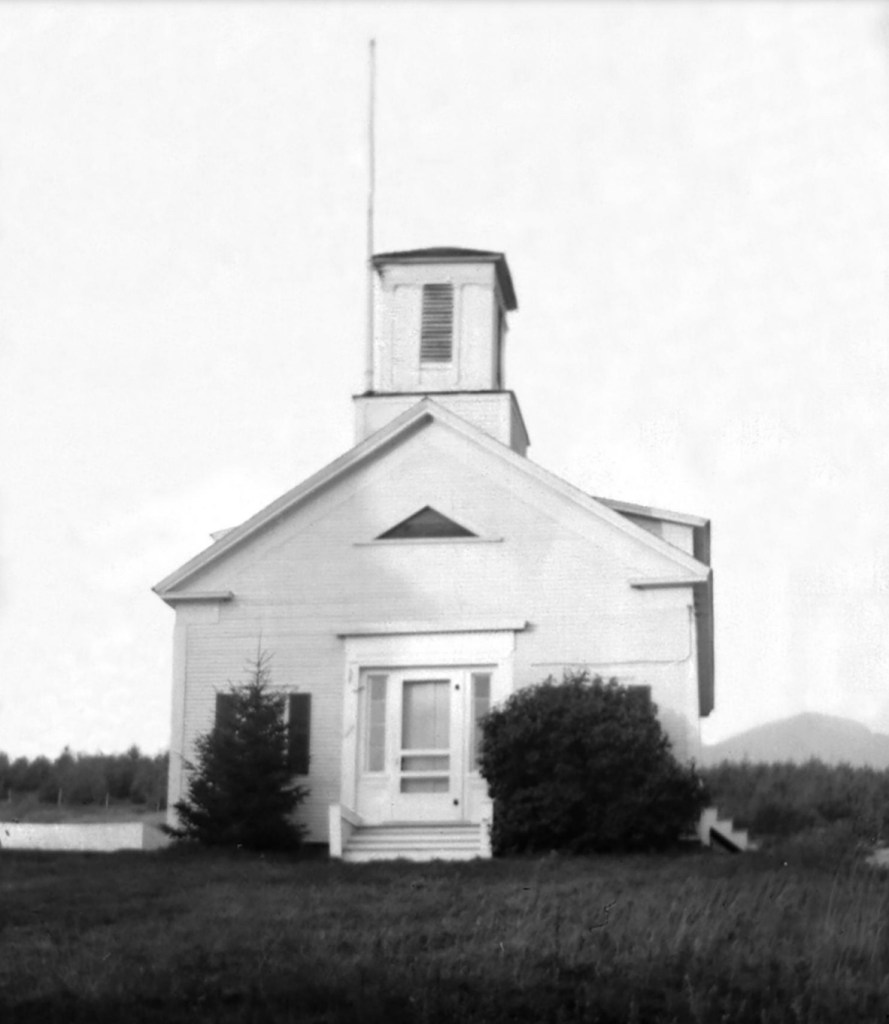
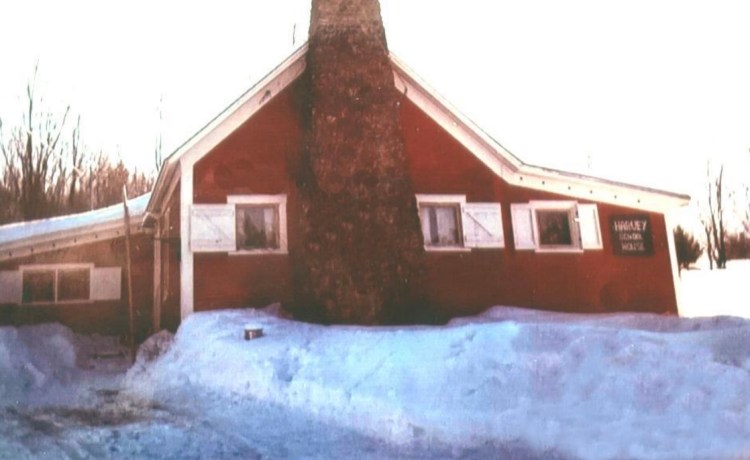
Located about 450 yards north of the Harvey Road and Pleasant Valley Road intersection. Original meeting notes voting to build this school in 1830 are in the Historical Society’s files. The school was in use from 1830-1911 and later converted to a residence. This photo, taken in 1970, shows that the schoolhouse was the main part of the residence. The building burned down in 1985.
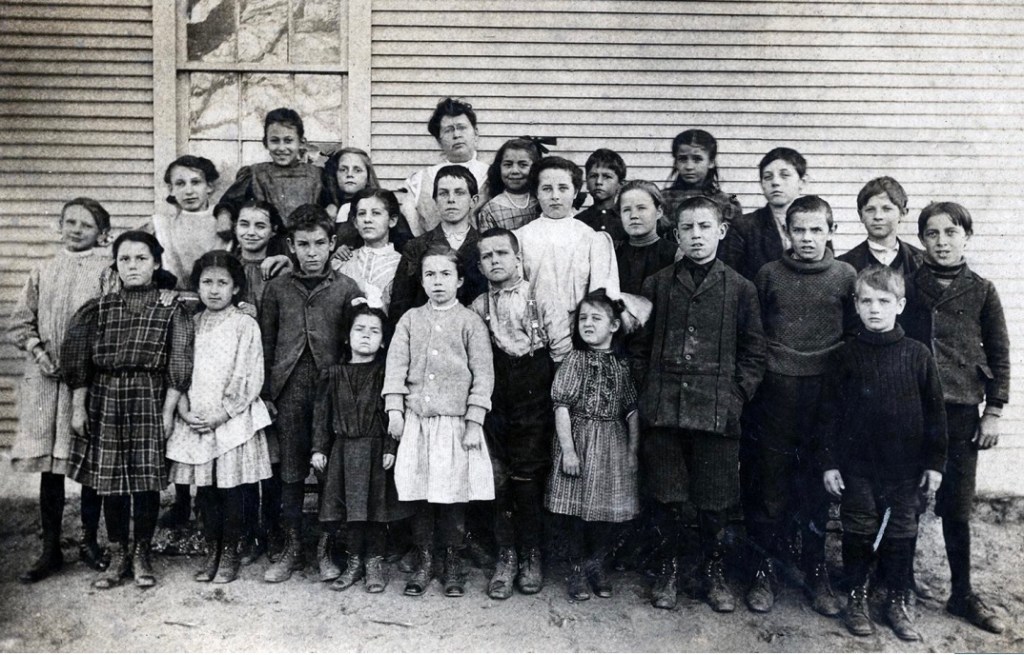
Located on Pleasant Valley Road, near the intersection of Deane Road. This school was in use from 1844-1920 and had a large attendance. In 1845, 76 students attended–boys for 3 months during the winter and girls for 3 months in the summer. This was a “fractional school” as children from nearby Cambridge attended as well as Underhill students. The building was used for various community functions, including a dancing school in the late 1920s. Their Saturday night dances had rules–no drinking (!) and girls were not allowed away from the building alone. The building is still standing.
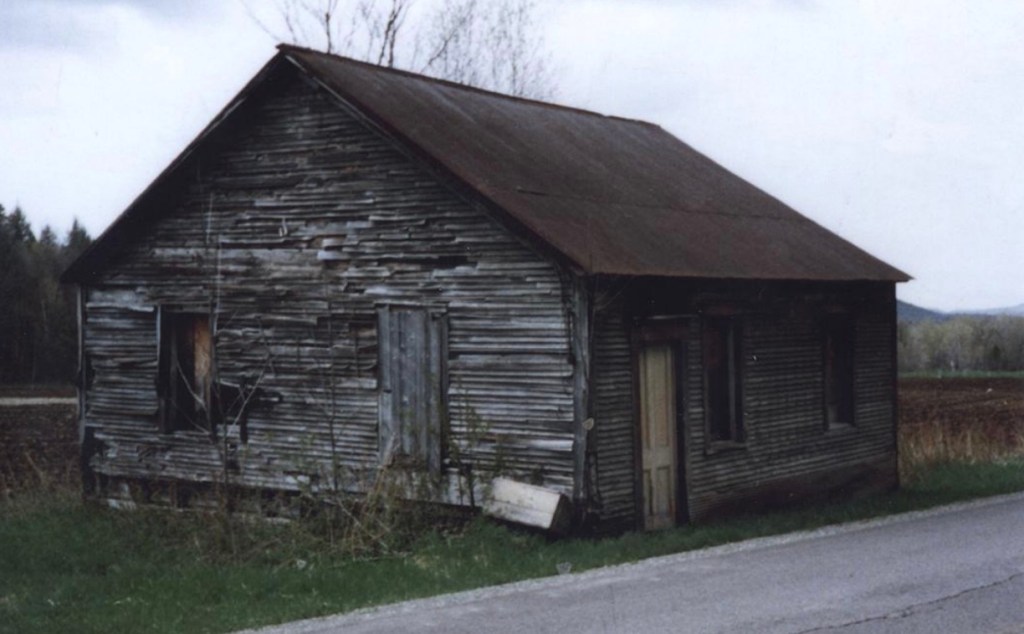
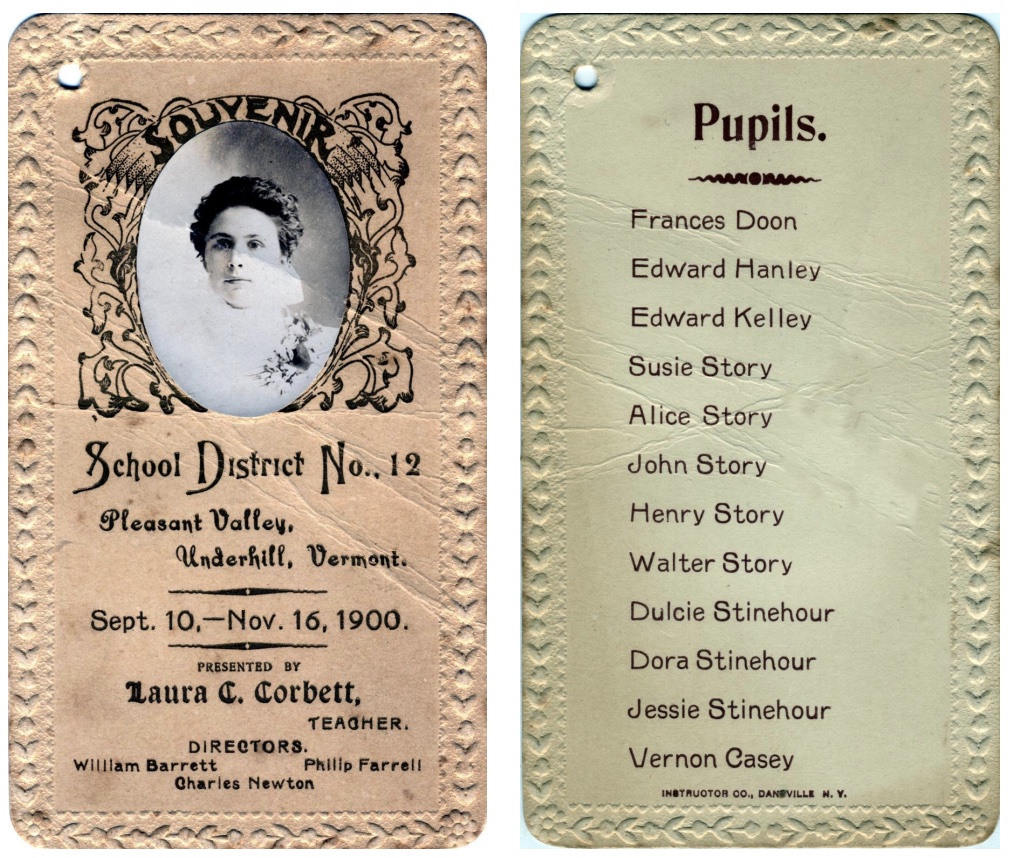
At the intersection of Doon and Irish Settlement Roads. This school was in continuous use 1867-1953. Earlier, there also was a log cabin school just up Doon Road which was in use 1840-1866. District #12 was well attended. One year there were as many as 75 students. The school was small, and sometimes students actually sat in each other’s laps or on long benches with 5 or 6 kids to a bench. To keep the big old stove going each week, the students’ families provided wood. Emily Flynn is probably Underhill’s best known teacher of the early 20th century, having taught for 50 years mostly in Districts 12, 13, and 5. Irish Settlement Road/Doon Road was certified as a Vermont Standard School in the late 1920s. This school still stands and is used as a part-time camp.
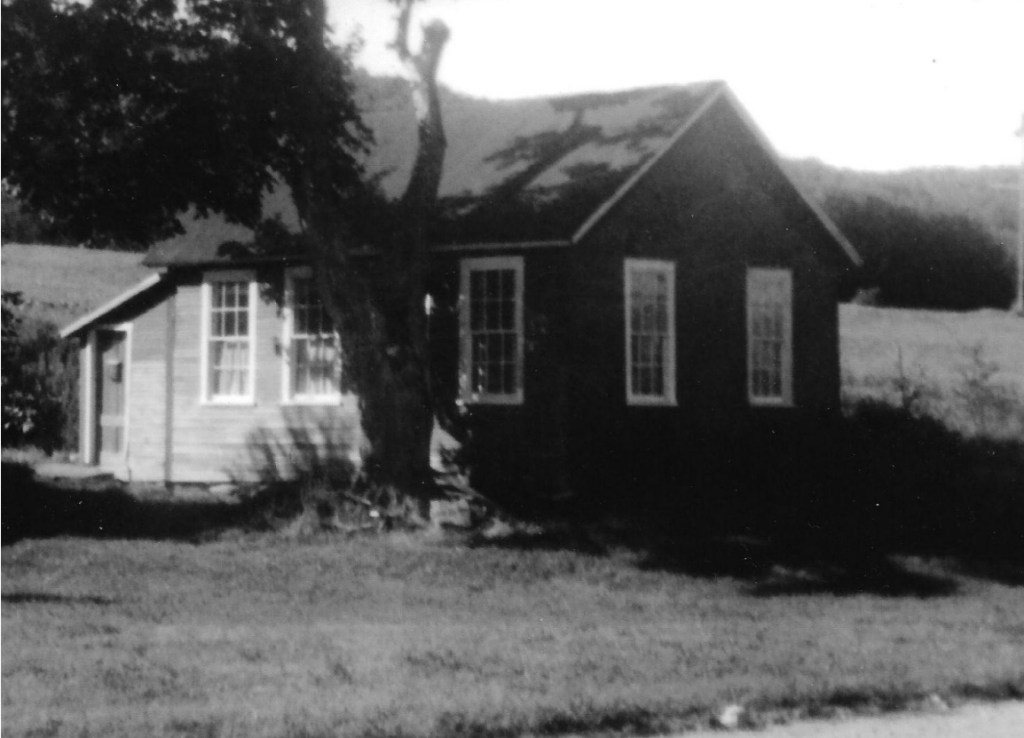
Near McClellan Farm Road. Built in 1839-1942, this school is still standing. Lillian Cross taught here, as did Emily Flynn. The 1845 School Report shows 15 students attended that year. In the 1901 Town Report, there is a statement: “Privy is attached to the building… this ought not to be.” Students raised money for the Red Cross to help with the aftermath of the disastrous flood of 1927.
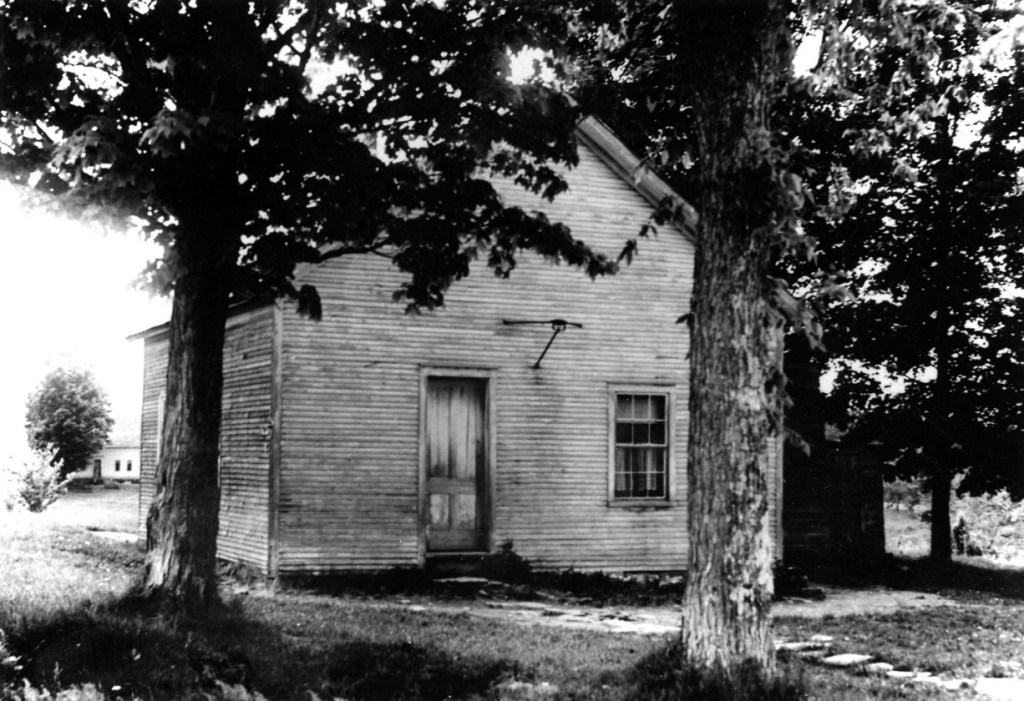
Located approximately 1.3 miles from the intersection of Irish Settlement Road and Sand Hill Road. In use from 1858-1920. It is mentioned in the Town Meeting book dated 1827 that an early school was near here. The district was called (Rufus) “Forbush District.” Emily, Nellie, and Alice of the Flynn family taught a few years here, though all in different years. The photo shows this school’s stone foundation on the east side of the road.
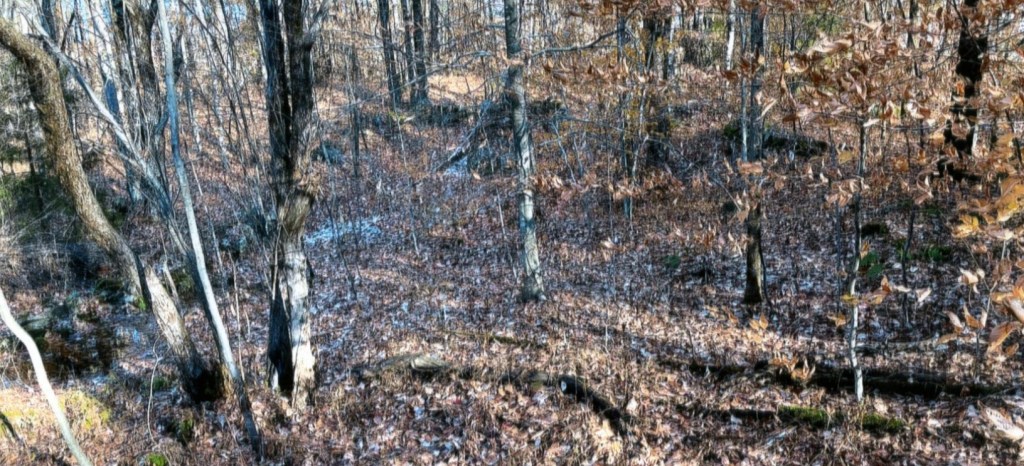
Located on the Mountain Road near the “Green Camp/Halfway House area” in the State Park. This was a log building. Classes were taught by 14-year-old Mary Breen. This school operated for a short time in the 1860’s. Mary went on to teach in different district schools, and she also became School Superintendent in the late 1800s into the early 1900s.
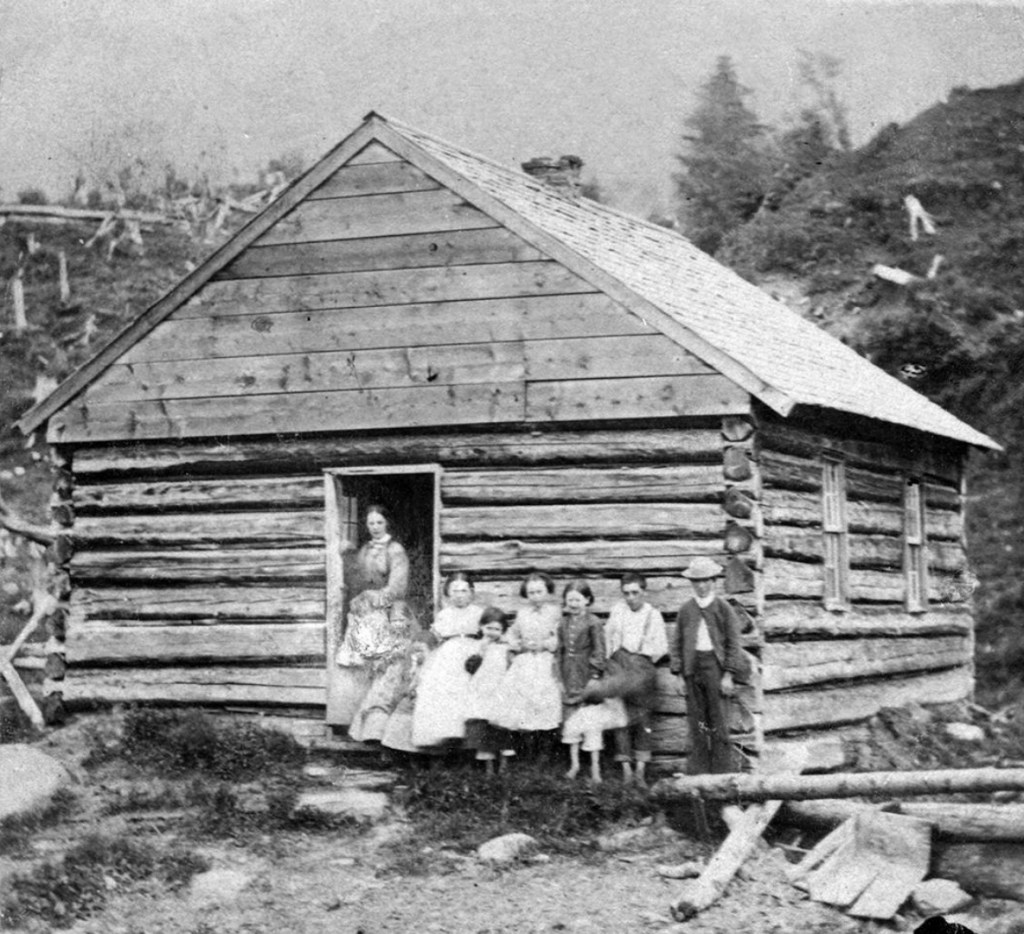
The help of many ‘along the way’ made the research fun. Without their help, this project would not have been possible. Many thanks to everyone:
Research:
Photography:
Sources Utilized:
Roger Frey – President
Underhill Historical Society
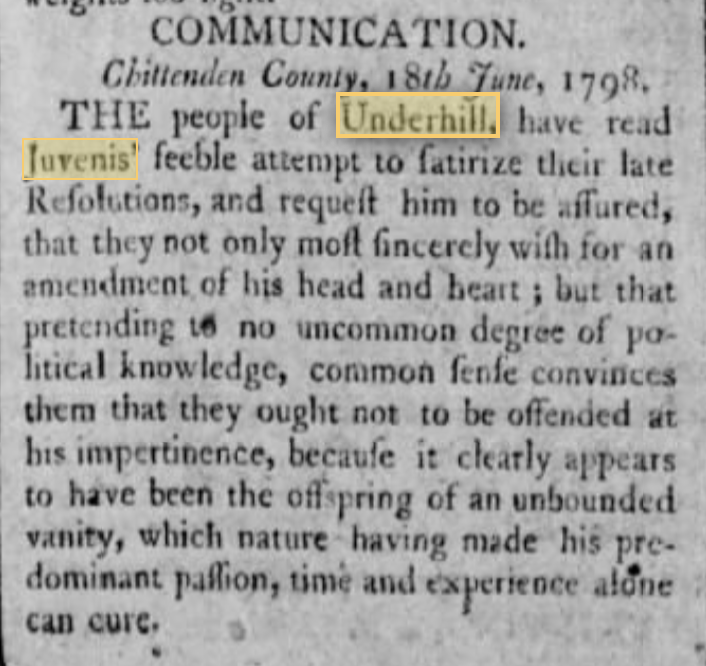
During the 1790s, Americans were divided between whether the United States should more closely align itself diplomatically with Britain or France. Federalists tended to favor Britain for cultural and economic reasons while Democratic-Republicans tended to prefer France. In 1798, amid growing tensions between the new French Republic and U.S., a diplomatic incident known as the XYZ Affair managed to outrage Americans enough to provide some political unity in opposition to France. The incident involved three American diplomats sent to France to negotiate an end to tensions in the hopes of avoiding war. Upon arrival, however, the French, saddled with ongoing war, demanded payment of money from America before the diplomats would be seen. Even to Francophiles, the French demands represented an affront to American sovereignty and resembled past British insults.
Many towns across America responded to the XYZ Affair with public statements against France.1 Underhill drafted its own response and published it widely, possibly in the hopes of eventually reaching readers in France through subsequent publications. The Underhill Resolutions offer a glimpse into the political thought during the town’s infancy and reveal a deeply connected community seeking involvement in national and even international politics. The text below has been transcribed from the May 25, 1798 edition of The Green Mountain Patriot of Peacham, VT.
The Green Mountain Patriot – May 25, 1798
For the Green Mountain Patriot. Messrs. Printers,
By giving the following a place in your paper, you will give an additional proof of your impartiality, and oblige U.H.
A number of the inhabitants of Underhill, in the State of Vermont, having met together for the purpose of reading with attention, and comparing their various sentiments on the late Dispatches from our Commissioners to the Republic of France; finding, on examination, that there was not in the whole town more than one man who was not a firm tried democrat, and perceiving, at the same time, that there was a perfect unison of opinion, requested the Selectmen to draw up such general Resolutions, maxims, or opinions, as they should deem most expressive of the universal sentiment of the whole town, to be exhibited to them, after divine service, on Wednesday the 9th of May, being the Fast day appointed by the President of the United States, and which, after Udney Hay was chosen to fill the Chair and William Barney was chosen clerk, were deliberately read, and afterwards read by paragraphs—fully explained—debated on—and, being in sundry instances corrected now stand as follows:
1st. We are of opinion that the British Treaty has produced the most discord amongst ourselves, and has been to the United States, the most pernicious instrument, to which their seal has ever been affixed, since they became one of the nations of the earth. That the whole tenor of it tended to create a jealousy in our only ally, nor does it in our opinion appear easy to conceive, how the unprejudiced and well informed mind could avoid discovering that France would take umbrage at some part thereof; a careful comparison of the 18th article of that treaty, with the 26th article of the treaty with France, taking into view the situation of all the parties at the time each of these treaties were formed, and knowing that every treaty we have entered into (that with Great Britain only excepted) contains a stipulation familiar to that in the 26th article with France, does alone fully justify us in our consciences for this declaration.
2d. That, so far from discovering pusillanimity, or timidity, it is equally honorable for a nation, as an individual, when sensible of having committed an error, openly to confess, and publicly to correct it.
3d. That the application of the term government, when the Executive Branch of that Government should only have been made use of, has misled many undesigning and well meaning men.
4th. That, while sensible to the necessary and propriety of each branch of Government maintaining all the powers legally bested in it, we are determined, that he who, either in contradiction to the Constitution, or by a strained construction thereof, endeavors to increase the Powers of the Executive, either positively or negatively, shall never have a vote from any of us as our Representative in Congress; fully convinced that, where a reasonable doubt arises on that subject, it is safer to place an excess of confidence in the hands of Congress, than in the hands of the Executive.
5th. That a Power lodged in the President, of forbidding, or permitting our merchant vessels, to arm, at his pleasure, would be extremely dangerous. For, if they have a natural right to arm in self defence, not forbidden by the Constitution, or law of the land, it is despotism in him to prevent them. If otherwise, we are of opinion that it is contradictory to the true meaning and inflection of the Constitution, that he should be insured with a power, which, though it does not amount to a declaration of war, must have a violent tendency to promote that greatest of all political calamities, a relinquishment of our Liberties or our Independence excepted.
6th. That the ruinous and distressed situation, into which a Pitt has brought the British nation, ought to be a warning to all people, enjoying the blessing of a representative government, never to let their fondness for a man or men, entice them to continue as their Rulers, any one of those, whose measures have been productive of the most alarming evils, which might have been avoided, in all human probability, by a contrary conduct, and may yet be in a great measure remedied by different men.
7th. That, if possible to be effected, it would prevent much discord, and render great service to the whole community, could some effectual mode be adopted for discriminating legally, between the liberty and licentiousness of the press.
8th. That this day in a particular manner, we esteem it a duty thus publicly to return our thanks, to the Ruler of the Universe, for the blessing of a general Constitution which we esteem the best on earth, and which, though not probably perfect in all its parts contains the seeds of amendment within its own bowels.
9th That, though we esteem the above points of very great general importance, as well as sundry others, respecting which our Representatives in Congress appear to form very contradictory opinions; we, nevertheless, hesitate not to declare, that our present alarming situation, arising from the arrogant and indecorous treatment our ministers have met with in France, calls on us loudly to lay aside, for the present, all thoughts of disquisition on those subjects, and, like true patriots, with a spirit of uninterrupted unanimity, turn our whole attention to the defence of our Rights, our Liberties, and our blood earned Independence. The mention of this produces in our hearts an instantaneous movement, for respectfully requesting our worthy Commissioners, to accept of our sincere, our hearty thanks, for their conspicuously meritorious conduct. May they meet with that reward, which to souls like theirs is the richest and most delicious of all earthly gifts—the universal approbation of their grateful fellow citizens.
While it is difficult to determine, whether they have shone most eminently in their display of firmness, or moderation, they have avoided every approach to meanness of humiliation. No national debasement, as on a former occasion, by an acknowledgment, “That the United States for reparation, have recourse only to the justice, authority and interposition of his Majesty.” No, brave men, you, like true Americans, declare that “one object was still dearer to us than the friendship of France, which was our national independence.” A speedy exportation from this happy country, without the benefit of return, to each citizen of the United States, who cannot from his heart, avow the same sentiment.
Tell us, worthy Commissioners, will you permit a few plain, undesigning, unlettered farmers, strangers to all cabinet intrigues, enjoying, seeking, or wishing for no office, to inform you how, was it in our power, we would, under present circumstances, address the French nation? We know that you will give your consent, for men, who can so happily intermix a true spirit of conciliation, with stern and rigid patriotism, are always polite and condescending. We will therefor begin:
Former Friends, Great and Illustrious Republicans, Brilliant Warriors, hitherto unconquered Soldiers, Frenchmen,
The foregoing resolutions will point out to you some of our general political maxims. We are convinced that, in many respects, they accord with yours. We have read with attention, with sorrow and surprise, the late Dispatches from our Ministers to the President, exhibiting the treatment they have met with from your government; a treatment, so degrading to the important station, which we are conscious, by proper management, our country must fill in the eye oof a discerning world; so disgraceful to these warm sentiments of admiration, your best friends, amongst us, have unremittingly displayed in your favor, so debasing to these expanded, generous, exalted declarations, your government, in its various changes, have constantly proclaimed, were and would be the rule of its actions; that we are utterly at a loss to conceive, what evil genius of France could have prompted your Directory to countenance measures, which, if not very soon retracted, must compel every American to withdraw his affection for you, unless he is deaf to the call of commanding patriotism, unless he is become perfectly callous to the cries of a despised, an insulted country. Gracious heaven! Can your Directory permit the men to breath, unpunished, the same air with themselves, who dared to tell our Commissioners that “they, (meaning this very Directory) disregarded the justice of our claims, and the reasoning with which we might support them.” Who degraded the most powerful nation on earth, by placing them on a level with the pirates of Barbary and savages of America. Who compared its first magistrates to a lawyer in the least honorable part of his profession. Judge, Frenchmen, what an opinion the world must entertain of them, if they treat such accusations with silence. Shall we add, men who had the effrontry to hint that, like Venice, we would, as a nation, be blotted out from the map of the world. But perhaps you will say, “We know how the Democrats of America have been abused; we have seen with what illiberal scurrility they have been wantonly reviled; we know that they will not miss this opportunity fully to revenge themselves of their bitterest enemies.” That a few Newspaper scriblers have abused us is certain, but ought that to prevent us from fulfilling our duty to our country? The great mass of Federalists, we can have no doubt, are in their views equally honest as we are, though we differ from them in some abstruse, while important political points—Many, many oof them detest, and despise the unmerited invectives which have been heaped on us, as much as we possibly can. In this State, we could produce a lengthy catalogue of names, in support of this assertion. We shall mention two—a Tichenor and a Hitchcock. Who, that is well acquainted with them ever entertained a doubt of their moral virtue? Or their political honesty? Who, in their most convivial hours, ever heard either of them revile any man, or body of men, merely on account of a disagreement from them on certain political tenets, however strenuous they might be in support of ttheir own opinion. At any rate, Frenchmen, we rely fully on the good sense of our countrymen at large, for determining on the propriety or impropriety of our maxims and sentiments, that being the only tribunal before whom we will ever permit ourselves to be judged on that particular point. Think not from this, that we are such cowards and dastards, or even so meek and gentle, as to forget that we hvae been unmeritedly termed “disorganizers”—“traitors to our country”—“men who were aiming to overset our government”—and by way of ridicule “exclusive patriots,” &c. &c.—Or, that we will deprive ourselves from all the pleasures attendant on honorable resentment. No, Frenchmen, we will glut ourselves with revenge; we will overwhelm our enemies with shame, and bury them in penitential sorrow. We will, if attacked by you, be the foremost in flying to the standard of our insulted country, and inflict immediate vengeance on all such of our present revilers as shall not have virtue enough instantly to follow us. We will compel the whole of them to declare, that it is difficult to discriminate betwixt Democratic revenge and Patriotic magnanimity.
Forget not, Brilliant Warriors, that a small band of United Freemen; a small band of men, who have outvied each other in demonstrating their regard for you, and your country; who have resented every appearance of an injury against their beloved ally, with an enthusiastic ardor approaching almost to error, in thus revealing to you their own sentiments, disclose, at the same time, those of their democratic brethren, throughout the United States. Actuated by the purest, the most disinterested motives, we separated ourselves, in a certain degree, from the administrators of our government, because we believed that they wished an unnatural connexion with our former, and your then most powerful and most vindictive enemy. Because we believed that they neither discovered, nor felt all that energy of Friendship for you, which the glorious cause you was engaged in so justly merited. What return have we lately received for these vigorous proofs of our unqualified friendship? Our messengers of peace have, for upwards of three months, in a mode bordering on humiliating concession, been praying to be heard, for the express purpose of renewing on the most firm and permanent basis, a friendship extremely interesting to both nations. Think how our hearts are agitated, from being obliged to add, that, during the whole of this time, they have been permitted to remain unaccredited. Your Directory have even refused to open the door of reconciliation; they have refused to grant, to their tried friends in this country, the means of discovering, whether the administrators of their government were sincere in their asserted desire of a renewal of that love and friendship, which once so happily subsisted between us. They have [illegible] equally, the opportunity of making reparations for injuries committed, as of defending our country against accusations, some of which, at least, upon fair and impartial investigation, might possibly be either totally disproved, or greatly palliated. Lay your hands on your hearts, Brilliant Warriors, you have offered such astonishing proofs of your enthusiastic bravery, in defence of the honor of your country, and say, what your feelings would have been, had Ministers of yours, sent for the same laudable purpose, been treated with such deliberate disrespect, such disdainful contempt. We wait not for an answer, we know by our own feeling what yours would be on such a trying occasion.
Permit us, Frenchmen, in the sincerity of remaining friendship, to assure you, that in attacking this country, you will have difficulties to struggle with, inexperienced hitherto in the defence of your own, or in the conquest of others. Nature has given us strong holds innumerable. Providence has impressed our minds with an enthusiastic thrift to preserve our Independence. While yet untutored in the art of war, the capture of a British army proclaimed to the world the firmness of our zeal, in the maintenance of our rights and privileges. That zeal, you will find upon trial, not in the least, yes we repeat it, not in the least, diminished. Your valiant countrymen, who freely and gallantly shed their blood in aiding us to capture a second British army, will tell you that our natural courage is not inferior to yours; that in marching and countermarching, and in preparing places of temporary defence, we are capable of exceeding you.
Animated as we then shall be, on parting from our wives and children, from our brothers and sisters, from our nearest and dearest connexions, by an endearing embrace, a heart felt sigh, and above all by the remembrance, in the hour of action, of that to them heart rending admonition, which however they will not fail to give to us at the moment of separation “let victory or death be your constant countersign.” We will be more than a match for you. Recollect the immortal glory your army gained at the battle of Genappe. Recollect the sentiments by which they were then inspired, by which they were led to victory and success. Recollect that in a contest with you, we shall b e fighting in the same cause as they then were; and you will not ascribe our assertion to a heated imagination, or a spirit of gasconading; you have already proved it from experience to be a well founded truth. Recollect, we beseech you, the general events of your contests while you were slaves, with the powers you have lately conquered, or the one you are yet engaged against, and contrast them with your unequalled successes, since you became freemen. Recollect that we are free, as you can wish to be, and that you must not measure your expected success against us, by what you have experienced in your contest with the enslaved Austrian, or the enslaved Italian. We assure you, in the name of former friendship, a friendship which we sincerely lament has ever been in any degree lessened; a friendship which, with equal sincerity, we most ardently wish may be yet speedily and firmly renewed; that, whenever any nation under Heaven attacks the Territory of the United States, the universal song will be in the plain, but expressive language of the sailor, “a long pull, a strong pull, and a pull all together.” It will be a pull, if you compell us to face it, which astonished and applauding nations will read the accounts of with admiration; which angels and the spirits of our many departed heroes will look down on with approbation; and which Heaven will finally crown with success.
But let us, once dear and much valued friends, enter for a moment into the field of improbability, and admit that you would eventually prove successful against us. Can you possibly, even in that case, gain as much as you would by an equitable and amicable settlement of existing differences? Peace established in Europe, you bid fair for soon becoming the first mercantile nation in the Universe. Your climate far superior to that of Britain; your soil at least equally good; your position, on a rich and extended continent, affording you great advantages over her insulated situation; purged of that herd of drones the late Nobility of your country; divested of that ignoble prejudice, which prevented men of rank, fortune, or family, from pursuing any profession, art, or occupation; with minds possessing the most inventive faculties, all the various branches of commerce and manufactures must progress and flourish amongst you, with a degree of rapidity, exceeding even your own expectation. To support this productive parent of finance, from whom are you to obtain the raw materials? From whom are you to obtain the necessary supplies of provisions lumber &c. for your rich West India possessions? Nature in both instances has pointed out the United States. It must then upon due consideration, be your and our wishes, because it is your and our Interest, that the friendly hand of nature should on the head, meet with our mutual assistance. We earnestly request of you to consider this well, before you adopt such measures as must thwart, perhaps for ever, this pleasing prospect, by driving our trade into other channels, from which it may never again be possible to divert it. In short, before the fatal die is finally cast, which might, which probably would divide us for ever, we will remind you of the illustrious declaration of your Executive, in their note of the 4th of January 1793, in answer to the arrogant language of the British Minister: “After having done every thing in our power to maintain peace, we will prepare for war, conscious at least of the justice our our cause, and of the efforts we have made tto avoid that extremity. We shall combat, with regret, the English whom we esteem, but we shall combat them without fear.” This was language worthy of an infant Republic, conscious of its own greatness.
Permit us to observe thereon, that if our Ministers cannot get accredited; if your government will not consent, officially, to propose terms, nor, officially, to hearken to propositions, of accomodation, we will imitate an example we have long admired, and a similar declaration to your Directory, the instant Congress issues the order, will be the favorite theme of every democrat, from the southernmost bounds of Georgia, to the northernmost line of Vermont.
The Clerk was then ordered to add pursuant to a motion for that purpose, that every paragraph of the above had been unanimously agreed to, and the Chairman was in like manner desired to have the whole printed, in one or more of the Vermont public papers.
By order of the meeting,
Udney Hay, Chairman
William Barney, Clerk2
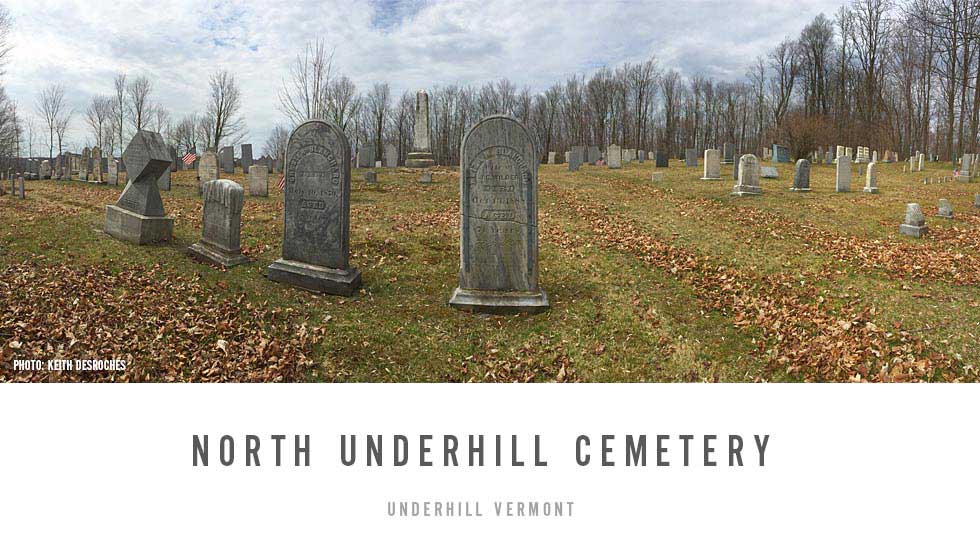
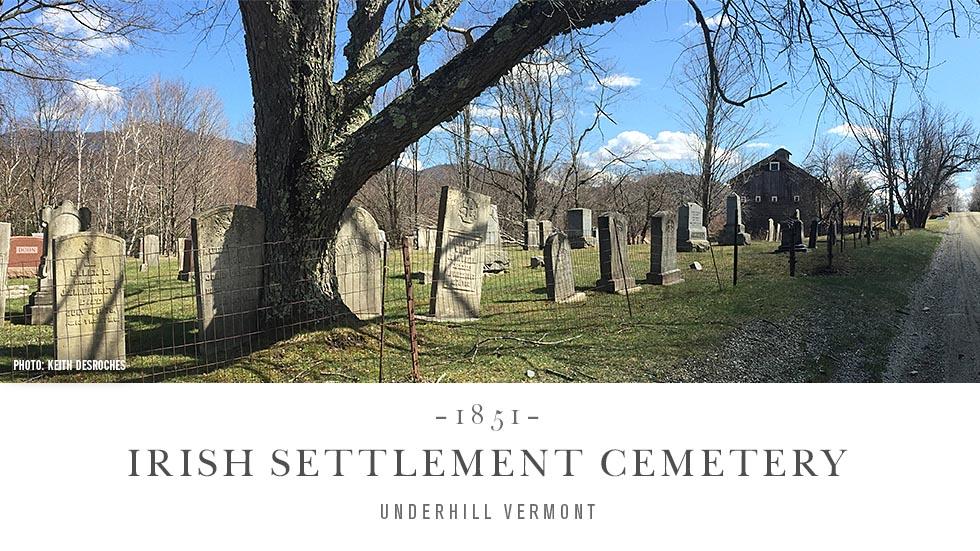
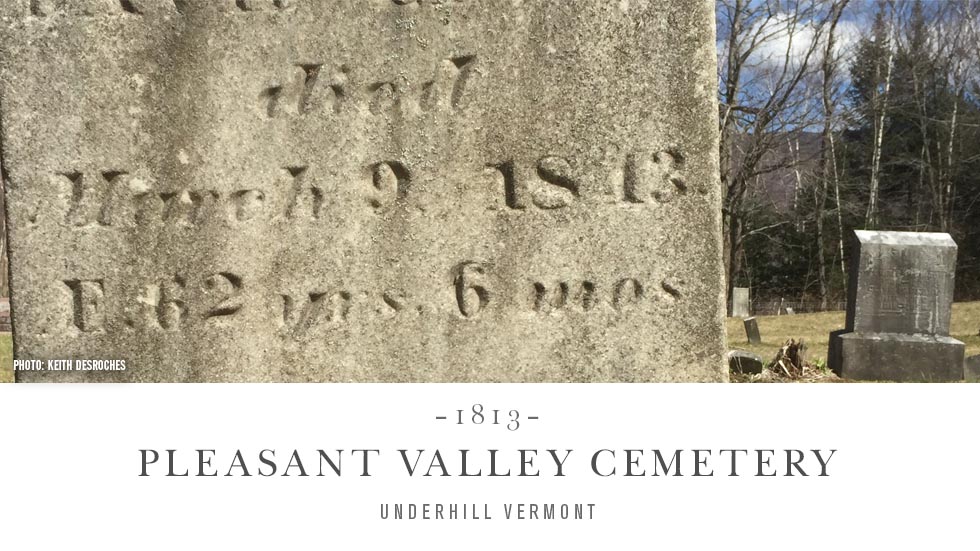
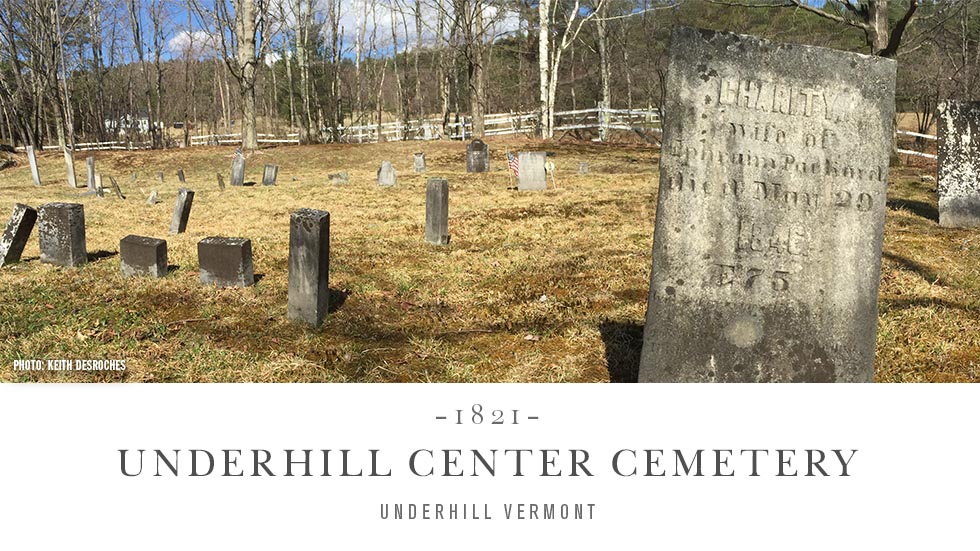
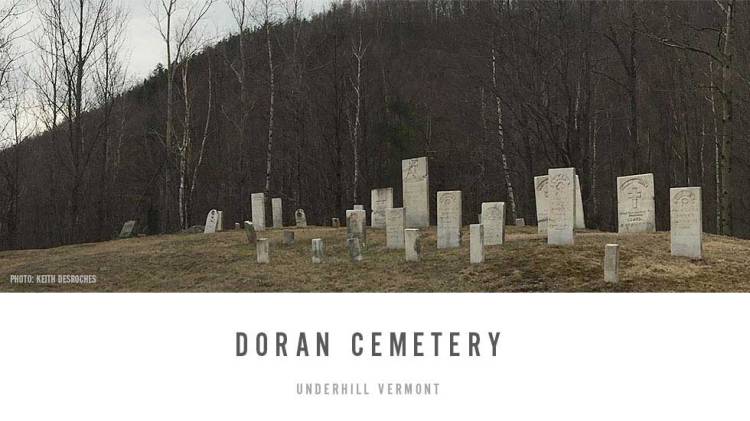
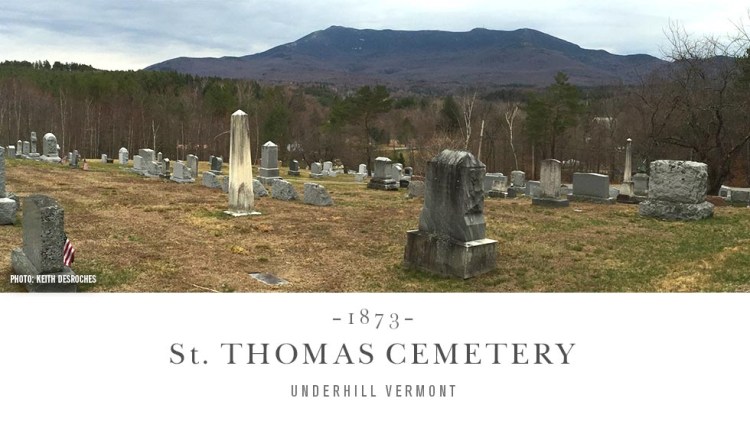
Our past can be recalled by a simple stroll through any one of Underhill’s seven cemeteries.

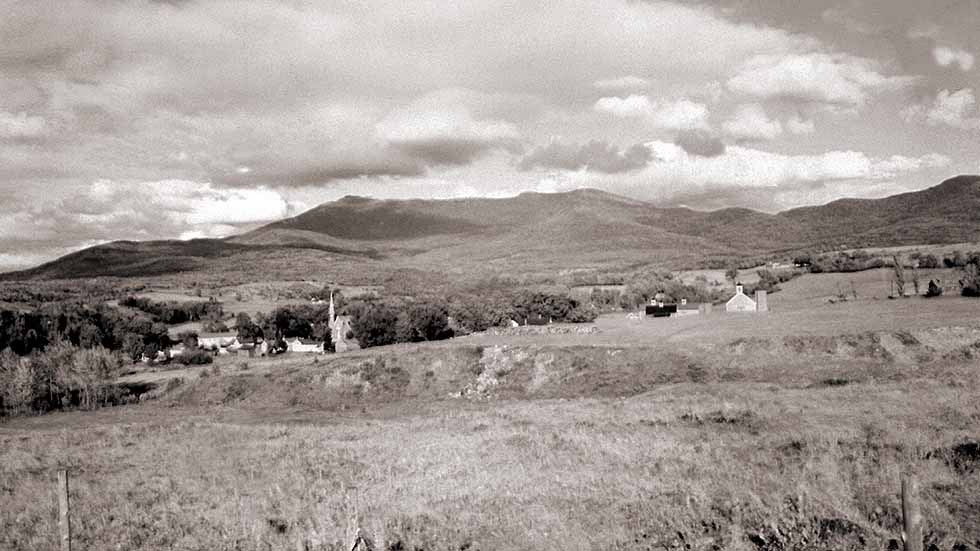
In writing a history of Underhill, it is impossible to leave out the section of Jericho known as Riverside, which is so intimately associated physically, economically and socially with the area of Underhill referred to as Underhill Flats. Riverside is a small area adjacent to the Town of Underhill and separated from larger Jericho by a curve in the Browns River.
Here were located the Methodist and Episcopal churches, the Waters Library, a major sawmill, a creamery, the Dixon House Hotel which was the social hub of the region for so many years, and a stagecoach stop along the major highway north to Cambridge, the pharmacy, the GAR Hall, a movie theater, the Mansfield Women’s Club, the B&L Railroad line from Burlington, several stores and craft businesses and more. While most of the historical enterprises are gone, Riverside is still closely associated with Underhill Flats, sharing a water district and a school district. The two towns share the Underhill-Jericho Fire Department, the new Deborah Rawson Library, and the Jericho Underhill Boy Scouts. The ID (Incorporated District) School, the Chittenden East District’s Browns River Middle School, the Rawson Library and much of Mills Riverside Park also serve both towns but are actually located in Riverside.
When Underhill and Jericho were chartered within a day of each other in 1763, little attention was paid to the nature of the land which was subdivided. As Underhill and Jericho grew into real towns, it was the local topography that was important to the residents, not the boundary that separated them for the purposes of municipal governance. Buildings and a park came to straddle the town line and no on in Underhill Flats or Riverside paid much attention. No one knew how Underhill Flats, the economic and social focus of the town of Underhill, was municipally related to the Riverside area of Jericho – or cared.
The differences became noticeable only as land grew in value, taxes escalated, and the two towns began Planning and Zoning, wherein the municipal governance in the two towns was not always the same and when larger, modern school districts were created which encompassed both towns. The differences in listing and taxation and zoning became problems. The ID School created problems for both towns as to which resident could vote on which issues at town meeting.
The historical ignorance of the Town boundary which essentially merged Riverside with Underhill Flats seem to remain, even though the map boundary separating Underhill and Jericho has been well established.
In 1741 George III of England established the crown colony of New Hampshire, fixed its present-day boundaries and installed one Benning Wentworth at its head. Wentworth, as governor, was put in charge of Fort Dummer, then a remote outpost planted on the opposite (west) bank of the Connecticut River. Using this miniscule toehold, Wentworth proclaimed jurisdiction over the vast, largely unexplored “no man’s land” beyond the Connecticut recently gained in the historic ceding of French Canada to Britain. Actually, New York was first promised this territory. But Wentworth embarked upon an aggressive campaign, chartering townships from Massachusetts northward, thereby sowing an enduring legacy of land-grabbing and real estate controversies that would characterize the original settlement of Vermont, known then as the Hampshire Grants.
Within twenty years all the prime agricultural soils right up through the Champlain Valley were bought up by wholesale land developers (Ira and Ethan Allen, notably, among them) looking for a tidy return off a burgeoning colonial population. Remaining marginal farmland lay in hill country. Records show that on June 8, 1763, Wentworth issued a charter containing thirty-six square miles (23,040 acres) of virgin wilderness to a group of sixty-five investors, one of whom was named Benjamin Underhill. This land went for exactly one cent per acre. On this same day Westford, Stowe and the now extinct township of Mansfield were chartered in different syndicates comprising many of the same shareholders. Jericho had been born the day before.
These original owners never intended personally to clear this frontier. They were land speculators. Most joined several standard sixty-five-member coalitions purchasing thirty-six square miles at a penny an acre. Likely none ever physically visited their holdings any more than a contemporary market trader would bother inspecting some corporate plant. In this New World exploitable wilderness was everywhere just over the perceived horizon. It was a brisk commodity—parceled up, shuffled about and horse-traded off to young, hardy, gullible frontiers people desperate for a new beginning someplace.
In the following year of 1764 the Hampshire Grants, now a gridwork of 131 separate townships, were mostly all sold off, though few settlers had actually arrived. But by year’s end, following decades of dispute, King George himself finally ruled that this whole (literal) shooting match west of the Connecticut River had all along belonged to New York, not New Hampshire. Benning Wentworth’s scheme swiftly unraveled and he eventually resigned under scandal. New York began selling its own charters directly adverse to the so-called “Wentworthless” claims. In fact, in 1776 New York sold a tract of land to one Frederick Rhinelander of New York City, which included parts of Milton, Westford and Underhill. But in the tempestuous months preceding the outbreak of revolution, entrenched Hampshire Grantees in first-settled areas like Guilford and Bennington (named after you-know-who) fended off arriving homesteaders armed under New York authority. In fact, the Green Mountain Boys of Revolutionary legend originally banded to fight not British soldiers, but Yorkers—fellow settlers.
Thus, for pioneers contemplating “going into the Grants” during the 1760s and 1770s migration north offered the terrifying prospect of colonizing territory ravaged by dispute and revolution. A breed apart, those lost souls who dared stepping into this wilderness faced a pantheon of nemeses: native Abenaki, French trappers, British soldiers, New York militia, Green Mountain vigilantes, not to mention starvation, wild animals and brutal cold. [1] Needless to say, Benjamin Underhill and his peers never saw much quick profit. It would take decades more for this hill country to start populating.
On September 12, 1785, a group of landed gentry gathered at the home of one Abraham Underhill (presumably a relative of Benjamin) in Dorset, Vermont. This was the first formal meeting of these sixty-five original shareholders—or their survivors—who twenty-two years earlier had speculated, sight unseen, on a chunk of uninhabited wilderness lying somewhere nine days’ walk north of them. Much had transpired over those intervening years. New York, Massachusetts and New Hampshire were now constituents in the new, thirteen-member federation.
Although the Green Mountain Boys had valiantly supported the War of Independence, the Continental Congress snubbed their membership mainly out of deference to the powerful New York delegation still smarting from rivalry and the loss of substantial charter fees to Wentworth. But residents of the Grants stood defiant, proclaimed themselves a sovereign nation, drafted their own Declaration of Independence and Constitution, and even minted their own currency. Eventually they adopted the name: Vermont. Finally, in 1785 they laid to rest the quarter-century of antagonism by paying off New York and legitimizing Wentworth’s originally bogus charters. In that year the ruggedly self-reliant Republic of Vermont was finally poised for prosperity—and for inevitable admission, six years later, into the Union as the fourteenth State.
There was certainly some urgency to the 1785 shareholders meeting at Mr. Underhill’s home in Dorset. Now that the great feud was finally over, a land rush was on and civilization was swiftly pushing back the frontier. Pioneers had already settled on the Browns and Lamoille River flatlands. So a committee of three was appointed to dispatch a surveyor posthaste. “Surveying” the Vermont wilderness in 1785 entailed nothing of today’s professionalism. It was a combination of bush-whacking, dead reckoning, eye-balling and much bare-fisted negotiation with sundry squatters, neighbors and adverse claimants in a conspicuous grab for the best cropland. By the time this surveying team arrived, the choicest alluvial pickings had already been staked by surrounding townships.
The earliest settlers in Underhill proper arrived the following spring of 1786. Their lots encompassed the gateway area we now call the Flats. More folks gradually filtered in and cleared along the foot trail to Cambridge. This path became a wagon road following the line of least resistance up the route we now call Poker Hill Road. In 1791 Vermont became a State, and the first official U.S. Census records Vermont as having a population of 85,000. Guilford, the largest town, had 2,400; Underhill had 65. By the next census of 1800, nine years later, Underhill’s population nearly quadrupled.
From the turn of the nineteenth century onward the stream of homesteaders to Underhill increased. From the start the primary industry was logging.[3] The virgin forest was cleared, lumber was cut for homes, schools, churches, taverns, barns, fences, etc. Saw mills clustered around every available stream site and ran day and night during Spring thaw. People were dispersed across a multitude of logging camps and small, subsistence farms. Travel was minimal and always on foot; life was mind-numbingly parochial. These scattered homesteads typically revolved around a local neighborhood or “settlement,” featuring a meeting house with shipping post and cemetery, perhaps a mill, store, or tavern, always a one-room schoolhouse.
Potato starch and potash refineries, grain mills, tanneries, stores and blacksmiths sprang up, first along Poker Hill, then up the Browns River and Pleasant Valley. In 1839 the sparsely inhabited logging township of Mansfield straddling the mountain was dissolved by State legislation, and the summit with the entire western slope (12 square miles or exactly one-third) was given to Underhill, the eastern two-thirds to Stowe.
The war between the States was a cataclysmic event in the history of Vermont and Underhill. Chroniclers agree the most rabid abolitionism flourished in the deep north. Vermonters enlisted in droves to eradicate Southern slavery and preserve the Union. More men and resources per capita were expended from Vermont than any other State. Families of twenty children were not uncommon back then; the population base was exploding. But by that time Vermont was nearly devoid of its forests; the wilderness gone, available decent farmland confining. The Civil War accelerated the opening of the American West, like a huge plug releasing restless masses out across the fruited plain toward the next expanse of wilderness and the distant lure of gold. One local yarn explains how Nebraska Notch was named: residents of parts east streaming through the pass would announce their destination, “Nebrasky.”
We look back upon our forbears with nostalgia. But in reality, scratching out a hardscrabble existence during those times was insufferable, especially for the upland inhabitants of Underhill. Though by the 1860s, seventy-five per cent of Vermont was treeless, logging was still underway on the less accessible slopes of Mansfield and her foothills. Once the timber fell, the rough ground was left for recent arrivals to work.
Today, in the remotest backwoods of Underhill we are amazed to discover rock piles, stone walls, cellar holes and other evidence of unimaginable labor. Sheep-raising was the dominant agricultural industry of the Civil War period, and Vermont was regarded as the wool capital of the world. But from that very first survey a hundred years earlier, Underhill was somehow muscled out of its proportion of rich bottomland. The remaining thin, stony, sloped, poor-draining soils were never meant for efficient production.
From its inception, Underhill had always been—relative to other towns—an unwealthy and rather itinerant place. Many, many families simply gave up, gathered everything and headed west. The Census of 1870 records Underhill’s highest pre-modern population at 1,655 residents. From then on it was all downhill.
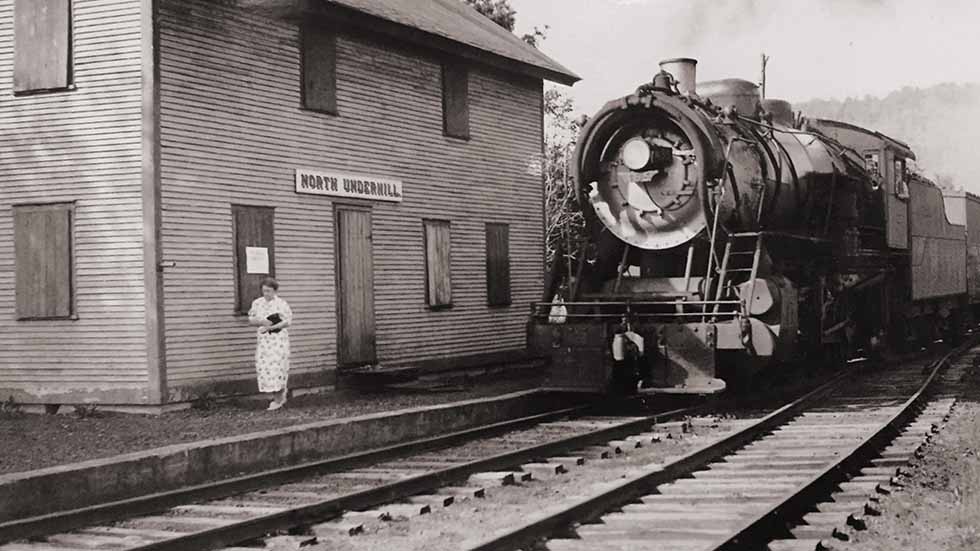
At this population crest, came an event which would influence the modern predicament of Underhill. 1877 saw the coming of the Burlington & Lamoille Railway, from Essex to Cambridge. Railroads are not particular respecters of town lines, and back then, municipal boundaries had not the significance of today. So, to no one’s concern at the time, this station was positioned almost directly on the Underhill-Jericho town line. Though another station was built at the opposite end of Underhill, it was the Flatts depot which germinated and took on a life of its own. Here a true “population center”—a mini-metropolis! — spread out right across the town boundary.
While the population of Underhill township as a whole declined, the Flatts on both sides of the dividing line ballooned. Churches, stores of every variety, mills, hotels, taverns, a theater, a private boarding school, stockyards, livery stables, paved streets and a public common arose just west of the train stop. Blacksmiths, barbers, wheelwrights, a doctor, a druggist and a lawyer set up shop. As the far-flung upland settlements were losing people and importance as social, residential and economic nuclei, Underhill Flatts as the focal point of local life grew.
Fifteen years after the coming of the B & L Railway, the Vermont legislature granted this boomtown unique authorization to unify into one single school district the Flatts settlement on the Underhill side with the adjacent Riverside Settlement on the Jericho side. Thus was born the Underhill Incorporated District (Underhill I. D.) straddling parts of Jericho and Underhill and the source of so much frustration today. Underhill at the turn of the century was a transforming place. As the hillside populations drained, farms and logging businesses consolidated into bigger, intensive, more efficient operations. Dairy cows supplanted sheep as Vermont soon became (and remains) the Holstein capital of the world. B & L boxcars carried in fertilizer, grain and manufactured goods and carried out lumber, leather, maple sugar, potatoes, butter and cheese.
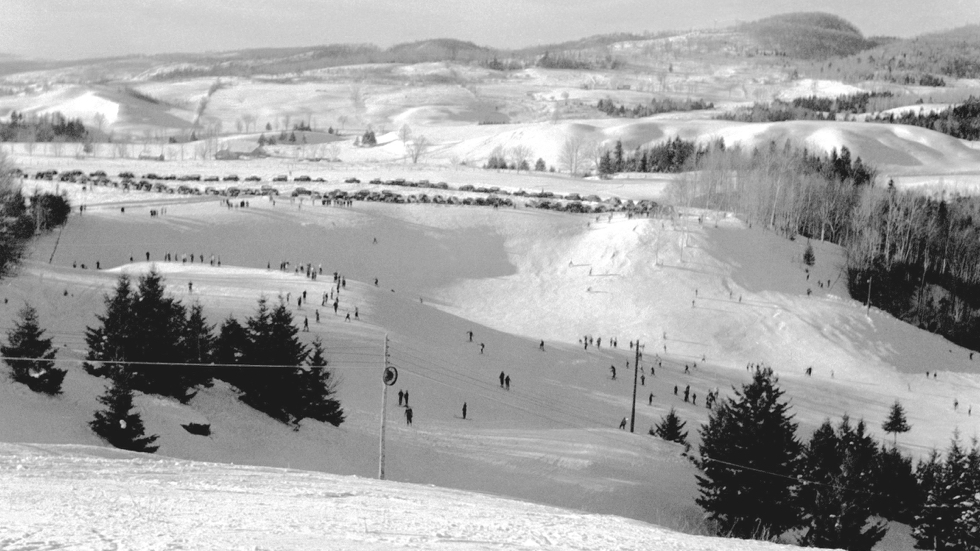
The railway helped to make Underhill an attractive vacation destination. The Halfway House, a hotel built near the current site of Underhill State Park camping area, cultivated a flourishing business. From there guests would often hike or wagon-ride up a narrow road for an overnight at the Summit House Hotel situated on the nose of Mt. Mansfield. Several other resort hotels existed in Underhill Center. In the early part of the century many of the small mountain farms were purchased for vacation homes and Underhill Center was for many decades essentially a ‘summer colony.’
The 19th century grand hotels with ballrooms went into decline, replaced by simpler summer ‘boarding houses’. In 1924, the first alpine ski trail on Mt. Mansfield (The Teardrop) was cleared on the Underhill side. In 1935, the Underhill Ski Bowl was started on the Egan farm with a primitive rope tow and was used by the newly formed Winter Sports Club. The ski operation thrived from 1946- 1982 under the ownership of the Dubrow family and the Underhill Ski Bowl was shown on all the maps of Vermont. It certainly was the place for the children in Underhill to enjoy the cold winters and become expert skiers — and with an improved ski tow and lighted night skiing, it became popular with the Burlington crowd, too.
It was a great community loss when the facility closed ( largely due to exorbitant increases in the cost of insurance.) The sport of cross-country skiing in Vermont actually began in Underhill Center. A group of enthusiasts started clearing trails in the mid ‘60s and the Edgemont races were popular for many years. A longer trail was cleared all the way to Smugglers’ Notch and was used for the annual ‘Madonna Vasa’ race. The races were discontinued in late ‘70s because of excess popularity; they became just too big to handle. Meanwhile, many local trails have been cleared and the sport is now highly popular all over Underhill.
From the mid ’40s to the mid ’60s Underhill Center was a mecca for country dances held Saturday nights at the ‘Hen House’ (now Wells apartments) in Underhill Center. It was entertainment for all ages and was popular with dancers from all around the area. In the early ‘70s the Town bought land in Underhill Center for a recreation area and with the help of a State grant established tennis courts and a small swimming pond. A volunteer Recreation Committee was formed to oversee the facility and there are annual tennis and swimming lessons. From 1982-1998 the Connells operated an international youth hostel in their handsome barn in Underhill Center, attracting visitors from many countries. In 1970, the time of the first Town Plan, vacation property accounted for nearly 13% of the Grand List. Over the last 30 years nearly all the seasonal homes have been converted to year- round residences. Now only 2.4% of houses are listed as vacation houses.
The flush of prosperity lasted two generations before competition from America’s heartland ushered the agricultural economy of the Northeast into decline. Inexorably, from the hilly regions, dairy farm after farm fell out of production. And Vermont’s worked-over timber stands could scarcely vie with the expansive virgin resources of the great Northwest.
Loss of Land
Two factors exacerbated the population decline in Underhill as the 20th century unfolded: the establishment of the Mt Mansfield State Forest and Park and the Federal Underhill Artillery Range. As early as 1859 UVM had acquired stewardship of the crest of Mt Mansfield with its unique glacial leftover of tundra. In 1914, with the logging of the mountain virtually complete, Vermont began the acquisition of land on Mount Mansfield for a State Forest and Park and the initiation of programs for reforestation and recreation, absorbing some homesteads in the process. Expansion of the State Forest has continued throughout the years as land has become available through purchase from lumber companies and private gifts. In 1926 the Federal government purchased land in Underhill, Jericho and Bolton to use as an artillery range for the Fort Ethan Allen military base in Essex Junction and summer training for college reserve officers. 1153 acres of Underhill were taken off of the tax rolls; the neighborhood called ‘Hutchville’ disappeared. In 1946 more land was added to the ‘Range’ bringing the Underhill total to 3,292 acres.
Loss of Income
When the Depression hit, commercial rail evaporated, and by 1939 the B & L stopped running. Farms were abandoned or sold off as vacation homes or hunting camps to cityfolk attracted by firesale prices, the unspoiled environment and the absence of people. Underhill became a second-home haven. The 1950 census recorded Underhill’s lowest population since 1820 at less than 700 residents.
By the 50s Underhill’s fifteen separate “settlement” school districts had dwindled to five, apart from the “I.D.” With so few inhabitants, even five was too much. So in 1953 the five remaining districts consolidated into one, which headquartered itself in Underhill Center, thus completing the current school district configuration that some residents now regard as geographically absurd.
As the town population declined, the many churches in town were hard pressed to maintain viable congregations and began to share facilities with churches in Jericho. The ‘Union Church’ in Underhill Center, shared by Methodist and Baptist denominations, was given up and in 1950 the building was purchased by the town of Underhill for use as a Town Hall and renovated by civic volunteers. (The new facility replaced the former Green Mountain Academy in Underhill Center, which had served as Town Hall for many years.)Meanwhile, Chittenden County’s population had been growing all the time; between 1850 and 1940 at a steady rate of 1% per year and after World War 2 at 2% per year. Between 1940 and 1980 the population doubled. Moreover, the freedom of transportation provided by the automobile liberated people from the need to build close to railroads where real estate prices were high. Dirt roads became paved highways. Renewed prosperity was around the corner.
The flush of prosperity lasted two generations before competition from America’s heartland ushered the agricultural economy of the Northeast into decline. Inexorably, from the hilly regions, dairy farm after farm fell out of production. And Vermont’s worked-over timber stands could scarcely vie with the expansive virgin resources of the great Northwest.
Loss of Land
Two factors exacerbated the population decline in Underhill as the 20th century unfolded: the establishment of the Mt Mansfield State Forest and Park and the Federal Underhill Artillery Range. As early as 1859 UVM had acquired stewardship of the crest of Mt Mansfield with its unique glacial leftover of tundra. In 1914, with the logging of the mountain virtually complete, Vermont began the acquisition of land on Mount Mansfield for a State Forest and Park and the initiation of programs for reforestation and recreation, absorbing some homesteads in the process. Expansion of the State Forest has continued throughout the years as land has become available through purchase from lumber companies and private gifts. In 1926 the Federal government purchased land in Underhill, Jericho and Bolton to use as an artillery range for the Fort Ethan Allen military base in Essex Junction and summer training for college reserve officers. 1153 acres of Underhill were taken off of the tax rolls; the neighborhood called ‘Hutchville’ disappeared. In 1946 more land was added to the ‘Range’ bringing the Underhill total to 3,292 acres.
Loss of Income
When the Depression hit, commercial rail evaporated, and by 1939 the B & L stopped running. Farms were abandoned or sold off as vacation homes or hunting camps to cityfolk attracted by firesale prices, the unspoiled environment and the absence of people. Underhill became a second-home haven. The 1950 census recorded Underhill’s lowest population since 1820 at less than 700 residents.
By the 50s Underhill’s fifteen separate “settlement” school districts had dwindled to five, apart from the “I.D.” With so few inhabitants, even five was too much. So in 1953 the five remaining districts consolidated into one, which headquartered itself in Underhill Center, thus completing the current school district configuration that some residents now regard as geographically absurd.
As the town population declined, the many churches in town were hard pressed to maintain viable congregations and began to share facilities with churches in Jericho. The ‘Union Church’ in Underhill Center, shared by Methodist and Baptist denominations, was given up and in 1950 the building was purchased by the town of Underhill for use as a Town Hall and renovated by civic volunteers. (The new facility replaced the former Green Mountain Academy in Underhill Center, which had served as Town Hall for many years.)Meanwhile, Chittenden County’s population had been growing all the time; between 1850 and 1940 at a steady rate of 1% per year and after World War 2 at 2% per year. Between 1940 and 1980 the population doubled. Moreover, the freedom of transportation provided by the automobile liberated people from the need to build close to railroads where real estate prices were high. Dirt roads became paved highways. Renewed prosperity was around the corner.
In 1957 IBM set up a manufacturing plant in Essex Junction with tenuous roots. The venture turned out to be successful and as the years went by the commitment became more resolute. By 1968, with the expansion of manufacturing and the opening of a new engineering building, the company had completely changed the economic landscape of Chittenden County.
The completion of Interstate 89 further fueled an upturn in the economy. High-tech manufacturing and service industries blossomed, and the population suddenly soared. In the mid 60s Underhill started to grow again and to grow fast. Open land subdivided into house sites; summer homes and hunting camps converted into year-round residences.
Town Planning Started
Although Underhill lay on the outskirts of the immediate effected area, some of the far- sighted town citizens saw the future coming and took steps to try to control possible ill-planned housing developments. In 1961, the town authorized the appointment of a Zoning Board to write a zoning ordinance; the minimal regulations were adopted in 1963. The following year a Planning Commission was appointed. The VT Planning and Development Act (Act 250) was passed in 1968 in response to the disastrous consequences of unregulated development in the state. The legislation required the writing of a Town Plan on which to base zoning ordinances. In preparation the Underhill Planning Commission initiated a ‘land use’ study by the U.S. Soil Conservation Service in Essex Junction and were fortunate to have the expertise of soil scientist , Robert Towne, to do the work. The first Underhill Town Plan was adopted in 1970 , along with subdivision regulations to curb the proliferation of poorly planned housing developments , which the early zoning regulations had not been able to prevent.
Some of the early subdivisions established in the late ‘60s had road problems which became historical legacies. In 1973, the revised Zoning Ordinance was passed, based upon the SCCS Land Use Map using ‘Critical Area Zoning’ criteria. The fundamental, unchanging natural basis for the regulations has stood for 30 years, so far.
Town Hall Renovated
In 1967 the population of Underhill still hovered around 700, but rapid change was coming. The Town Hall had suffered structural damage from an untended roof leak and the Town Office in the basement was woefully inadequate. A bond vote to pay for remodeling of the building was first passed and then rescinded. In desperation the Selectboard even contemplated the possibility of sharing a Town Hall and Town Manager with Jericho. Then a project to renovate the building with volunteer workers emerged and the newly formed Historical Society undertook fund raising projects to pay for the materials. It was a two- year project of Saturday workdays with citizens of all ages participating. The project was highly successful and even received recognition from the State Historical Society. In 1970 a grand town party celebrated the building rejuvenation.
Property Taxes Soared
About the same time as the passage of Act 250, the VT Supreme Court decreed that the historical basis for tax appraisal which evaluated land use for agricultural usefulness was now unfair and appraisal would henceforth be based upon something called “Fair Market Value”. This was an average number derived from recent property sales and was used to evaluate land by total acreage. In 1970 the Underhill Town listers reappraised land on this basis and the result was disastrous. Land appraisals soared, some even quadrupling. The Civil Board was overwhelmed by appraisal challenges and just about every lawyer in Burlington had a job in Underhill… The Board revoked many of the changes and the listers took the Town to court. (The Town taxpayers had to pay for legal costs on both sides of the issue.) The upshot was that the court threw the challenge into the hands of the State Board of Appraisal, which had pressured the listers in the first place. A compromise was finally reached which allowed modifying factors to be applied to the land values, depending on location and viability for housing. But lasting damage had been done. Underhill was essentially up for sale. The Selectboard responded by setting up the first town ‘Land Use Contract’ , which abated taxes on lands which were set aside from development for 10 years. (Although an important purpose was to protect some of the few remaining farmers from excessive taxation, several independents refused to participate.) Subsequently the State set up similar contracts. The huge pressure on land sales somewhat diminished, but the pressure of population growth in Chittenden county spread inexorably to Underhill, with a rapid expansion of housing and the need for one school addition after another.
As we enter the new century, the population of Underhill is about 3000, five times more than its lowest number of 600 in the early ‘60s. But the population is no longer rapidly growing and the school population has experienced decline. With excess school facilities in both Underhill and Jericho, the opportunity to redress the historical legacy of the Underhill ID school problem may be at hand.
Meanwhile, Underhill enters the new era with a refurbished Town Hall, a new Town Garage, a new Town Park, a Conservation District, many fine new bridges and improved roads. It shares with Jericho a thriving new memorial library and a new, well-appointed building for the Underhill-Jericho Volunteer Fire Department ( which celebrated its 90th anniversary in 2003) . The Mills Riverside Park , also shared by the two towns, is a splendid addition to the communities and is used for all manner of activities: picnicking ,camping, concerts, sports practice, farmers’ market , bird watching. It is soon to have a useful covered pavilion, courtesy of the local Lions Club. In spite of the great increase in town population, the pressures of commuting and the social draw of Burlington, Underhill has managed to preserve a sense of community. There is good attendance at Town Meeting and volunteer service, long a town tradition, continues to thrive. The projections for future population growth in the county are alarming for Underhill as it carries its role as steward of the gateway to Mt Mansfield. Needless to say, the challenges ahead are many.
Above summaries are a compilation of chapters about the History of the Town of Underhill, VT written by a number of authors. Its production would not have been possible without the computer expertise of Kika McArthur, who is also responsible for the graphic design and many of the outstanding photographs. The chapter on the History of Business and Social Life in Underhill Flats/Riverside by Gary Irish, local Jericho historian, is a volume in itself. The pen and ink drawings of historical railroad engines by Stanton Hamlet in his chapter about the Burlington and Lamoille Railroad are particularly notable. The 100 year history of the Jericho Underhill Fire Department by Randy Clark, Sr has been included as originally laid out and published in the Mountain Gazette by Brenda Boutin. Former Underhill Town Clerk and Treasurer, Luella Lamphere, compiled several of the historical databases which were computerized by ET Moore, who also computerized the historical maps.
The first chapter which describes the geology and physiography of Underhill could not have been written without the kind support of former professor and chairman of the UVM Department of Geology and State Geologist, the late Charles H. Doll. He not only shared important references, but personally showed me many of the outstanding geological features of Underhill. Underhill Town Planning has been dependent on the original contributions by soil scientist Robert Towne of the US Department of Soil Conservation in Essex Junction, as well as the late chairman, Art Hogan and his assistant, Don Rich, of the Chittenden County Regional Planning Commission. Some of the early history of Underhill is on the Internet. The history by Emily Flynn, which was unpublished, has been included with some corrections. Thanks go to Judy and Gael Boardman for sharing the trove of Underhill ephemera given to them by collectors, Roland and Mary Ellis. Many new items added greatly to formerly forgotten Town history. The assistance of First Step Print Shop has been invaluable. The book binding is courtesy of Marianna Holzer of Holzer Productions.
Compiled by Elizabeth Weichel Moore with permission to republish.
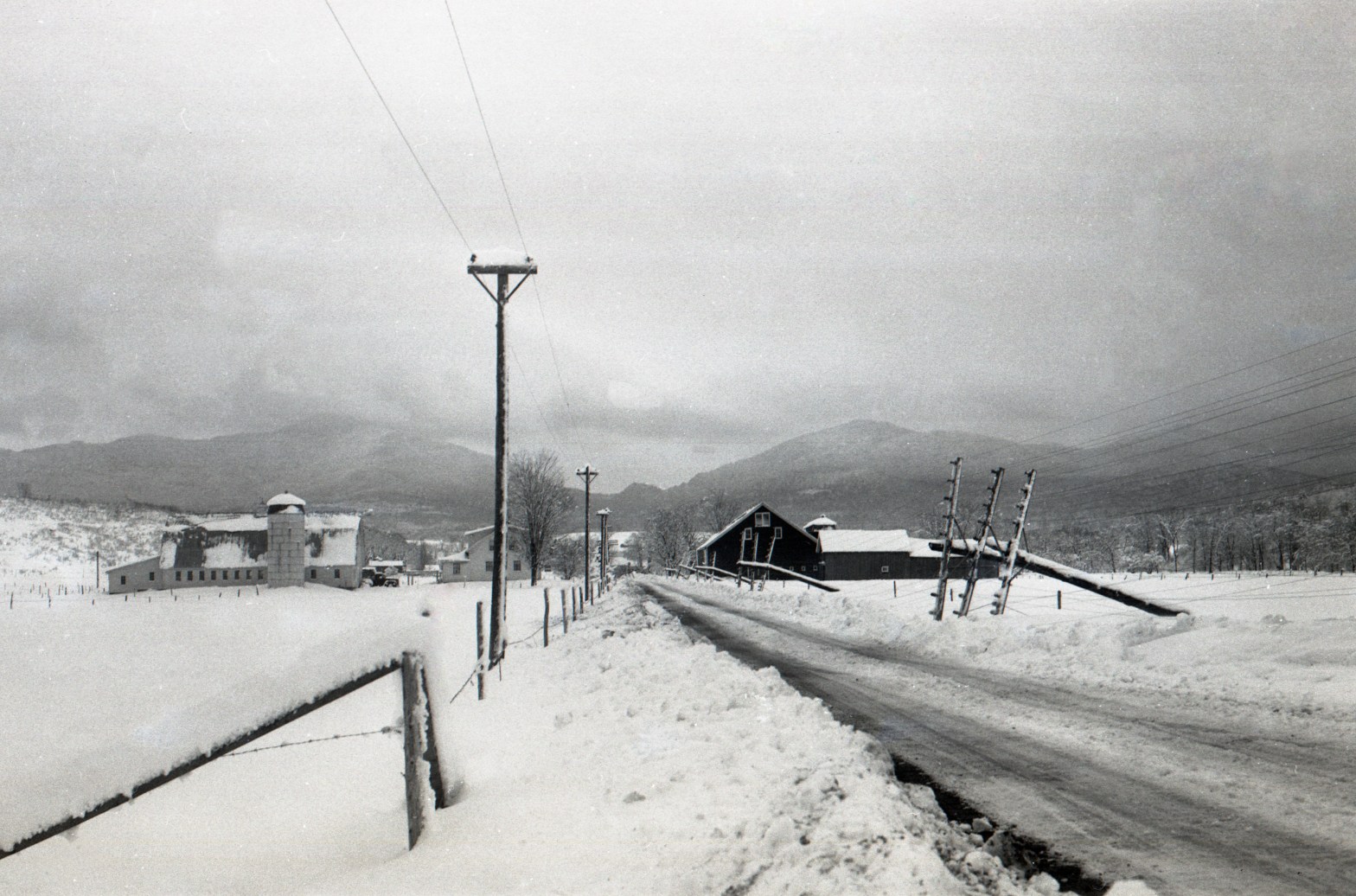
THIS is a mountainous town situated in the northeastern corner of Chittenden county. It is bounded north by Cambridge, east by Stowe, the boundary line being the highest elevation of land on Mount Mansfield, on the south by Bolton and Jericho, and west by Jericho and Westford. It was originally granted by the governor of New Hampshire to Joseph SACKETT, jr., James SACKETT, Peter SACKETT, Joseph SACKETT, Edward EARLE, James JAMISON, Com. LAW, jr., esq., Jonathan DAYTON, jr., Jonathan HAZZARD, Andrew ANDERSON, James ANDERSON, John YEATS, James SACKETT, Tertius, Samuel SACKETT, John SACKETT, David MATHEWS, Andrew TEN EIKE, William SACKETT, Joseph SAVAGE, Daniel VOORHIS, Michael BUTLER, Samuel WALL, Joseph BULL, Jeremiah ALLEN, John FREEBORN, Peter ALLEN, William ALLEN, Robert FREEBORN, Samuel BROWN, Carey DUNN, William SANDS, Benjamin UNDERHILL, Henry FRANKLIN, Bishop HADLEY, James HORTON, sen., Sylvanus HORTON, Maurice SALTS, Louis RIELEY, James REED, Peter TEN EIKE, jr., Isaac ADOLPHUS, Samuel JUDEA, Myer MYERS, Solomon MARACHE, Jacob WATSON, Joshua WATSON, Sylvanus DILLINGHAM, John DILLINGHAM, William BUTLER, Robert MIDWINTER, John MIDWINTER, Darrick AMBERMAN, Joseph HOLMES, John COCKLE, Jonathan COPELAND, Uriah WOOLMAN, John SEARS, Hon. John TEMPLE, Theodore ATKINSON, esq., Mark H. G. WENTWORTH, Dr. John HALE, Maj. Samuel HALE. The charter was dated June 8, 1765, for which the sum of $230.40 was paid. The original township contained thirty-six square miles, to which was annexed in November, 1839, about twelve square miles from the town of Mansfield. The original proprietors were warned to meet at the dwelling house of Captain Abraham UNDERHILL, at Dorset, then in the county of Bennington, on the 12th day of September, 1785. The warning was issued by John SHUMWAY, justice of the peace. Major Gideon ORMSBY was chosen moderator, and Timothy BLISS clerk. It was voted to make a division of the township in lots of one hundred acres to each right, with an allowance of four acres to each lot for highways, and the lots to be 160 rods long and 104 rods wide. Nathaniel MALLARY, Augustin UNDERHILL, and Captain Thomas BARNEY were appointed a committee for that purpose, with power to select a suitable surveyor. On the 11th of November, 1785, the committee made a report which was accepted, and that survey constituted the first division of town lots.
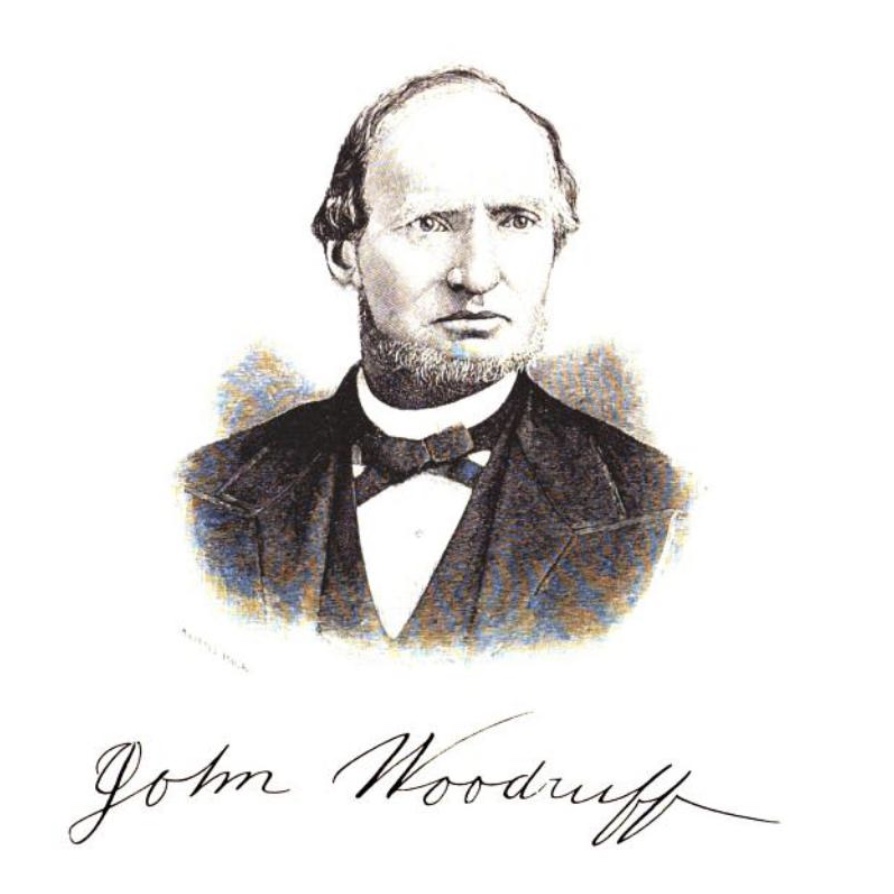
On the 13th day of January, 1790, a second meeting of the proprietors was held at the house of Thaddeus Munson, of Manchester, in the county of Bennington. Augustin UNDERHILL was elected moderator and Daniel ORMSBY clerk. It was voted to make a second division of lots of one hundred acres each in said township, from the best part of the undivided land, and Major Gideon ORMSBY, Augustin UNDERHILL and Captain Thomas BARNEY were appointed a committee for that purpose. This committee reported on the 9th day of November, 1790. On the 14th of February, 1803, a meeting of the proprietors was held at the dwelling house of David BIRGE, on the premises now owned by John WOODRUFF, in Underhill. Captain Daniel CLARK was elected moderator, and Barnard WARD clerk, and Luther DIX collector. At this meeting William BARNEY was chosen to run out the third division of town lots, and on the fourth Monday of December, 1803, the survey made by him was adopted.
The first settlers in this town were Elijah BENEDICT and Abner EATON in 1786. Mr. EATON located in North Underhill and resided there to the time of his death. The first deed executed in town was from Thomas BARNEY to Caleb SHELDON, and dated August 25, 1789. The first child born in town was Nancy SHELDON, daughter of Caleb SHELDON, on the 10th of September, 1787. Town meetings were held in North Underhill from 1794 to 1832. Here were located a church, tavern, store, and school-house. The school-house was built in 1787, and the church in 1804. William BARNEY was elected the first town representative in 1794. Colonel Udney HAY represented the town from 1798 to 1804, and was one of the Council of Censors in 1806, at the time of his death. He was a Scotchman, and was highly educated; whether he resided in Vermont prior to settling in this town is unknown. It appears from the State papers of 1780 that Colonel Udney HAY, then department commissary-general for the Northern Department of the Continental army, had made application to Governor Chittenden to obtain supplies for the troops of this department.
His communications were submitted by the governor to a committee of the council, and after the same were fully considered the committee made a report on the 2d of November, 1780, by its chairman, Matthew LYON, stating “that they have examined said papers, and also conferred with Colonel HAY thereon, and find that he is appointed by the Continental commissary-general to purchase provisions in the New Hampshire grants;” “and that it is the opinion of your committee, that Colonel HAY by coming to this State and making application to the Legislature thereof, has missed his instructions;” “and that it is further the opinion of your committee that (considering the embarrassment the State lies under), with regard to the claims of other States, and the jurisdiction assumed over it; considering also the large supply of provisions already granted for the troops to be in the service of the State the year ensuing; should we suppose this State could be called the New Hampshire grants (which is by no means admissible), the Legislature of this State ought not to undertake to supply Colonel HAY with the beef required. Signed, M. LYON, Chairman.”
Nevertheless Colonel HAY was not prevented from buying beef and other supplies. He is described in Vol. II, “governor and Council, ”as a “gentleman and imposing man, rather of the Matthew LYON cast.” “He was opposed to the constitution and to the administration of Washington and John Adams, and continued to the end a politician.” He settled in this town at the close of the Revolutionary War, on the farm now owned by Thomas Jackson. His last resting place is unknown, but is supposed to be in the cemetery at North Underhill.
George OLDS, Caleb SHELDON, Barnard WARD, David BIRGE, Oliver WELLS, and Chauncey GRAVES were Revolutionary soldiers. Elijah BIRGE was a captain of a militia company raised here, that formed a part of the regiment commanded by Lieutenant-Colonel Luther Dixon at Plattsburgh in 1813. Colonel DIXON was one of the early settlers. He possessed great strength physically, and was noted as a brave and resolute man. While his command was at Plattsburgh, Governor Martin CHITTENDEN issued a proclamation ordering the militia back to Vermont, which was dated at Montpelier, November 10, 1813, and dispatched an agent to the camp at Plattsburgh to distribute the same. Colonel DIXON looked upon it as an attempt to incite insubordination in the camp, and ordered that the agent be flogged, which was properly done by a detail from Captain BIRGE’s company. On the 15th of November an answer was drawn up and signed by Colonel DIXON and all of the officers in his command, and duly forwarded to the governor. Coming from troops in the service, in the history of that war cannot be found a similar communication to the governor of any other State. [The extracts from this answer, given by Mr. Monahan, we take the liberty of omitting, as both documents appear in full in previous pages.-ED.)
Colonel DIXON, after his return home, was sued for causing the arrest of the governor’s agent at Plattsburgh on that occasion, and was compelled to pay $1,000 in settlement of the matter. Afterward two or three attempts were made in the Legislature to reimburse him, but without success. George MARSH had the matter before Congress at the time of Colonel DIXON’s death, but no definite action was taken on it. He held many important offices in this town, and was liked by all who knew him. He went to live in Milton in 1834, and died there in December, 1846, at which place he was buried. Three of his sons are now living, L. M. DIXON, proprietor of the Dixon House at Underhill, a noted summer resort, Dr. L. J. DIXON, of Milton, one of the most prominent physicians of Northern Vermont, and Judge L. S. DIXON, of Madison, Wis., one of the judges of the Supreme Court of that State for sixteen years; and one daughter, Susan BOSTWICK, of Jericho, wife of I. C. BOSTWICK.
Elijah BENEDICT, born in New Bedford, Conn., in 1741, came to Pawlet before the Revolution, but, sympathizing with the king, his property was confiscated, and he was obliged to flee to Canada, where he remained until after peace was declared, and in 1786 came to Underhill, and located on the farm now owned by George H. BENEDICT.
Jonas HUMPHREY came from Genesee county, N. Y., at an early day, and settled upon the farm lately owned by N. STORY. He married Caroline DIXON, daughter of Captain Jared DIXON, one of the first settlers in town. His son, D. C. HUMPHREY, still resides here, and is eighty-two years old.Adam HURLBUT, from Roxbury, Conn., settled upon the farm now owned by Charles Prior and C. L. Graver, in 1789. He subsequently made the first settlement on the farm lately owned by his grandson, Wait HURLBURT.
Eli HURLBURT, a veteran of the War of 1812, was one of the first settlers in Westford. Afterward he removed to this town and located on the farm now owned by his son, J. R. WOODRUFF. The deed to him was from Abner EATON, and dated June 13, 1791. He died, aged seventy-nine, on the farm now owned by his daughter, Mary A. WOODRUFF.
Caleb SHELDON was born at East Hartford, Conn., in 1756, came to Underhill in 1788, located on a farm now owned by his daughter, Mary S. SHELDON, where he died about 1800.Jason ROGERS, born in Connecticut, came to Underhill in 1800, and settled on the farm now owned by Charles E. TRUELL, and lived there until his death. His son, Abial ROGERS, also came from Connecticut and located on the farm now owned by the estate of the late Deacon Z. W. CHURCH, in 1808, where he carried on the business of saddler for several years, at which place he died, aged eighty-four. H. A. ROGERS, son of Abial, now resides on the farm formerly owned by John STORY, at which place he is doing business as a harness-maker.
Chauncey GRAVES came from Salisbury and made the first settlement on the farm now owned by his grandson, Tyler M. GRAVES. Ira, son of Chauncey and father of Tyler M., was five years old when he came here, and remained on this farm until his death, May 8, 1877, aged eighty-two years.
Isaac J. BOURN came to Underhill from Jericho in 1816, and purchased the farm now owned by Alvah MARTIN at Underhill Center, and lived there until he died.
Captain N. M. HANAFORD was born at Enfield, N. H., in 1791, and moved to this town at an early date, and always lived near Underhill Center up to the time of his death, which occurred in 1862, aged seventy-one years. He served as fifer and also as drum-major in the War of 1812.Martin MEAD came from Rutland in 1807, and located on the farm now owned by Seth W. MEAD. He had a family of ten children, three of whom are now living here,-Martin, Seth W., and Simeon M. MEAD.
Asa CHURCH came from Vershire in 1808 and located on the farm now owned by Thomas REEVES. After subsequent changes he finally located on the farm now owned by Cyrus Prior at Underhill Center, where he died at the age of eighty-four years. He had a family of twelve children, but none of them is now living.
Joshua MARTIN was born in Goffstown, N. H., and came here in 1819, locating on the farm now owned by James SHEEHY, at Underhill Center.
Timothy BURDICK came from Rhode Island, enlisted in the regular army in 1812, served five years, and after he was discharged located in Underhill, clearing up the farm now owned by Martin FLYNN, on what is known as the Irish Settlement road, at that time a wilderness. He was a man of energy and determination, for no other would have attacked a wilderness to lay out a farm, and be as successful as he was. He died at Underhill Center in 1875, aged eighty-five years, and was buried in the cemetery at Underhill. Two of his daughters reside at Underhill Center, and a son, Dr. A. F. BURDICK, went to California in 1849, resided there for three years, and returned to Underhill, where he has resided ever since.. He is a successful practitioner, and has administered to the wants of the people in this and adjoining towns about thirty years.
The principal villages sixty years ago were North Underhill, Underhill and Underhill Center, and ranked in size in the order named. The oldest person living in town is Ira DICKINSON. He served a term of enlistment in the regular army prior to 1812, and was one of the volunteers from this town who went to Plattsburgh and participated in that battle. He is a pensioner, and is now (1886) ninety-two years of age. He has a splendid memory, and loves to converse and relate incidents which transpired before and during the war.
The manufactures in Underhill in early times were very limited. In 1825 TOWER & OAKS built a starch factory, run by a steam-engine of ten horsepower. From that time to 1850 they manufactured large quantities of starch, and a number of other mills were built, but they have all gone to decay. Several saw-mills have been operated in town, which supplied the wants of the people up to the time of the opening of the Burlington and Lamoille Railroad, which took place in 1877. Five miles of the railroad bed is in this town.
From that time to the present there has been a great demand for lumber here, and, as a consequence, one water-power and three steam mills have been put in operation, requiring a force during the busy part of the season of about 250 men to supply and operate them. Three of these mills manufacture clapboards and one shingles. Nearly five millions of feet of lumber were shipped from the railroad station here during the past year. Underhill relies on agriculture more than manufacturing. It is a fine town for dairy purposes, shipping each year about 60,000 pounds of butter. During the last season L. F. TERRILL & Son shipped 15,000 bushels of potatoes from this station. Underhill is not a wealthy town, but may be classed as a prosperous farming community. It is purely rural, possessing good land and on the whole the finest scenery in Vermont. Two valleys traverse it north and south, and one east and west. It has a natural observatory on Mount Mansfield, the highest point of land in Vermont, affording a view that is probably unsurpassed by any in New England. The altitude of Mount Mansfield is 4.389 feet. It exceeds the highest of the Catskills. Imagination has pictured out the upturned face of a giant, showing the forehead, nose, lips and chin. About one-third of the distance from the nose to the chin may be seen drift scratches upon the rocks, and the identical rock that formed them — two bowlders of about thirty and forty feet in circumference, lying near by, deposited there from icebergs that passed over when the lofty peaks of Mansfield were beneath the ocean; Brown’s River rises on the side of Mount Mansfield, flowing in a westerly direction through Underhill and Jericho, uniting with Winooski River in Essex.
The schools of this town are managed on the district system and divided into fourteen districts, having an attendance of about four hundred pupils and at an average yearly cost of about $1,600. There were two academies, the Bell Institute, located at Underhill, and the Green Mountain Academy, located at Underhill Center, that were once flourishing schools, each having about one hundred scholars; but the old-fashioned Vermont academy has gone. It evidently received its death-blow from the State Normal Schools, in other words, the old academies, scattered all over Vermont, have been legislated out of existence. So to-day a person so poor that he cannot afford to send his children away to school must be contented with what little can be learned in the district schools. Education cannot be as good in general as it was when nearly every town had its old-fashioned academy. Vermont now enjoys the privilege of class education; that is, those who can maintain their children away at school have an advantage they did not possess in the old academy. It is true the education of to-day is more aristocratic, but is the State as well off as when children all stood equal as far as opportunity went, in the old academy?
The following were college graduates from Underhill: Elon O. MARTIN, who settled as a Presbyterian minister in Lowndes county, Ala., at which place he died; Charles PARKER, Congregational minister, who died a few years ago at Waterbury; Wm. RICHMOND, for several years principal of the High School at St. Albans; Henry THORP, a teacher in California the last fifteen years; Ebin BIRGE, Congregational minister, who has recently died in Chicago; Gay H. NARAMORE is a lawyer in New York city; Frank FARRELL is a lawyer at Fort Dodge, Iowa; Seneca HASELTON, lawyer, and has been city judge at Burlington for ten years; Frank WOODRUFF, Congregational minister, and now professor at Andover Theological Seminary; Charles DUNTON, Methodist Episcopal clergyman, now principal of the Troy Conference Academy at Poultney; E. H. LANE, lawyer at Mamatte, Minn.; C. G. CHURCH, real estate agency at Watertown, Dakota.
Lawyers have never succeeded in this community. In 1821 a young man named BACON tried to practice law here for a short time, but gave it up and left the town. SAWYER & BEARDSLEY stayed longer, but were not successful. Others have located here, but have not found it a good place to practice. The people of Underhill never had much litigation. Physicians have had better success. Among the physicians who lived in this town, now dead, were Hiram G. BENEDICT, A. C. WELCH, H. BURROUGHS, Samuel DOW, Jesse MAY, and G. W. ROBERTS, at Underhill Center. A. Y. BURDICK and W. S. NAY are the physicians who are now in practice here.
The Congregational Church was organized in the town in December, 1801, by Rev. Ebenezer KINGSBURY, of Jericho. The original members were Adam HURLBURT, James DIXON, George OLDS, Carey MEAD, Herman PRIOR, John COLEMAN, Daniel CLARK, Eleanor DIXON, Judette MEAD, Abigail BIRGE, Rachel WARD, Lydia DIXON, Permit PRIOR, and Veelea MEAD. Rev. James Parker, who was ordained in 1803, was the first settled minister. Rev. Simeon PARMELEE, who died at Oswego, N. Y., aged one hundred years and six months, officiated in this church for many years. Its membership now numbers about one hundred. Rev. J. K. WILLIAMS is the present pastor.
St. Thomas (Roman Catholic) Church is located at Underhill Center. The church edifice was built in 1856. Rev. Thomas LYNCH was the first, and Rev. J. GALIGAN is the present pastor. Its dimensions are thirty-two feet by ninety feet. The organization has about one thousand members.
The Freewill Baptist Church, located at Underhill Center, was organized in 1836 by Elders S. D. KENESTON, and J. E. DAVIS, with twenty members, Elder DAVIS acting as their pastor. The church has a seating capacity for 250 persons, and was built in union with the Methodist Society in 1850. It has no settled pastor at present.
There are two stores at Underhill Center, one owned by D. L. TERRILL, and the other by G. A. TERRILL; and two stores at Underhill, both owned and managed by L. F. and George E. TERRILL, under the firm name of L. F. TERRILL & Son. All of these stores are doing a flourishing business.
The Custar House at Underhill, T. S. WHIPPLE, proprietor, and the Mountain House at Underhill Center, G. W. WOODRUFF, proprietor, are model hotels, and furnish the best of accommodations to the traveling public.
Cyrus BIRGE was the first postmaster, receiving his appointment in 1825. The office was then at North Underhill. There are now three post-offices, with the following postmasters: North Underhill, F. J. ROBINSON; Underhill, J. J. MONAHAN; Underhill Center, Samuel DAVITT.The town has no organized fire department.
In the War of the Rebellion Underhill is credited by the adjutant-general of Vermont with furnishing one hundred and fifty-seven men as having entered the service. Only six men were drafted during the war, in this town. Soldiers from here served in nearly all the Vermont regiments, batteries and companies of sharpshooters. Twenty-one went in the Thirteenth Vermont Volunteers — all in Company F. Of the one hundred and fifty-seven men twenty-four now live in the town. Those of the rest who are not dead are scattered, many far away. In a few years all will be gone.
L.H. BOSTWICK Post No. 69, G. A. R., was organized December 12, 1883, by the old soldiers from this town, Jericho and Westford. The post was named after Lieutenant Lucius H. BOSTWICK, of Company F, Thirteenth Regiment Vermont Volunteers, who died in Washington, D. C., in 1863, and has on its rolls the names of seventy-eight men. The first officers were L. F. TERRILL, P. C.; J. J. Monahan, S. V.; W. W. WHEELER, J. V.; A. C. HUMPHREY, adj.; A. W. TERRILL, Q.-M.; A. F. BURDICK, surg.; F. D. GILSON, chap.; W. H. HILTON, O. D.; William BURROUGHS, O. G. The present officers are J. J. MONAHAN,. P. C.; F. D. GILSON, S. D.; William BURROUGHS, J. D.; P. D. MATHEWS, adj.; S. M. PALMER, Q. M.; S. A. WRIGHT, chap.; A. F. BURDICK, surg.; J. LESSOR, O. D.; A. H. SHERMAN, O. G.
Custer Camp No. 7, Vermont Division, Sons of Veterans, was mustered here February 7, 1884, and the first officers were George E. TERRILL, captain; H. L. COLGROVE, first lieutenant; F. S. PALMER, second lieutenant The present officers are H. L. COLGROVE, captain; H. H. HALE, first lieutenant; F. S. PALMER, second lieutenant. There are fifty-seven members, all uniformed and armed the same as the National Guard, and well drilled. The headquarters Vermont Division Sons of Veterans are in this town, having the following division officers: Colonel, George E. TERRILL, Underhill; lieutenant-colonel, John E. FOX, Burlington; major, Orvice B. LEONARD, Brattleboro; chaplain, E. T. GRISWOLD, Bennington; adjutant, Fred E. TERRILL, Underhill; Q. M., H. L. COLGROVE, Underhill; insp., P. C. ABBOTT, St. Johnsbury; must. officer, J. M. NASH, Middlebury; judge advocate, Henry BARROWS, Brandon.
L.H. BOSTWICK, W. R. C. No. 19, was organized March 15, 1886, with Susie A. TERRILL, president; Mary C. BURDICK, S. V.; Helen HUMPHREY, J. V.; Hattie L. PALMER, secretary; Maria C. LUSELLE, treasurer; Helen WRIGHT, chap.; Lucy J. PRIOR, con.; Estelle MOREHOUSE, ass’t.; Amanda McDANIELS, guard; Mary LESSOR, ass’t; with some twenty members. Thus it will be seen that the soldier element of Underhill, while enjoying the blessings of peace, has every means of enjoyment, as well as the opportunity of recalling the stirring memories of days long gone.
In conclusion, many things could have been said of as much interest to our people, for the subject cannot be exhausted, as what I have already written; but time and space forbid. It is a very difficult thing to always procure accurate information on the subjects embraced where records are defective, and errors may appear in what I have written. If so, I hope the same will be overlooked, for they are not intentional.
Prepared by J.J. Monohan. History of Chittenden County, Vermont With Illustrations and Biographical Sketches of Some of Its Prominent Men and Pioneers. Edited By W. S. Rann, Syracuse, N. Y. D. Mason & Co., Publishers, 1886 Page 687-695.
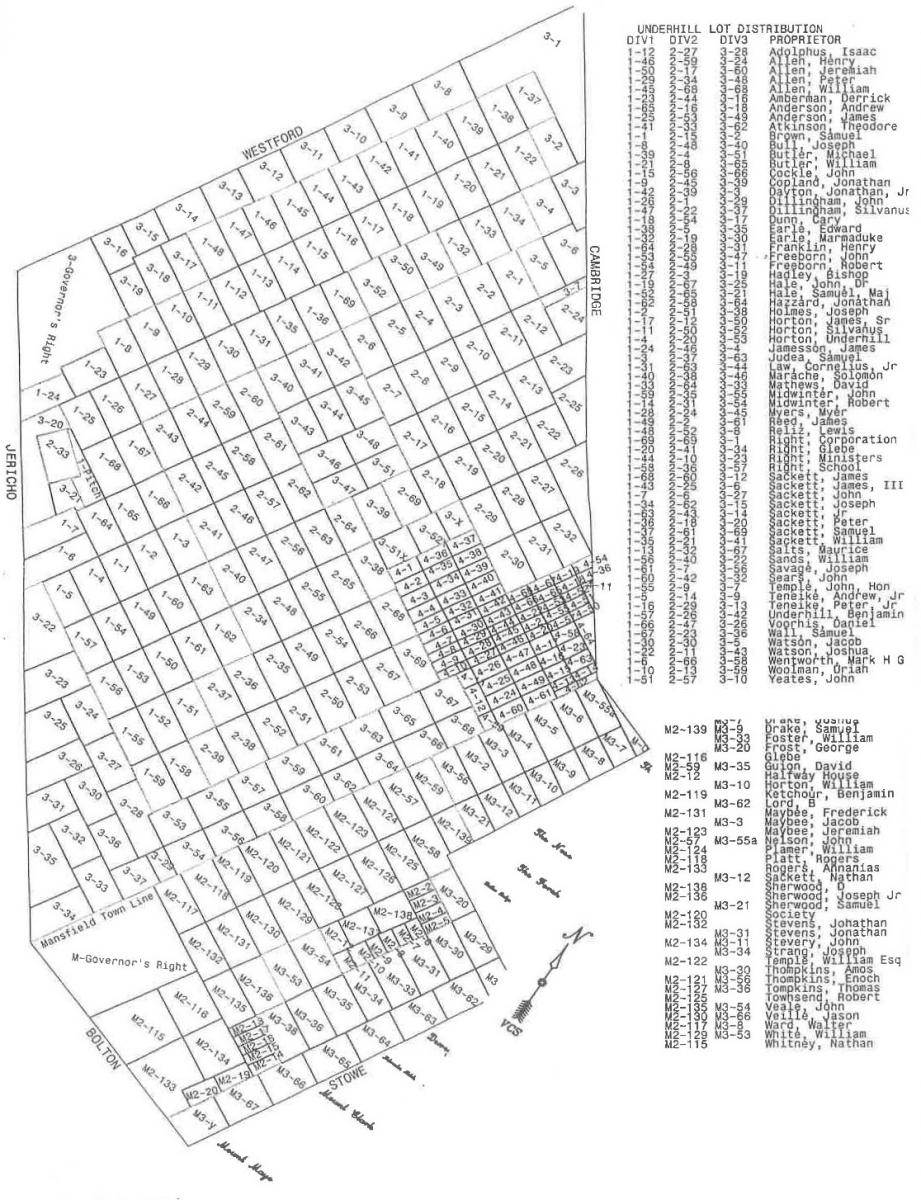
Names of Underhill lot owners taken from Underhill Surveys (1785-1804) in the Underhill Town Office, Mansfield lots taken from map titled “Plan of Mansfield Chartered June 8, 1763”.Names of Mansfield Owners taken from “Plan of Stowe” drawn by F.H Dewart (1913) located in Stowe Town Office.
Underhill lots traced by Harris Abbott (1968) from map of James Thorp (c.1900).Map adjusted to NAD83 Vermont Coordinate System in feet, to conform to 1/5000 Digital Orthophotos, USGS 7 1/2′ quad maps.
Prepared by ET MOORCE computer Services with assistance from Harris Abbott, Irene Linde and Tom Woodard, September 2002.
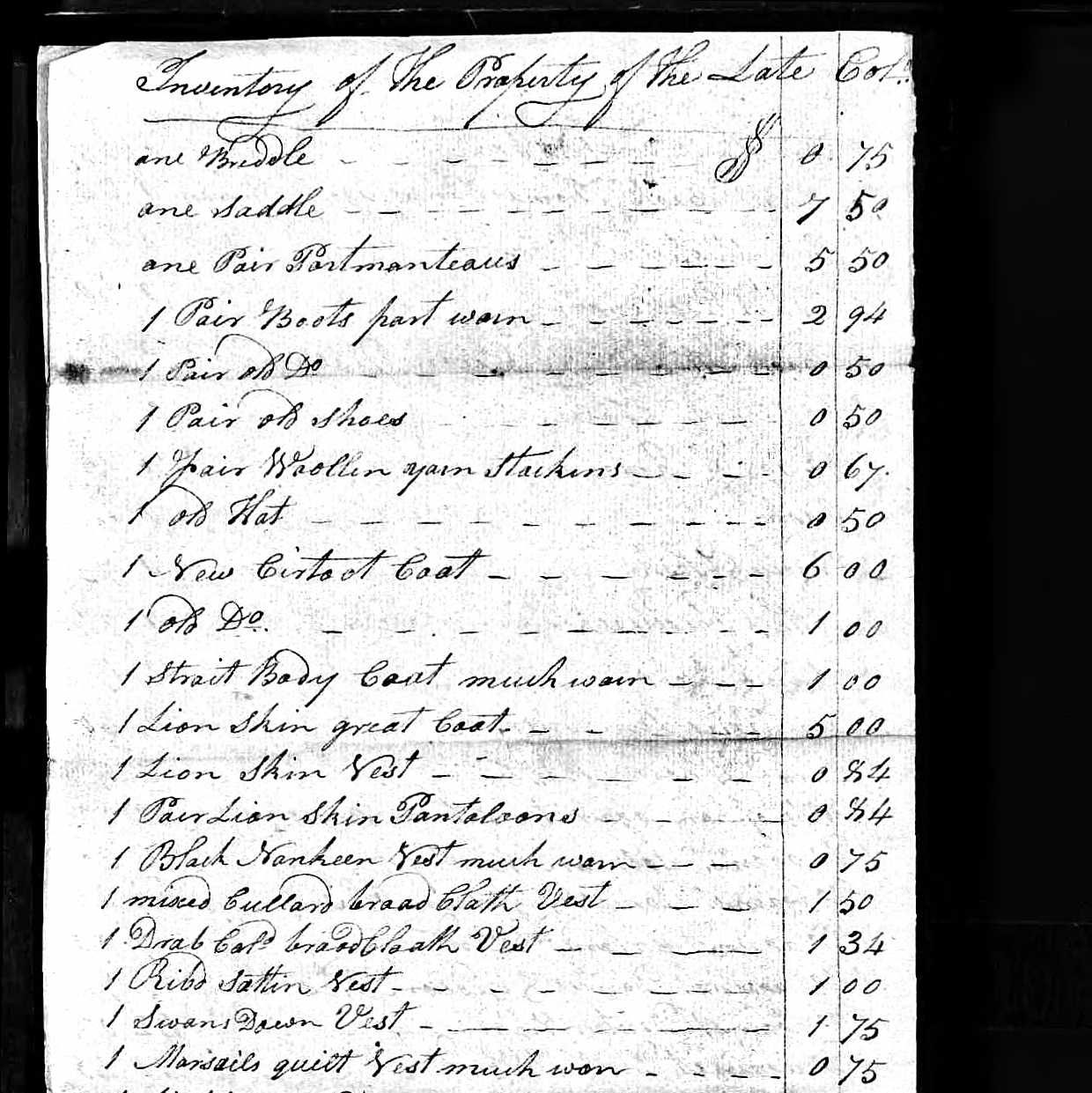
Probate records of estate inventories can provide us with a glimpse into the daily life of a time and place. Here is part of the estate of Lt. Col. Udney Hay who lived in Underhill 1796-1806. Some items of note:
1 Lion skin great coat and 1 lion skin vest: Despite his affiliation with the Democratic Republican Party ostensibly opposed to the aristocratic trappings of monarchy, Hay seems to have still appreciated some of the finer luxuries which might showcase his status as a gentleman.
Hay owned not one, but two copies of Thomas Paine’s wildly popular Age of Reason. Hay had publicly voiced support for Paine during his campaign for U.S. Congress 1802-1803


From the Vermont Centinel, September 10th, 1806:
With the deepest regret we announce to the public the death of Colonel Udney Hay, which took place in this town on Saturday the 6th ins. after a very short illness, in the sixty seventh year of his age. The next day his remains were conveyed to the meeting house, where an appropriate discourse was delivered by the Rev. President Saunders and attended to the grave by a numerous and respectable procession of his friends, from this and the neighboring towns, with uncommon manifestations of regard for his character and sorrow at his death. As a member of the council of Censors, the loss of Col. Hay, is to the state of Vermont at this time peculiarly irreparable, and must excite an unusual share of public regret.
We are aware that commendation of the dead is often and sometimes perhaps justly suspected of disguising real faults, and embellishing with counterfeit virtues; but the character of Col. Hay needs no fictitious coloring. His illustrious worth, like the sun, was crowned with its own beams and diffused its influence throughout a very broad circle. Though his life was a checkered scene—a twilight mixed with shadows—his virtues were such as ennobled while they endeared; for with honor which felt a stain like a wound, he combined integrity that palsied suspicion, and a philanthropy always glowing—but which quickened as he advanced in life, and seemed cubed for perpetuity. In fixing his destiny, nature and fortune seem to have been at perpetual war. The first had selected him as a favorite of her own, while the last early fastened her basilisk frown to pall his hopes and blast his expectations. Unfortunately, nature’s rare gifts are seldom found unalloyed with correspondent weakness—and Col. Hay’s open ingenuous spirit would have procured him enemies had he not been blessed at the same time with a goodness and sincerity of heart that would bear inspection, and which magnet-like, attracted as you approached it. Wit and judgement are not often united—but in Col. Hay they seemed to be kindred powers, most intimately interwoven and mutually cooperating, assisting and correcting each other. His wit was facetious, seldom severe, and rather courted a smile than imparted a sting. His judgment was penetrating, solid, and firm, his apprehension quick and clear, his imagination unusually vigorous and sprightly, but always obedient to reason. To these were united a generous warmth of friendship and gratitude, which stood fixed at a perpetual summer solstice—and benevolence so active, so expansive that it beggared, as it were, every other quality of his heart.
These were the gifts of nature, and with these had his situation and circumstances corresponded, what would he not have been! There is something, however, sublime in the contemplation of a great mind struggling with fortune, and Hercules-like, shaking off the calamities she has sent to subdue it.
In early life, Col. Hay came to America without education, without property or friends. During our Revolutionary War he soon and long distinguished himself in the department where he was stationed as an active, enterprising and able officer. And since the establishment of our State, his influence in our public councils for a considerable number of years, has been predominant beyond a parallel. As a politician his views of public affairs were marked with an amplitude of thought that spoke the man of prospect and profound sagacity. With a sovereignty of mind, that soared above the petty motives which tempt little souls from a straight course—he early adopted a system, and adhered to it with unwearied pertinacity to the end. If at any time, he had the zeal of a partizan it was without asperity—and his political adversaries however they may deprecate his influence, must bear testimony to his sincerity of opinion and he suavity of his manner in debate—never vehement or overbearing, preceptive of reason and open to conviction. To crown the whole, Col. Hay was a philosopher—his disposition was moulded for the blandishments of domestic life and “soft collar of social esteem”—but adversity, here pierced his heart through without freezing his spirits. His philosophy did not shrink from the calamities of life. It was not of that “dry fastidious sort that involved itself in a labyrinth of empty notions and logical subtleties, but of that authentic, plain, and practical kind that regulates the feelings, while it interests the heart, that corrects our wanderings while it stimulates our enquiries, that teaches us how to live and how to die, by teaching us what we are and for what we are designed.” With this philosophy he faced death without dismay, and with this philosophy we firmly believe he will be supported, when the bigotry of superstition shall pass away with the blaze of the Universe.

 Underhill Historical Society