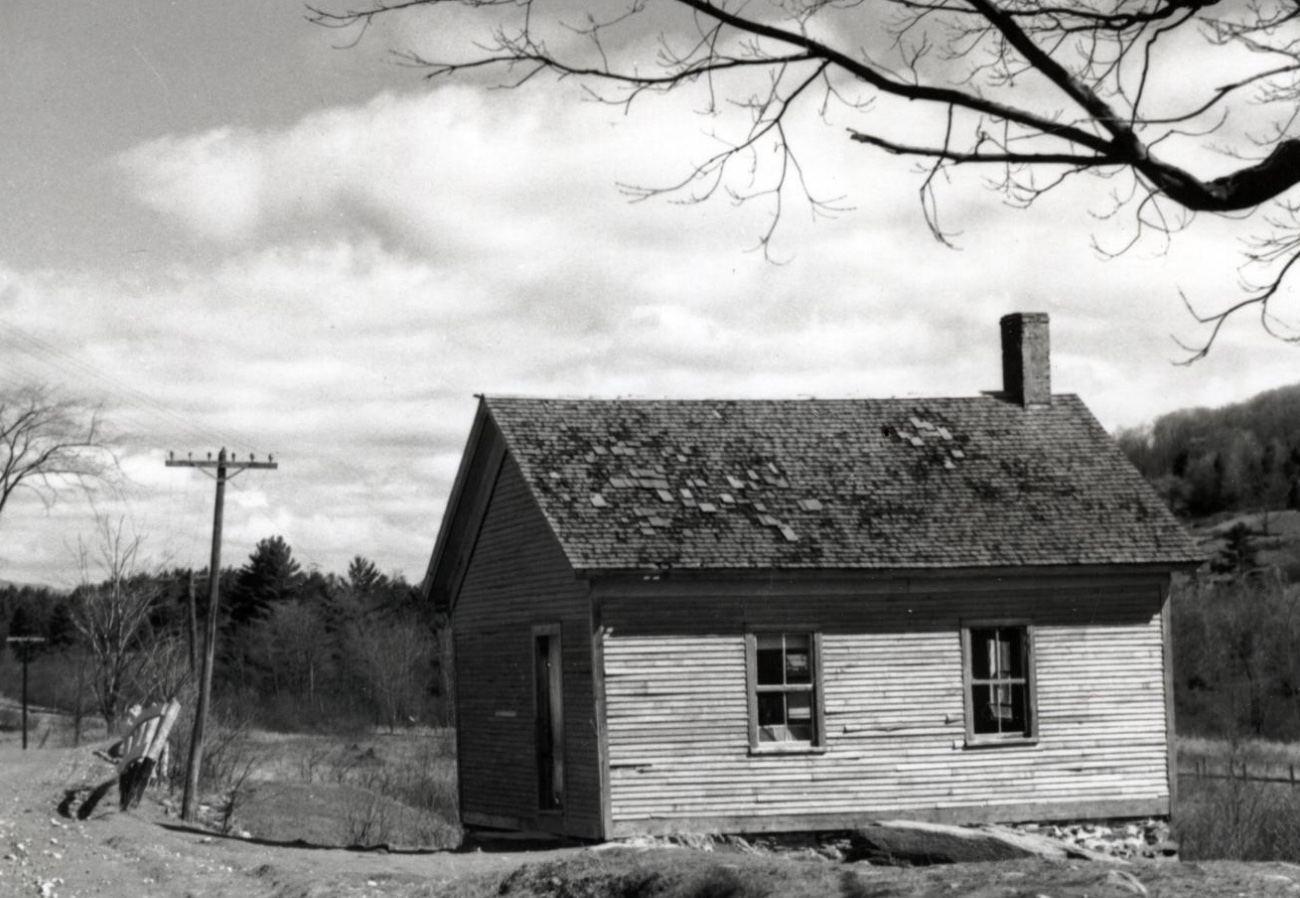
For schoolhouse locations, see interactive map here
Who Built/Paid for the Schools and Maintained Them?
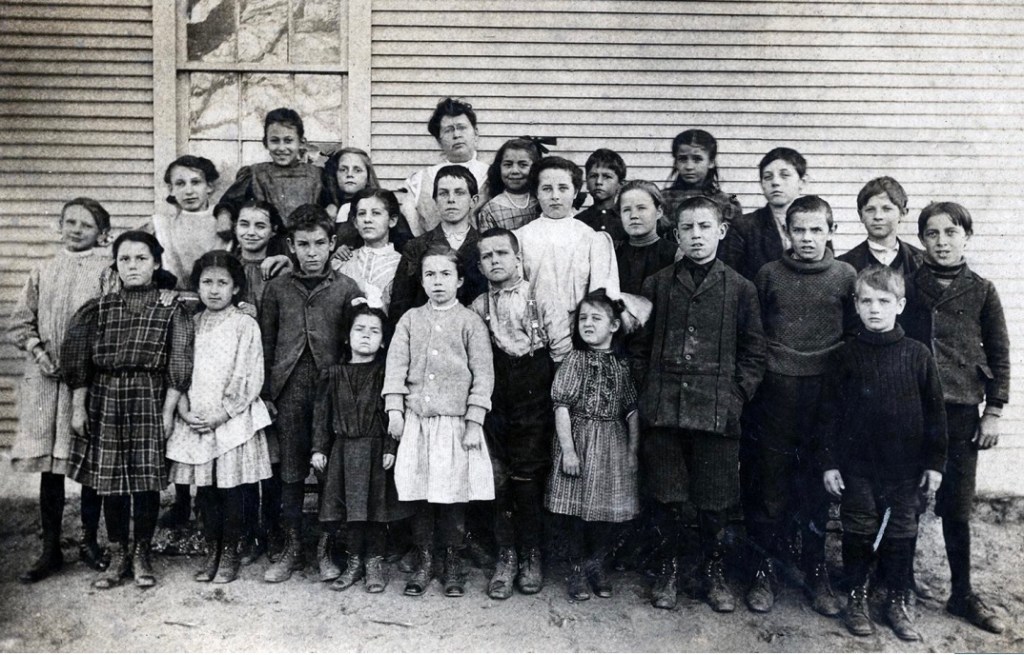
Think of the 15 Districts like neighborhoods. The parents of the students largely built the schools and did upkeep as needed. However, in reading selectboard reports/school committee reports there were years when they postponed repairs due to lack of consensus to spend the money to make the repairs. For example, the adults voted at Town Meeting 1829 that repairs would be billed to the students’ families. There was no water or plumbing in any of the school houses. Privies, boys and girls, were built and utilized for as many years as the school existed. One member of each school committee had the responsibility to collect taxes. By 1835, or possibly sooner, tax was collected from all homeowners in the district whether they had students in school or not. In short, each District was on their own in managing their schoolhouse.
What was it like to be a Student in a One-Room School?
In the early years, it was difficult to say the least. Text books were few and far between, and families had to supply textbooks for their children. Students…families, had to supply wood to heat the schoolhouse. As a student if you were sitting far from the stove you were likely cold, and too warm if sitting right next to the stove. Schools had the bare minimum of educational tools, often no books, dictionaries, globes, maps, even writing paper. They had to rely on the teacher to instruct what was often only their verbal knowledge. During some early years boys went to school in the winter, girls in the summer. Sometimes parents needed the children to work the farm and their attendance could be inconsistent. For example, during the 1873 summer term (both boys & girls by this time), there were 108 children in District #5, but only 50 were enrolled and the average attendance was only 34. Graduating from 8th grade was a BIG DEAL, with a graduation ceremony and a diploma. Only a small minority of students went on to High School, as they had to procure room and board at someone’s home while attending High School largely in Burlington or Essex Jct.
What was it Like to be a Teacher?
Simply stated, “it wasn’t easy”. Teachers were paid little and usually boarded with students’ families. Boarding during a 3-4 month session often meant a teacher would have to pack up and move sometimes weekly, bi-weekly, or at the very least monthly. Each District school committee was responsible to hire their teacher(s). School reports show parents were less concerned about qualifications than what the teacher was to be paid. Most of the teachers were female, however during years in which boys only attended winter term, a male teacher was often hired. Teaching multiple grades was difficult to say the least. Teachers had to be strong disciplinarians, and it was expected they would be. Teachers dealt with poor lighting, poor heating, privies, lack of drinking water, and most importantly the lack of educational tools and supplies. Often the teachers were young women as young as 14 years old. There was constant turnover of teachers due to inadequate compensation, and the poor conditions as mentioned. By 1909 they had a Town School Superintendent, who reported that of the 18 Underhill teachers only eight were high school graduates and only one had formal teacher education.
District #1: The Morse School
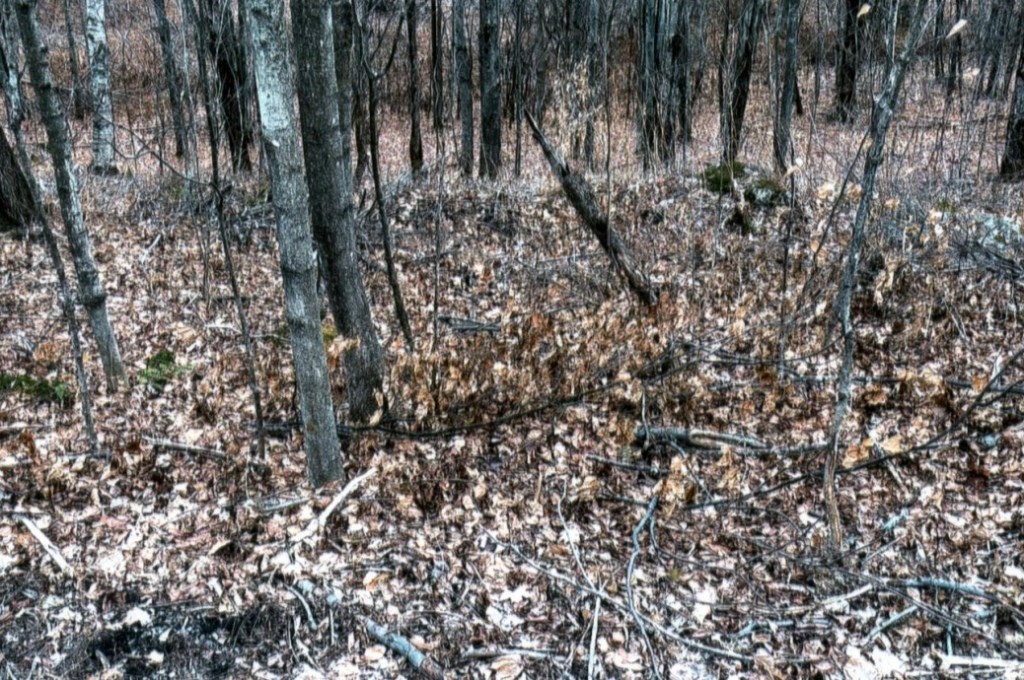
Located on Poker Hill Road (originally “Hill Road”) in operation 1787-1953. The first school was a log cabin. It was said the students sat on wooden bench boards held up by milk pails. Local citizens rebuilt the school 3 times, the last being in 1893. By the 1920’s Vermont instituted statewide educational standards. When a school followed through and was “accredited,” they received the designation “Vermont Standards School.” District #1 was the first in Underhill to be certified. Two families, Morse and Covey, over many generations were active as school teachers and/or school directors. The photo of the red house is the location on Poker Hill where the last (3rd) school house stood. In the other photo, one can see the stone foundation of the original schoolhouse location which is only 75 yards north from the red house.
District #2 Poker Hill Road (Previously called the “Hill Road”)
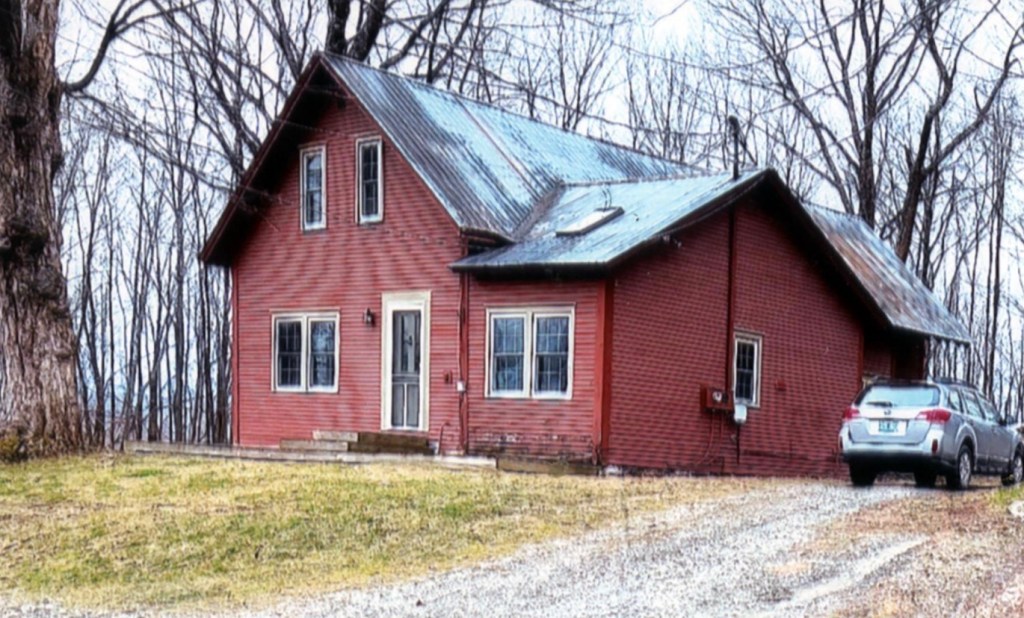
In the early years it was referred to as the (Poker) “Hill Road School.” It is situated on level ground above Birge Homestead/Tavern (Built 1802). This school operated until 1930. It is believed to have been built around 1797. Water for students was provided by the various owners of the Birge Homestead, and students wanted to fetch the water as there was an apple orchard there for them to eat apples while fetching the water. This schoolhouse was sold for $300 in 1947 and moved to Machia Family Farm 1 mile away. The photo of the “trees” is the approximate location of District 2, just north of the 1802 Birge Homestead.

District #3: The Flats School (often called the “Roaring Brook School”)
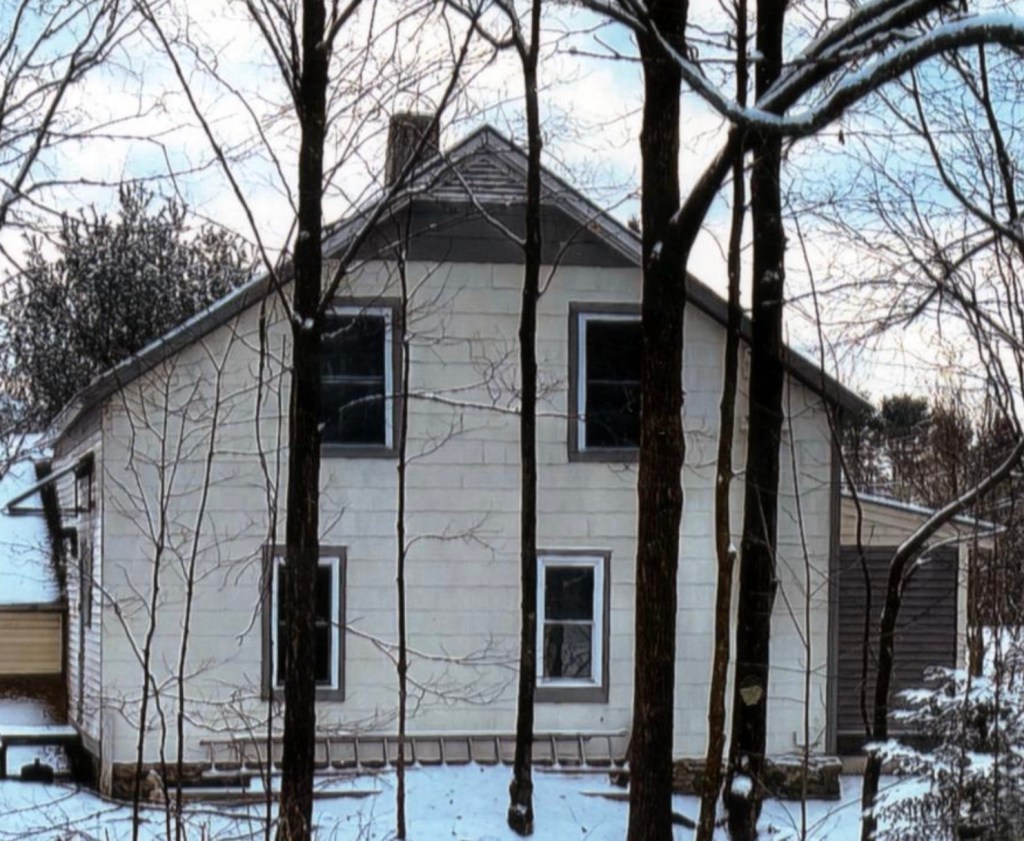
The school’s first location appears to be on the west side of “Flatts Road” (Route 15) near the junction of “Flatts Road” and “Hill Road” (Poker Hill Road) according to the Walling Atlas map of 1857. This location was further confirmed by local map maker Martin Hapgood in 1858. The Beers Atlas map of 1869 shows that school was moved alongside Roaring Brook at the end of Dumas Rd, directly across from the Humphrey (Mill) Homestead on Poker Hill Road. The current house photo provided was the location of the old schoolhouse. It was in operation beginning in the first decade of the 1800’s and closed in 1892.
District #4: River Road School
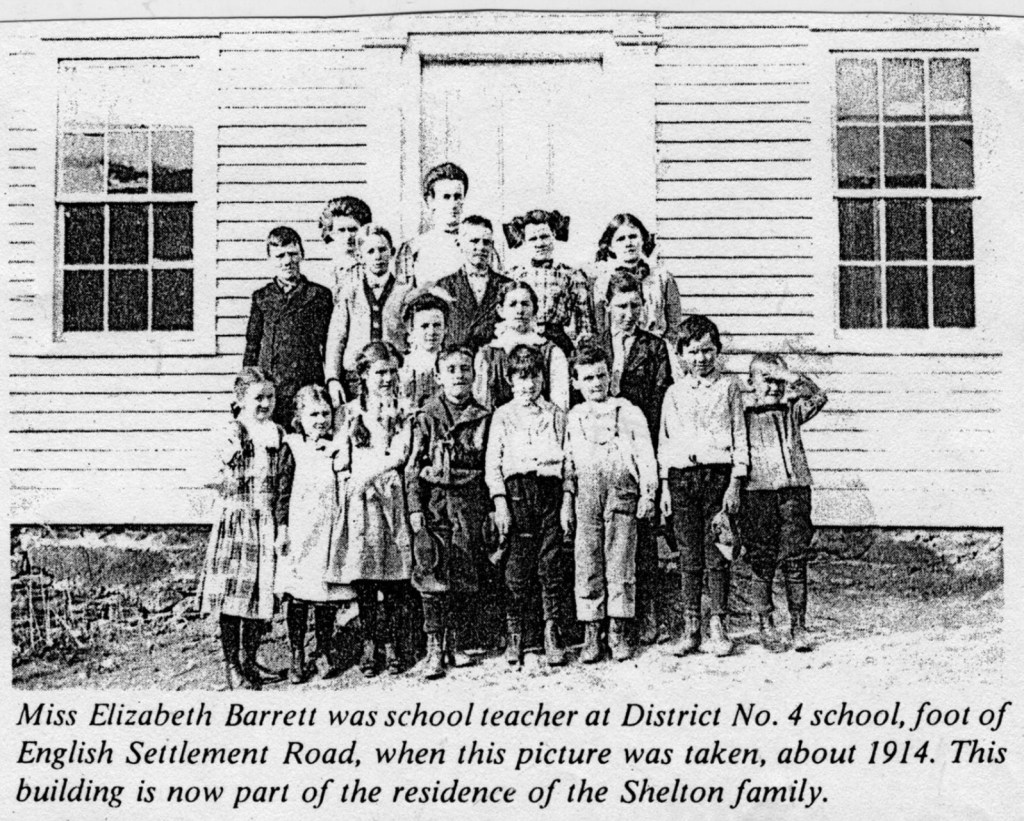
The River Road School formerly stood on the south side of River Road, opposite where the Lower English Settlement Road intersects River Road. Part of this school is believed to form part of the home on the westside corner of River Road and Lower English Settlement Road. The story was told that the students planted 3 maple trees in front of the school and also buried a bottle with the students’ names along with the 3 trees. Elizabeth Barrett was a teacher from the early 1900’s. The Historical Society has a music book with handwritten lessons on teaching music by a Miss West. This school is believed to have been started as early as 1814, but not utilized every year. However, it was run continuously from 1857 until around 1920.
District #5: The Center School
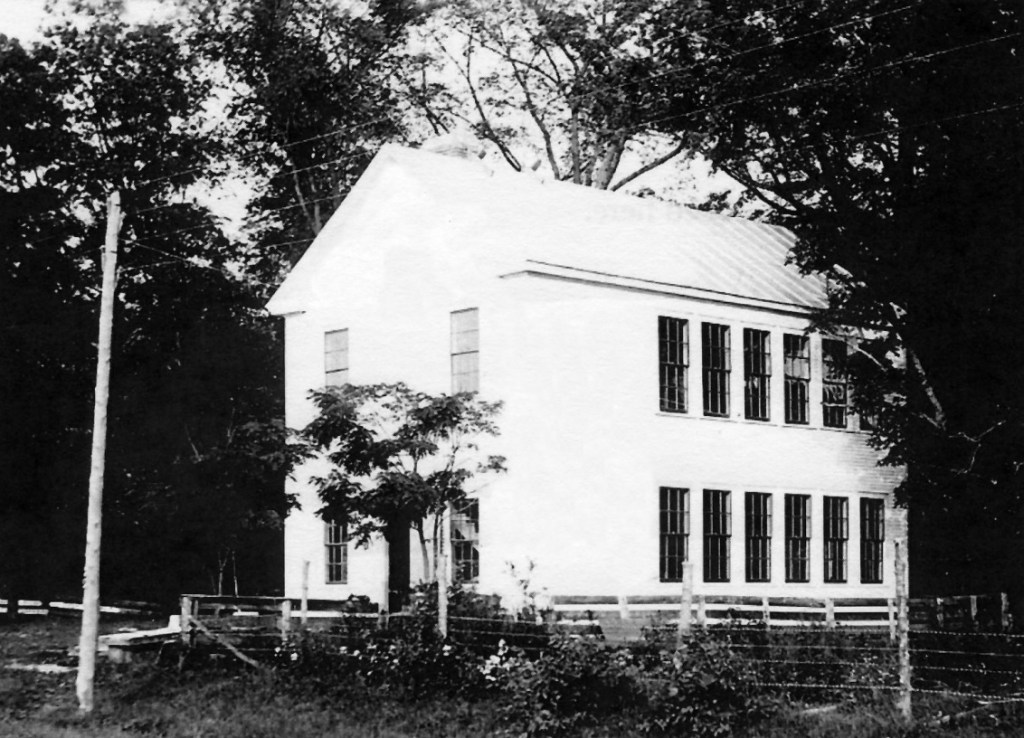
The first school building for Underhill Center was built nearby in 1823 and was replaced in 1836. These were both log construction. In 1860-1861 a diphtheria epidemic forced the townspeople to turn the schoolhouse into a “pest house” which they eventually burned down. In 1861 the schoolhouse was built as a one-floor schoolhouse, and a second floor was added in 1915. Underhill children were educated here for 90 years despite no running water and plumbing. A damaging fire in February 1951 prompted the townspeople to build the Central School, opening in September 1953. The Underhill Historical Society’s efforts preserved the building by 2019, and the schoolhouse is listed in the National Register of Historic Places, as well as recognized with a Roadside Historic Sign through the Vermont Division for Historic Preservation.
District #6: The Creek Road School
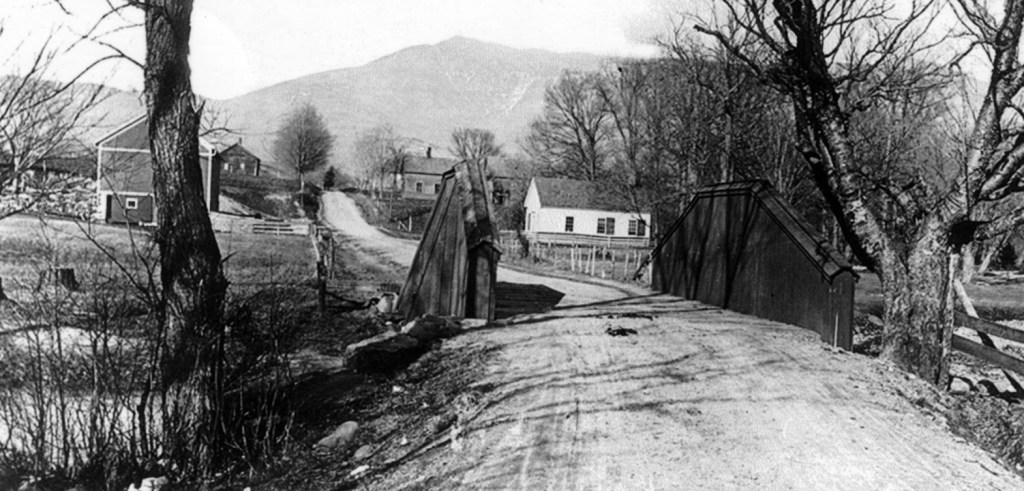
This school, built around 1828, was in continuous operation till 1953. Located on Rt. 15, just south of Gerts Knob Lane, on the east side of the road (later moved to the west side). According to the Schools Report, in 1845 there were 30 students and school lasted 6 months that year. Most schools in the early 1800s were in session 3 months in summer and 3 months in winter. The Creek Road School was certified as a Vermont Standard School in the 1920s. Teachers worth noting were Lillian Cross, mother of well-known local photographer Earl Cross, and Miss Majorie King who was one of the few teachers who graduated with formal teacher education from the Johnson (VT) Normal School.

District #7: Governor’s Rights
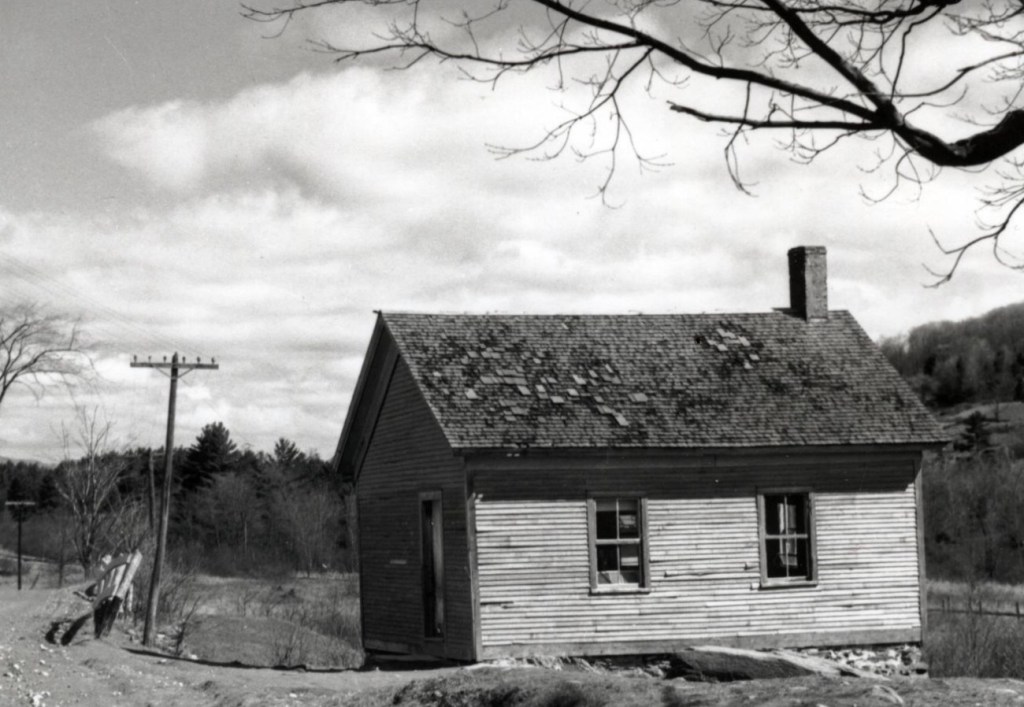
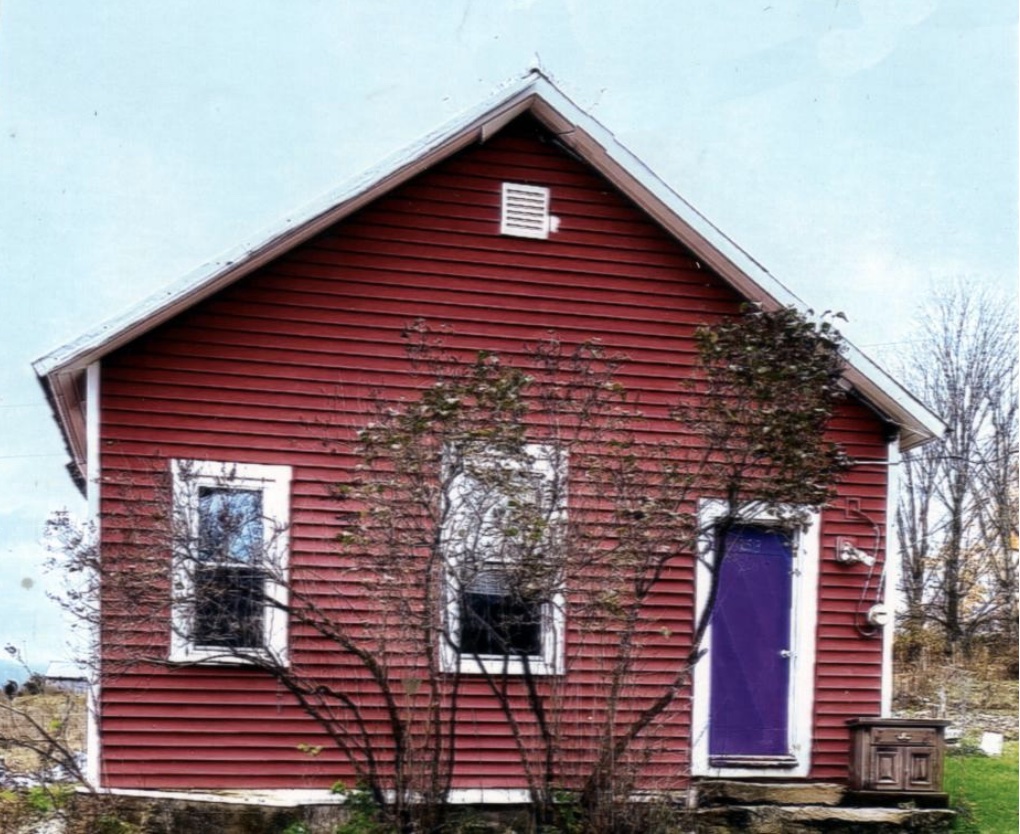
This schoolhouse is located on Cilley Hill Road at what is now the Rawson Farm property. Before the War of Independence, New Hampshire Governor Benning Wentworth reserved for himself 500 acres in the corner of Underhill abutting the towns of Essex, Jericho, and Westford. From this parcel he granted land for the Cilley Hill one-room school which was always known as the Governor’s Rights School as well as its designation as District #7. This school was known as a “fractional” school meaning that students from the bordering towns attended as well. The Governor’s Rights School is currently used as a residence.
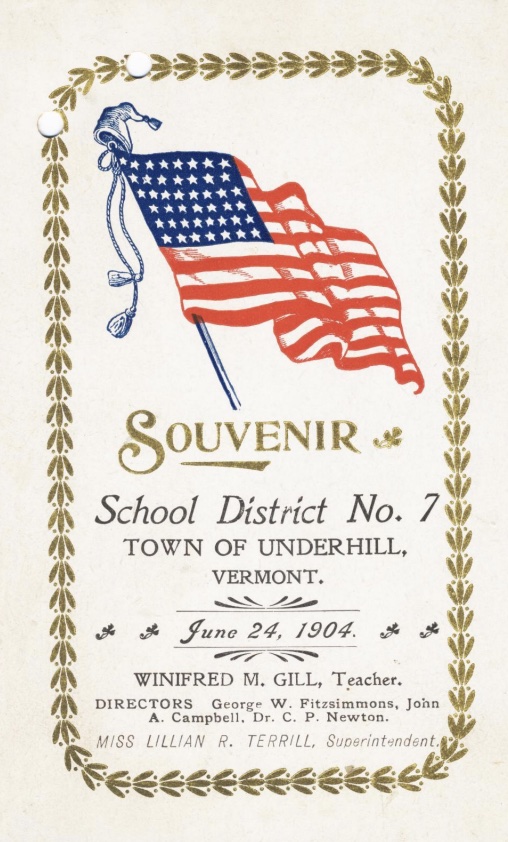
District #8: Hutchville
Hutchville was a community largely dedicated to the logging enterprise owned by James Hutchinson. Located on what is now the Camp Ethan Allen Training Site, this school operated in the years 1845-1909, although not continuously. Housed on the first floor of the main boarding house located near the junction of Beartown Road and West Bolton Road (Krug Road), the school served pre-school, kindergarten, 1st, and 2nd grade students. Those children who were old enough walked 2 miles to school. This was also another “fractional” school as youngsters from Jericho and Bolton also attended.
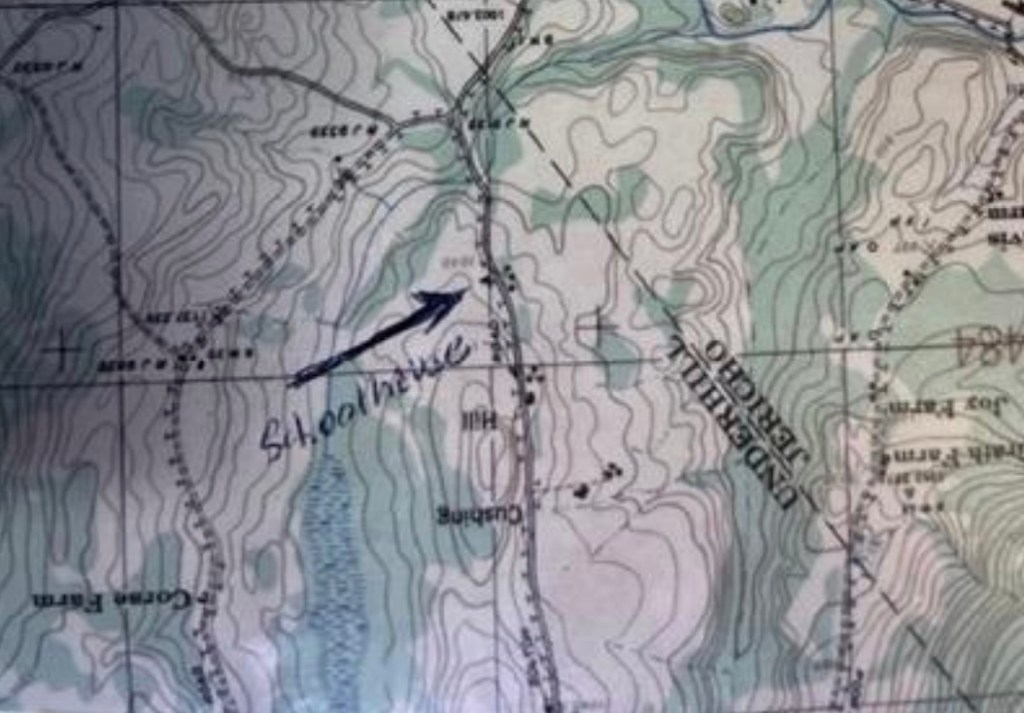
District #9: Stevensville School
Located just beyond what was known as Maple Leaf Farm (leased by ReTribe Transformations since 2017), it is believed that the school was built in the early 1840’s and was in use until 1919. According to the 1845 School Report, there were 24 students. Girls attended for 3 months in the summer, boys for 3 months in the winter. The schoolhouse burned down in 1982.
District #10: Harvey School
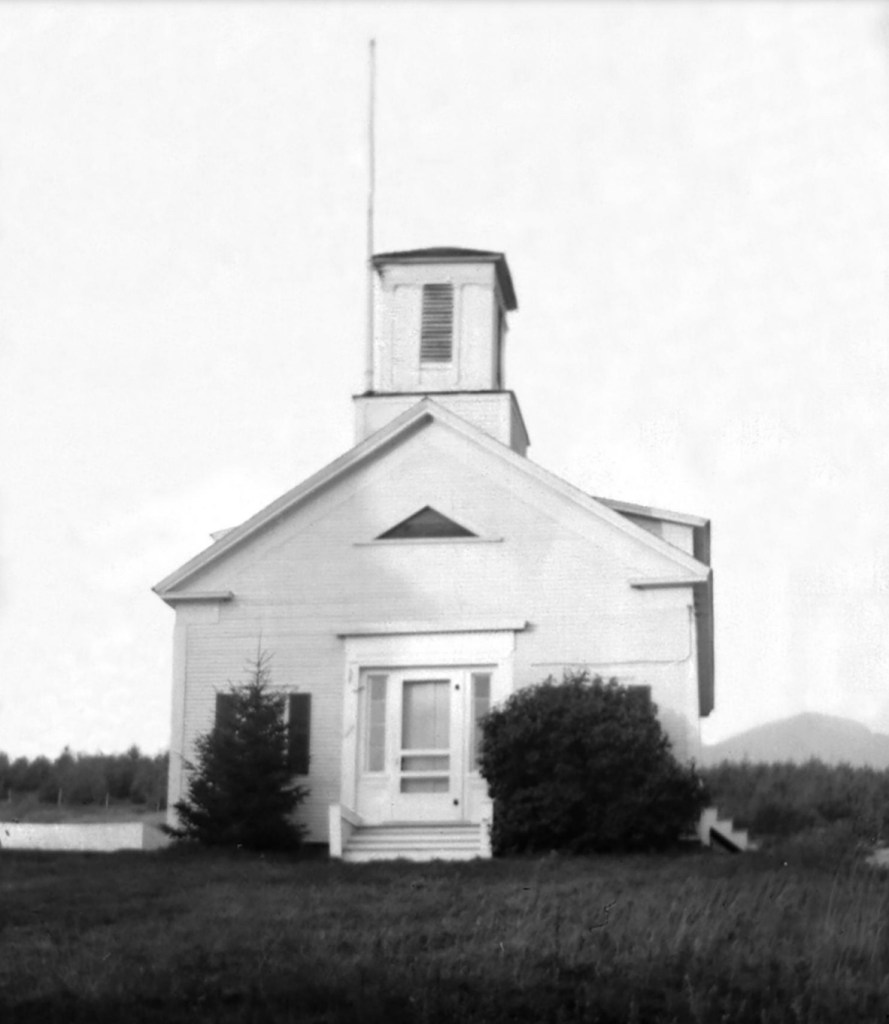
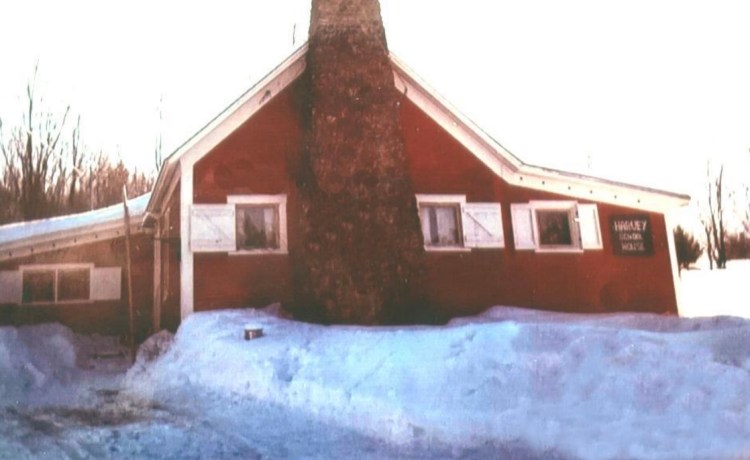
Located about 450 yards north of the Harvey Road and Pleasant Valley Road intersection. Original meeting notes voting to build this school in 1830 are in the Historical Society’s files. The school was in use from 1830-1911 and later converted to a residence. This photo, taken in 1970, shows that the schoolhouse was the main part of the residence. The building burned down in 1985.
District #11: The Bogue School
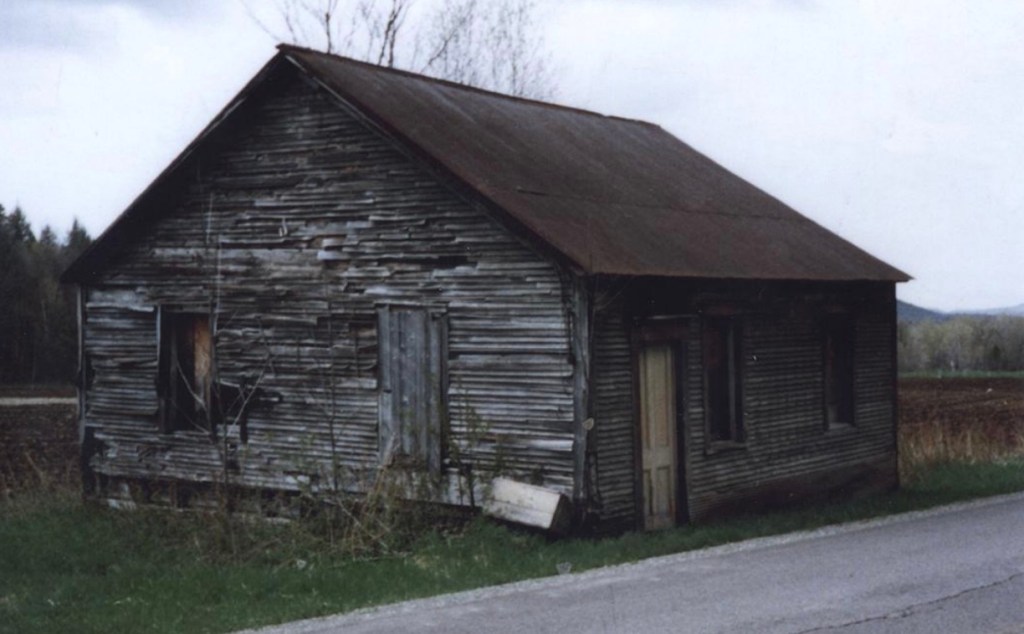
Located on Pleasant Valley Road, near the intersection of Deane Road. This school was in use from 1844-1920 and had a large attendance. In 1845, 76 students attended–boys for 3 months during the winter and girls for 3 months in the summer. This was a “fractional school” as children from nearby Cambridge attended as well as Underhill students. The building was used for various community functions, including a dancing school in the late 1920s. Their Saturday night dances had rules–no drinking (!) and girls were not allowed away from the building alone. The building is still standing.
District #12: Irish Settlement Road
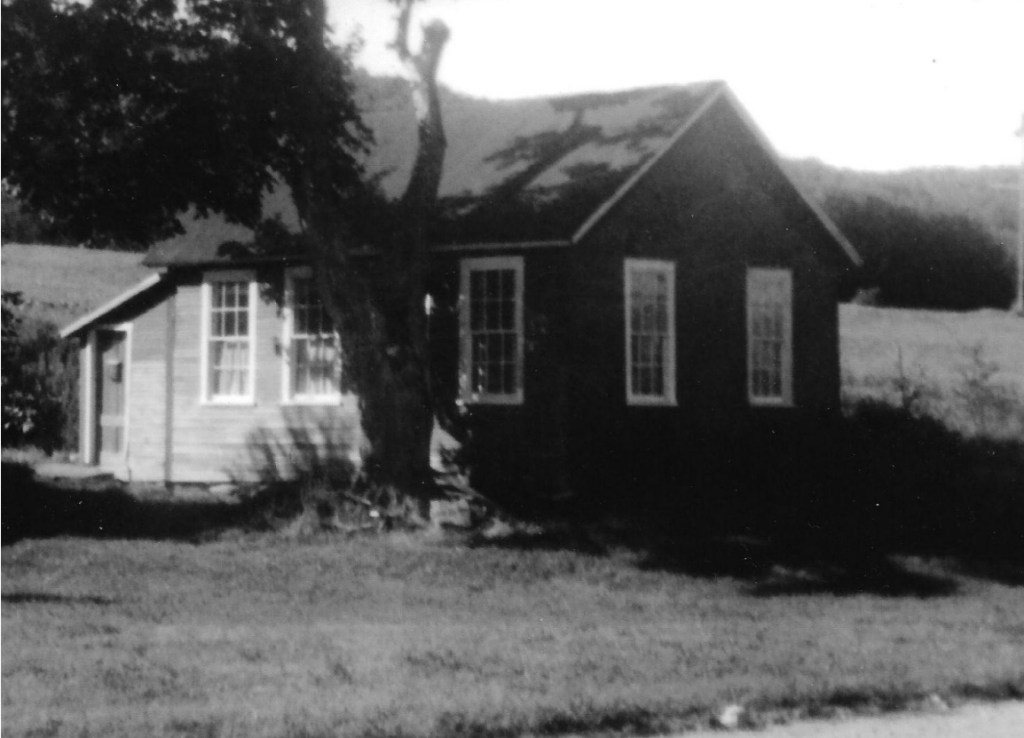
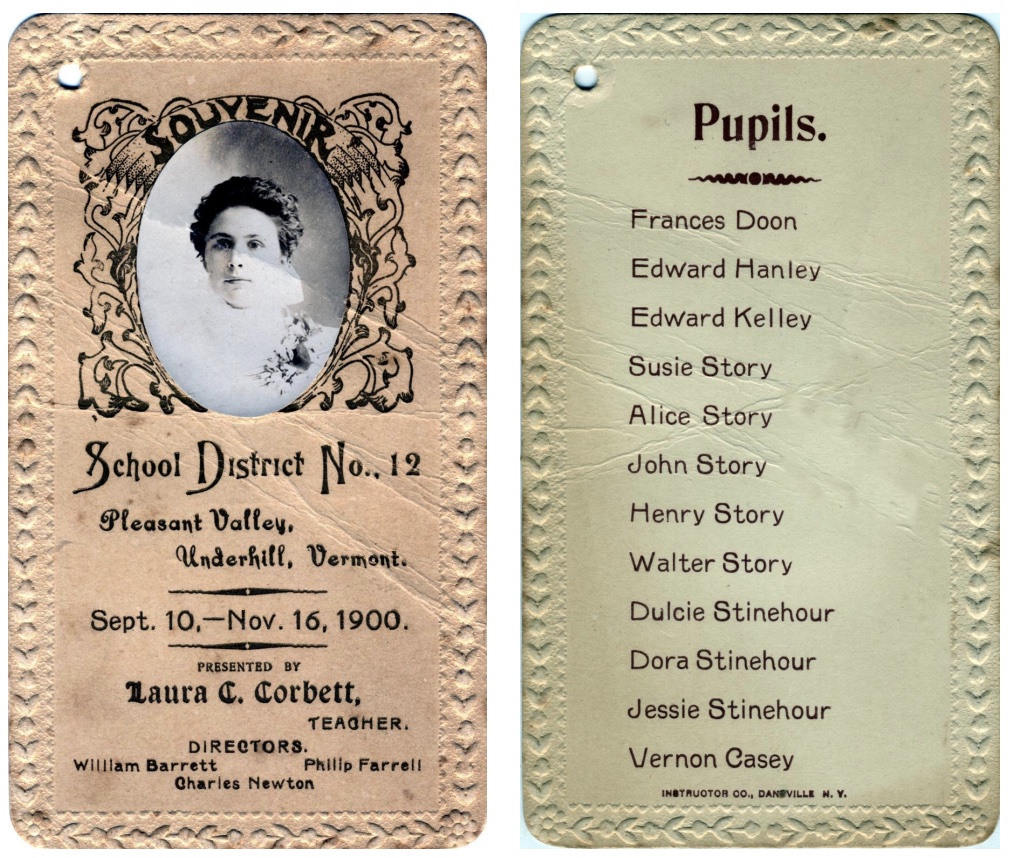
At the intersection of Doon and Irish Settlement Roads. This school was in continuous use 1867-1953. Earlier, there also was a log cabin school just up Doon Road which was in use 1840-1866. District #12 was well attended. One year there were as many as 75 students. The school was small, and sometimes students actually sat in each other’s laps or on long benches with 5 or 6 kids to a bench. To keep the big old stove going each week, the students’ families provided wood. Emily Flynn is probably Underhill’s best known teacher of the early 20th century, having taught for 50 years mostly in Districts 12, 13, and 5. Irish Settlement Road/Doon Road was certified as a Vermont Standard School in the late 1920s. This school still stands and is used as a part-time camp.
District #13: Upper English Settlement Road
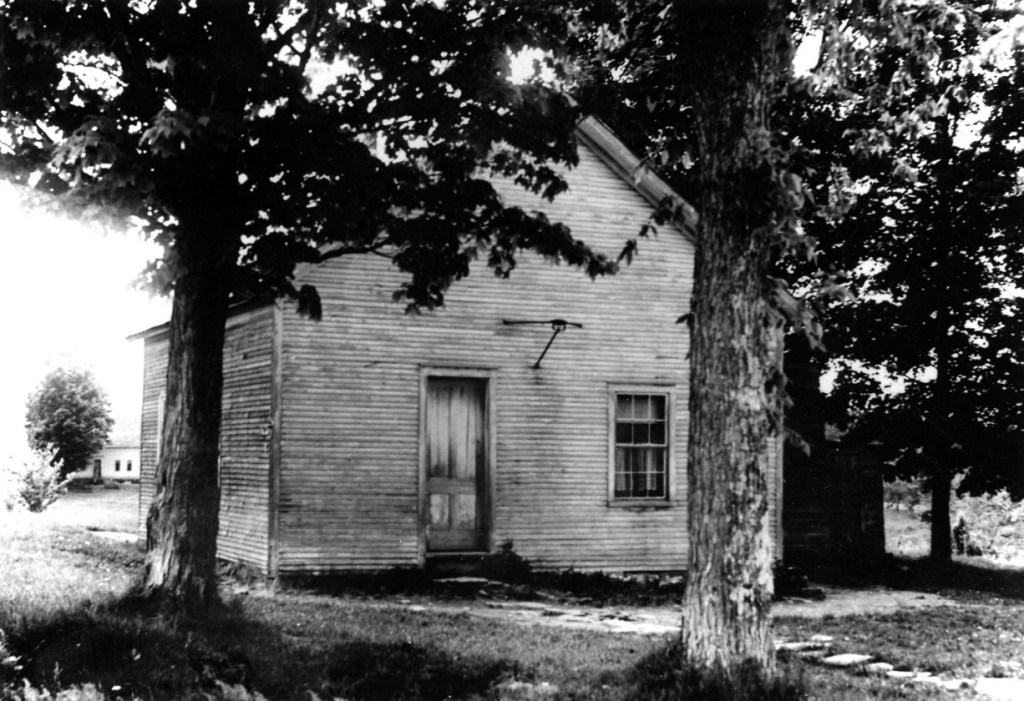
Near McClellan Farm Road. Built in 1839-1942, this school is still standing. Lillian Cross taught here, as did Emily Flynn. The 1845 School Report shows 15 students attended that year. In the 1901 Town Report, there is a statement: “Privy is attached to the building… this ought not to be.” Students raised money for the Red Cross to help with the aftermath of the disastrous flood of 1927.
District #14: Irish Settlement School
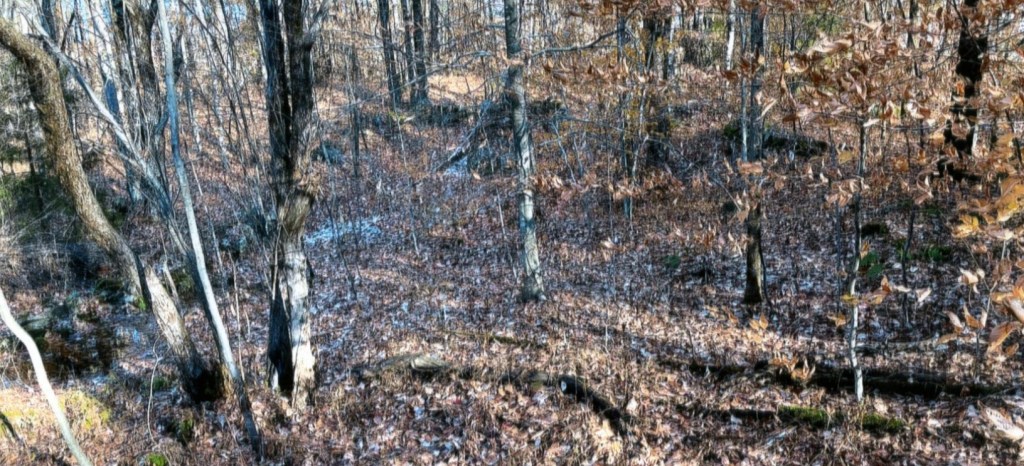
Located approximately 1.3 miles from the intersection of Irish Settlement Road and Sand Hill Road. In use from 1858-1920. It is mentioned in the Town Meeting book dated 1827 that an early school was near here. The district was called (Rufus) “Forbush District.” Emily, Nellie, and Alice of the Flynn family taught a few years here, though all in different years. The photo shows this school’s stone foundation on the east side of the road.
District #15: The Mountain School
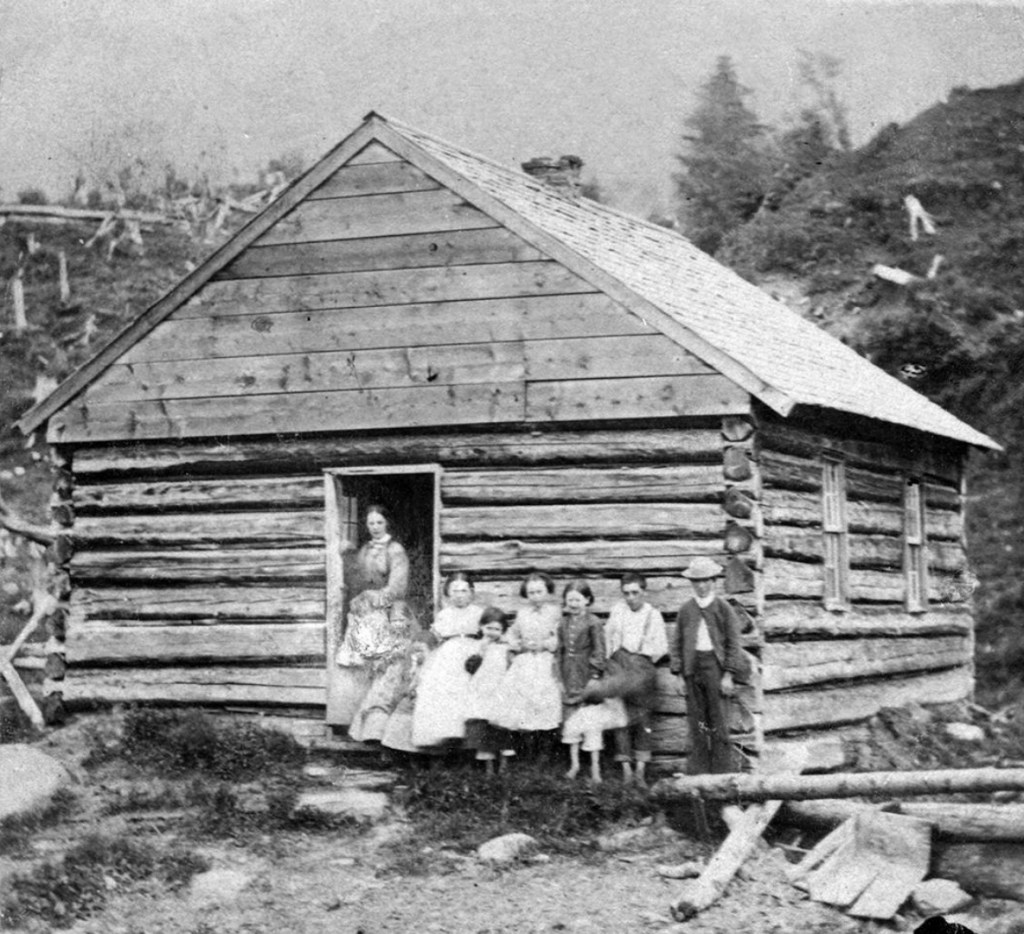
Located on the Mountain Road near the “Green Camp/Halfway House area” in the State Park. This was a log building. Classes were taught by 14-year-old Mary Breen. This school operated for a short time in the 1860’s. Mary went on to teach in different district schools, and she also became School Superintendent in the late 1800s into the early 1900s.
Acknowledgements
The help of many ‘along the way’ made the research fun. Without their help, this project would not have been possible. Many thanks to everyone:
Research:
- Judy Boardman, John Connell, Brad Holden, Gary Irish, Bill Laporte, Carolyn Leighton, Michael Luck, Michael Morin
Photography:
- Johnny Connell, Tim Durbrow, Lori Peckham, Steve Webster
Sources Utilized:
- Lorraine S. Dwyer, The History of Underhill; The Town Under the Mountains, 1976
- Emily Flynn, A Short History of Underhill
- Susan Thomas, History of the Old Schoolhouse (District #5)
- Underhill Historical Society Archives
Roger Frey – President
Underhill Historical Society
 Underhill Historical Society